The former president's comments on Nvidia's Jensen Huang and national security raise questions about political influence and tech oversight.
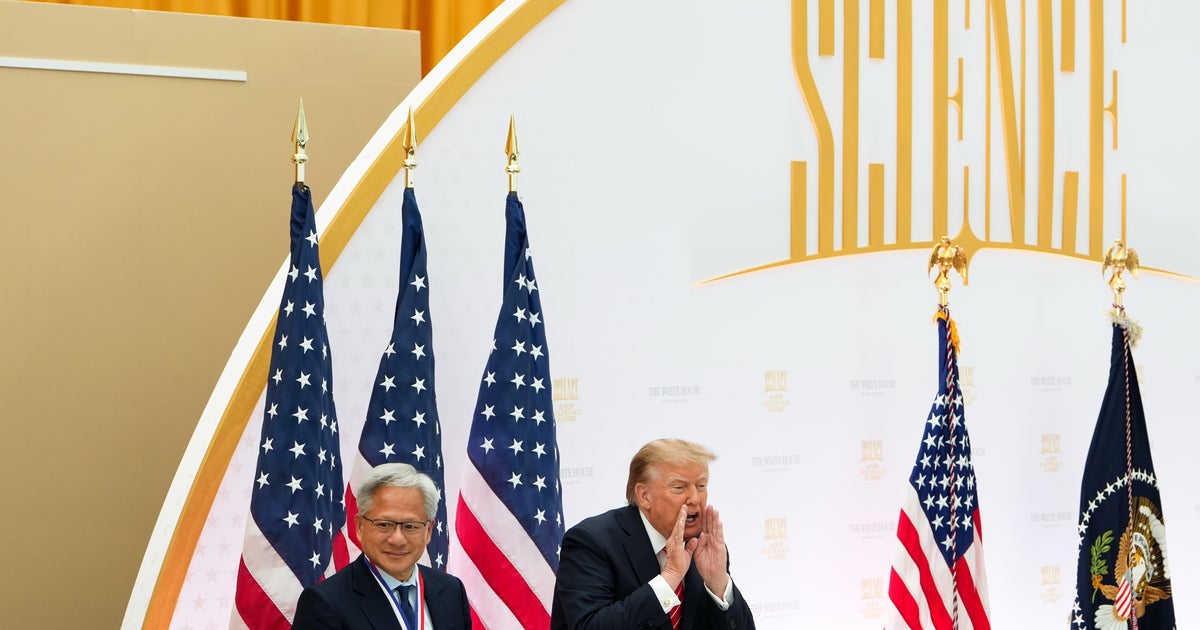
- The Lead: Former President Trump stated the U.S. government has no reason to believe Nvidia CEO Jensen Huang's continued leadership poses a national security risk.
- The Context: Huang, a prominent figure in the semiconductor industry, has led Nvidia since its founding, a period marked by significant technological advancement.
- The Impact: Trump's comments could influence perceptions of tech leadership and national security vetting, particularly within the business and political spheres.
- What's Next: Continued scrutiny of tech leaders' national security implications and potential policy shifts regarding foreign investment and leadership in critical industries.
In a statement issued Monday, former President Donald Trump declared that the U.S. government "has no reason to believe" that Jensen Huang's continued tenure as CEO of Nvidia "poses any risk to national security." The remarks came amidst ongoing discussions about the leadership and strategic importance of key figures within the semiconductor industry, a sector increasingly viewed through the lens of global competition and technological dominance.
This intervention from a former president, particularly on a matter touching upon national security and a high-profile tech executive, injects a significant political dimension into the narrative surrounding Nvidia. This briefing delves into the substance of Trump's statement, the broader context of technology and national security, and the potential implications for industry leaders and policymakers.
Trump's Statement and Nvidia's Position
Former President Trump's assertion directly addresses potential national security concerns that often accompany leadership in critical technology sectors. Nvidia, a titan in the development of graphics processing units (GPUs) and artificial intelligence chips, plays a pivotal role in areas ranging from gaming to advanced computing for defense and intelligence applications. Huang, who has helmed the company since its inception, is widely credited with steering Nvidia's remarkable growth and technological innovation.
The former president's comment, framing Huang's leadership as non-threatening to national security, appears to align with a view that the company's operational leadership, under Huang, does not present the kind of risks typically scrutinized by intelligence agencies or national security councils. This perspective suggests that the focus remains on the technology itself and its potential applications, rather than the nationality or specific leadership of the company's executive team, assuming adherence to existing regulations.
The Significance of Executive Scrutiny
In an era where technological capabilities are intrinsically linked to national power, the leadership of companies like Nvidia is subject to a high degree of scrutiny. Trump's statement, while seemingly definitive, also implicitly acknowledges that such scrutiny exists and that his administration, or any subsequent administration, would have the authority to assess these risks.
“The former president's pronouncements on the national security implications of tech leadership highlight a complex interplay of political opinion, economic interests, and technological advancement.”
The Evolving Landscape of Tech and National Security
The intersection of cutting-edge technology and national security has become one of the defining geopolitical challenges of the 21st century. From cybersecurity threats to the race for dominance in artificial intelligence and semiconductor manufacturing, the United States and its global partners are acutely aware of the strategic implications. Companies like Nvidia, whose products are foundational to many advanced technologies, are therefore often viewed not just as commercial enterprises but as critical components of national infrastructure and defense capabilities.
Historically, national security reviews have focused on mergers, acquisitions, and foreign investment, particularly concerning companies operating in sensitive sectors or those with significant intellectual property. The leadership of a company like Nvidia, however, raises a different set of considerations. The expertise and vision of its CEO are directly tied to its innovative output and market strategy, both of which can have profound national security consequences, whether intended or not.
Geopolitical Competition and Chip Dominance
The global semiconductor industry is characterized by intense competition, with nations vying for leadership in design, manufacturing, and supply chain control. This geopolitical backdrop means that any perceived vulnerability or advantage related to key technology players like Nvidia is closely monitored by governments worldwide.
Political Reactions and Market Undercurrents
Former President Trump's comments are likely to draw varied reactions from different political factions and industry observers. Supporters may view his statement as a pragmatic approach to business, emphasizing economic growth and innovation without undue political interference. Conversely, critics might question the basis of his assessment, particularly given his past rhetoric on trade and technology with China, and the potential for political considerations to influence national security judgments.
The stock market and the tech industry itself often react to pronouncements from influential political figures, especially those concerning major corporations. While Nvidia's market performance is driven by a multitude of factors, including its technological advancements and competitive positioning, political statements can introduce volatility or shape investor sentiment. The company, meanwhile, typically maintains a policy of focusing on its business operations and compliance with all applicable laws and regulations.
The Influence of Political Endorsements
The endorsement, or lack of concern, from a former president carries weight, particularly in political circles and among his base. This can indirectly affect how regulatory bodies or future administrations might approach similar issues, setting a precedent or shaping the public discourse around tech leadership.

Navigating Geopolitical Pressures and Innovation
The global technological race, particularly in areas like artificial intelligence and advanced computing, necessitates a careful balancing act for countries like the United States. On one hand, fostering innovation and attracting top talent are crucial for maintaining a competitive edge. This often means allowing companies to operate with a degree of autonomy under established legal and regulatory frameworks.
On the other hand, the potential for advanced technologies to be utilized for military or surveillance purposes, or to fall under the influence of geopolitical rivals, requires robust oversight. This tension is particularly acute in the semiconductor industry, where supply chains are global and the technology is foundational to nearly all modern digital infrastructure. The leadership of companies like Nvidia is therefore a subject of constant, albeit often behind-the-scenes, evaluation by national security agencies.
The Role of Executive Leadership
Jensen Huang's long tenure at Nvidia has been synonymous with the company's rise to prominence. His strategic vision has guided Nvidia through multiple technological shifts, from gaming graphics to the current AI revolution. The question of whether such leadership poses a national security risk is not merely about an individual but about the collective impact of a company's direction on national interests.
Looking Ahead: Policy, Perception, and Progress
As the conversation around technology and national security continues to evolve, statements from prominent political figures like former President Trump will likely remain a significant factor in public perception and potentially in policy discussions. The challenge for policymakers is to create an environment that encourages innovation and economic growth while safeguarding national interests against emerging threats.
For Nvidia and its CEO, the focus will likely remain on continuing to innovate and deliver cutting-edge products, while also navigating the complex geopolitical landscape and adhering to all regulatory requirements. The interplay between political pronouncements, national security assessments, and the realities of global technological advancement will continue to shape the future for leaders in this critical sector.
Key Watchpoints for the Future
Observers will be watching for any formal policy shifts or increased regulatory scrutiny concerning executive leadership in the tech sector, as well as how other political figures and industry stakeholders respond to Trump's comments.
🎯 The Bottom Line
The Bottom Line: Former President Trump's statement offers a political perspective on the national security implications of Nvidia's CEO, suggesting a current lack of perceived risk. However, the underlying complexities of technology, global competition, and national security ensure that such assessments remain fluid and subject to ongoing evaluation.
This briefing has explored the multifaceted dimensions of this story, from the specifics of Trump's remarks to the broader strategic context. As the U.S. continues to grapple with its role in the global technology landscape, the intersection of political influence, corporate leadership, and national security will remain a critical area of focus. Thank you for joining us for The Azeem USA Briefing.
Stay informed on the critical issues shaping America and the world. Subscribe to The Azeem USA Briefing.
📬 Reader Q&A: Key Questions Answered
Q: What is Nvidia's role in national security?
Nvidia's advanced chips are crucial for AI development, high-performance computing, and other applications that have significant implications for defense, intelligence, and critical infrastructure, making its leadership and technological direction a matter of national security interest.
Q: Why did former President Trump comment on Jensen Huang?
The specific catalyst for Trump's statement is not detailed, but it addresses the general principle of national security reviews concerning leaders of influential technology companies, particularly those with dual-use technologies.
Q: What are the typical national security concerns regarding tech leaders?
Concerns can include potential foreign influence, access to sensitive intellectual property, the strategic direction of the company's technology, and its role in critical supply chains that could be compromised.
Q: How does the U.S. government typically assess national security risks from companies?
Through bodies like the Committee on Foreign Investment in the United States (CFIUS) for foreign investments, and internal reviews by intelligence agencies and national security councils for broader strategic risks.
Q: What is the significance of Nvidia's market position?
Nvidia is a dominant player in GPUs and AI hardware, essential for the current AI boom, making its technological leadership and market strategy critical to U.S. economic competitiveness and technological advancement.
Comments
Post a Comment