
Former President criticizes a controversial campaign ad, drawing national attention to Ohio's gubernatorial race.
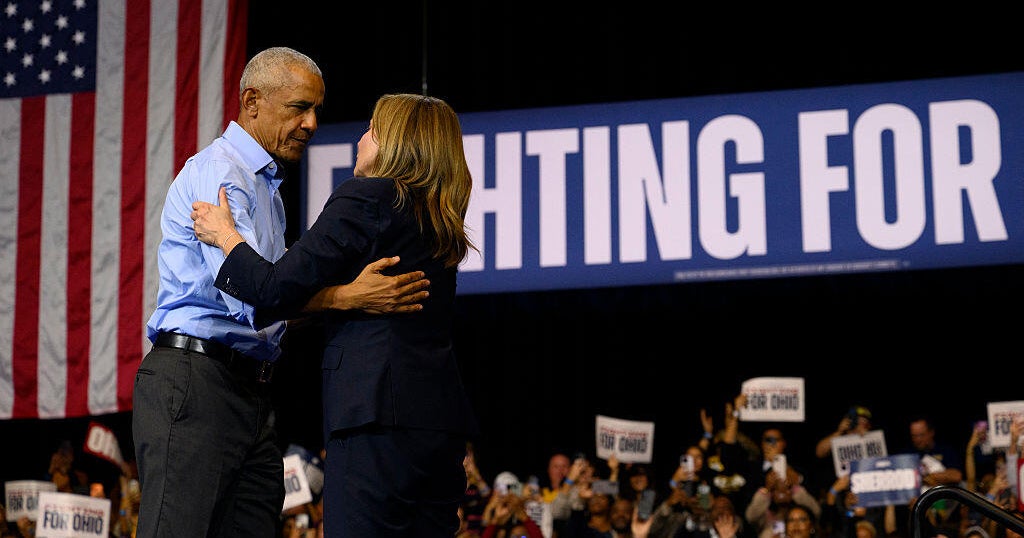
- The Lead: Former President Barack Obama publicly denounced an advertising campaign by Ohio gubernatorial candidate Vivek Ramaswamy.
- The Context: The ad targets Democratic rival Amy Acton and features her estranged mother, a tactic Obama described as "despicable."
- The Impact: The criticism amplifies national scrutiny on Ramaswamy's campaign strategy and potentially impacts GOP cohesion.
- What's Next: Watch for further reactions from Ramaswamy's campaign, national Republican figures, and potential shifts in voter perception.
In a powerful display of political intervention, former President Barack Obama took direct aim at Republican gubernatorial candidate Vivek Ramaswamy during a rally in Ohio, vehemently condemning a controversial advertising campaign that has ignited a firestorm.
The ad, which features the estranged mother of Democratic rival Amy Acton, has drawn sharp criticism not only from Obama but also from various political observers, pushing the boundaries of acceptable campaign discourse and forcing a national conversation about ethical boundaries in politics.
Obama's Denunciation: The Ad and the Outrage
Former President Barack Obama did not mince words at a campaign rally in Ohio, directly confronting Vivek Ramaswamy over a recent advertisement that critics say exploits a personal family matter. The ad, which prominently features the mother of Democratic candidate Amy Acton, has been widely criticized as a desperate and ethically questionable tactic. Obama called the ad "despicable" and a sign of what he characterized as a troubling trend in modern political campaigning, urging voters to reject such methods.
The former President's intervention is significant, injecting a high-profile voice into what might otherwise have been a state-level contest. His remarks were delivered with the authority of his office, aiming to frame the controversy not just as a political skirmish but as a moral indictment of the campaign's approach. The rally, intended to galvanize support for Democratic candidates, became a platform for Obama to articulate his concerns about the erosion of civility in public life.
Obama's Specific Criticisms
Obama elaborated on his dissatisfaction, suggesting that the ad represented a descent into personal attacks rather than a focus on substantive issues. He highlighted the potential for such tactics to damage not only the targeted individual but also the broader political discourse, making it harder to engage in constructive debate.
“This isn't just a disagreement over policy; it's a fundamental question about the character of our politics and the values we uphold.”
Ramaswamy's Defense: Doubling Down on Tactics
Despite the strong condemnation from a former President, Vivek Ramaswamy and his campaign have shown no signs of retracting the controversial advertisement. Instead, they appear to be doubling down, framing the criticism as an attempt to silence legitimate scrutiny and deflect from Acton's perceived weaknesses. Ramaswamy's team has argued that the ad raises valid questions about Acton's past and her fitness for office, asserting their right to present information they deem relevant to voters.
Ramaswamy himself has responded to the backlash by portraying it as a predictable reaction from the political establishment that fears his unconventional approach. He has suggested that opponents are uncomfortable with his willingness to challenge norms and expose what he describes as the hypocrisy of his rivals. This defensive posture aims to rally his base and portray him as an outsider fighting against a rigged system, a narrative that has proven effective for some candidates.
Campaign Justification
The Ramaswamy campaign's strategy seems to be rooted in the belief that controversy can generate attention and energize supporters who are disillusioned with traditional politics. By refusing to back down, they aim to project an image of strength and conviction, even in the face of widespread criticism.
The Broader GOP Landscape: Internal Divisions Emerge
The controversy surrounding the Ramaswamy ad has also exposed potential fault lines within the Republican party. While some in the GOP may privately agree with Obama's assessment of the ad's tactics, public silence or tacit support for Ramaswamy indicates a complex dynamic. The candidate, who has positioned himself as a conservative outsider, is testing the party's willingness to embrace aggressive, unconventional campaign strategies.
This incident raises questions about whether the Republican party will coalesce around Ramaswamy or distance itself from tactics that could alienate moderate voters or draw negative national attention. The involvement of a figure like Obama, who has historically been a powerful voice against divisive rhetoric, forces the party to confront the implications of such strategies on a larger stage. The fallout could influence not only the Ohio gubernatorial race but also the broader direction of Republican campaigning nationally.
National Implications
Political strategists are watching closely to see how this plays out, as it could set a precedent for future campaigns. The effectiveness of Ramaswamy's approach, and the party's response to it, will be a key indicator of evolving campaign norms.

Ethical Lines and Political Strategy: The Core Debate
At the heart of this dispute lies a fundamental debate about where to draw the line between legitimate political campaigning and exploitative personal attacks. Critics argue that the Ramaswamy ad crosses an ethical boundary by involving a family member who is not a public figure and who has a strained relationship with the candidate. They contend that such tactics are designed to inflict maximum emotional damage, overshadowing any policy-related arguments.
Conversely, Ramaswamy's campaign suggests that all information relevant to a candidate's character and background is fair game. They may argue that the family dynamic is indeed relevant to understanding Acton's decision-making or broader personal history. This perspective frames the controversy as a matter of voter information rather than ethical transgression, a common defense for controversial campaign tactics that seek to define an opponent negatively.
The Role of Personal History
The tension between leveraging personal history for political gain and respecting individual privacy is a perennial challenge in politics. This case, however, brings that tension into sharp relief due to the specific nature of the ad and the high-profile intervention by former President Obama.
Looking Ahead: What This Means for Ohio and Beyond
The immediate future will likely see continued back-and-forth between the campaigns, with both sides seeking to capitalize on the controversy. Ramaswamy will aim to maintain momentum and energize his supporters, while Acton and her allies, bolstered by Obama's endorsement, will work to paint Ramaswamy as unfit for office. The extent to which this national spotlight impacts Ohio voters' perceptions remains to be seen.
Beyond Ohio, this incident serves as a potent reminder of the escalating stakes in political discourse. The involvement of figures like Obama signals that certain campaign tactics can trigger broader national commentary and potentially influence voter turnout and sentiment across the country. The outcome of this particular spat could offer insights into the evolving landscape of political strategy and the enduring power of presidential endorsements.
Key Milestones to Watch
Voters in Ohio will be closely watching how this narrative develops in the coming weeks, as election day approaches. The campaign's ability to pivot from personal attacks back to substantive policy debates, or to continue this aggressive line of attack, will be crucial.
🎯 The Bottom Line
The Bottom Line: The Obama-Ramaswamy clash over a controversial ad has elevated a state-level race into a national referendum on campaign ethics, highlighting deep divisions within the political landscape and the enduring influence of former presidents in shaping public opinion.
As the election cycle progresses, the tactics employed in Ohio will undoubtedly be scrutinized, offering a preview of the broader political battles to come. We will continue to monitor these developments closely here at The Azeem USA Briefing.
Stay informed and ahead of the curve. Subscribe to The Azeem USA Briefing for daily insights and analysis.
📬 Reader Q&A: Key Questions Answered
Q: What was the controversial ad about?
The ad featured the estranged mother of Democratic gubernatorial candidate Amy Acton, attacking Acton's qualifications.
Q: Why did Barack Obama intervene?
Obama publicly condemned the ad during a rally in Ohio, calling it 'despicable' and criticizing the personal nature of the attack.
Q: How has Vivek Ramaswamy responded?
Ramaswamy has doubled down on the ad, defending its use and framing the criticism as an attempt to silence him.
Q: What are the broader implications for the GOP?
The incident highlights potential internal divisions within the Republican party regarding acceptable campaign tactics and the balance between appealing to a base and reaching moderate voters.
Q: What should voters watch for next?
Voters should watch how both campaigns handle the fallout, whether the ad's controversy impacts voter sentiment in Ohio, and if similar tactics appear in other races.
Comments
Post a Comment