
A commentator's reference to a local tragedy during ESPN's College GameDay broadcast ignites debate on campus safety and media responsibility.
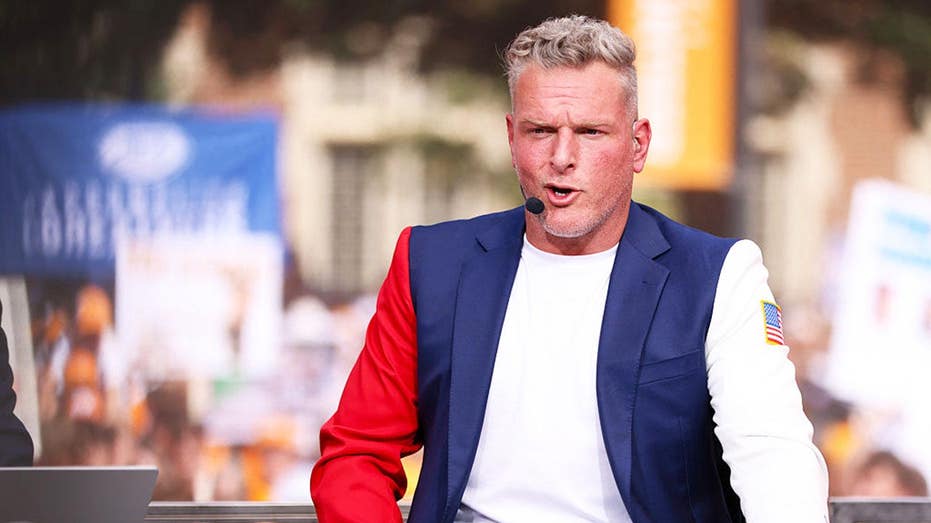
- The Lead: ESPN commentator Pat McAfee referenced the fatal shooting of Charlie Kirk, which occurred approximately 40 miles away, in a segment leading up to the University of Utah's football game.
- The Context: McAfee's comments were made in response to an Instagram video posted by the University of Utah that he deemed insensitive, given the recent proximity of the Kirk shooting.
- The Impact: The remarks have drawn criticism from various quarters, with some calling them inappropriate and insensitive, while others defend McAfee's intent to highlight safety concerns.
- What's Next: The incident is expected to fuel ongoing discussions about how public figures and institutions navigate sensitive local events and their broader implications.
The normally festive atmosphere surrounding ESPN's "College GameDay" on the University of Utah campus took an unexpectedly somber turn this past Saturday, as commentator Pat McAfee invoked the recent, tragic killing of Charlie Kirk in a segment that has since ignited widespread debate and criticism.
McAfee's reference to the fatal shooting, which occurred roughly 40 miles from the Salt Lake City campus, came in response to an Instagram video posted by the university. His comments have since drawn sharp reactions, raising questions about the appropriateness of such remarks on a national sports broadcast and the broader implications for public discourse surrounding sensitive local events.
The Controversy Unfolds: McAfee's Remarks and Utah's Response
The incident began when Pat McAfee, a prominent personality on ESPN's "College GameDay," expressed his discomfort with an Instagram video shared by the University of Utah. He specifically mentioned the recent killing of Charlie Kirk, a local incident that had sent ripples of concern through the community. McAfee stated on air that the university's video made him feel "uncomfortable" given the proximity of the shooting.
His remarks, delivered live to millions of viewers, immediately drew attention. While McAfee did not explicitly condemn the university's video, his linkage of it to the shooting was perceived by many as a pointed critique and a stark reminder of the tragedy. The university itself has not issued a formal statement directly addressing McAfee's comments, but the context of the interaction suggests a tense backdrop to the broadcast.
McAfee's Stance on Campus Safety
McAfee, known for his candid and often provocative style, appeared to be using the platform to highlight what he perceived as a disconnect between the celebratory nature of the broadcast and the recent loss of life in the wider community. His commentary suggested a broader concern for how public institutions handle sensitive events while simultaneously engaging in public-facing activities.
“The intersection of sports broadcasting, campus life, and real-world tragedy has rarely been more starkly illustrated than in the wake of Pat McAfee's remarks.”
A Tense Background: The Charlie Kirk Shooting and its Aftermath
The Charlie Kirk shooting, which McAfee referenced, occurred in the vicinity of the University of Utah, casting a pall over the region. While the details of the incident and its direct connection to the university's social media content remain a point of discussion, the event itself represents a significant local tragedy that has understandably affected the community.
The timing of McAfee's remarks, so soon after the shooting, amplified the impact. The geographical proximity meant that the event was likely fresh in the minds of many students, faculty, and residents. This context is crucial to understanding why McAfee's comments, however intended, landed with such force and generated significant debate about appropriateness and sensitivity.
Community Impact and Media Scrutiny
Local news outlets and community leaders have grappled with the aftermath of the shooting, focusing on public safety and support for those affected. The intrusion of a national sports broadcast into this sensitive period, through McAfee's commentary, brought the tragedy into a different kind of public forum, one often characterized by less nuanced discussion.
Echoes and Reactions: How Officials and the Public are Responding
The fallout from McAfee's comments has been swift and varied across social media and sports commentary circles. Critics have accused McAfee of being insensitive himself, arguing that he used a local tragedy to create drama on his show and unfairly targeted the university's outreach efforts. Some pointed out the 40-mile distance as a factor, questioning the direct relevance to the campus environment itself.
Conversely, supporters of McAfee have defended his right to express his observations and highlighted his intention to draw attention to safety concerns. They argue that public figures have a responsibility to acknowledge prevailing community sentiments, and that ignoring such events, even when hosting a sports show, can appear tone-deaf. The debate has effectively split opinions, reflecting differing views on the role of sports media in addressing societal issues.
University's Position (Implied)
While the University of Utah has not issued a direct rebuttal to McAfee's specific claims, the context of the Instagram video likely involved standard promotional content. The implicit response from the university, by not immediately engaging in a public spat, may suggest an attempt to de-escalate the situation or focus on its own communication priorities.

Navigating Sensitivity: Media Responsibility vs. Freedom of Speech
This controversy brings to the forefront the ongoing tension between the broad freedoms afforded to media personalities and the ethical considerations that should guide their commentary, especially when dealing with sensitive local events. Pat McAfee, like many modern broadcasters, operates in an environment where personal brands are intertwined with their on-air personas, leading to a blurring of lines.
The challenge for networks like ESPN is to balance allowing commentators the latitude to express themselves authentically with ensuring that their remarks do not cause undue harm or disrespect to victims of tragedy or affected communities. The distance of the Kirk shooting from the university campus further complicates the narrative, prompting questions about where the boundaries of relevance lie in public commentary.
The Role of Context in Public Discourse
Analysts suggest that the incident highlights the critical importance of context and nuance in public discourse. While McAfee's intent might have been to raise awareness or express solidarity, the execution led to a situation where his words were interpreted as critical and potentially disrespectful. This underscores the difficulty of navigating complex social issues on live, national television.
Looking Ahead: What This Means for College GameDay and Beyond
The "College GameDay" broadcast, a cornerstone of college football Saturdays, now finds itself associated with this controversy. It raises questions about future editorial oversight and the potential for similar incidents to arise when broadcasts are held in locations experiencing heightened local sensitivities.
Moving forward, the incident serves as a case study for how sports media entities and commentators should approach the intersection of entertainment and real-world events. The expectation will likely be for increased awareness and careful consideration of any remarks that could be perceived as insensitive or exploitative of local tragedies, regardless of the commentator's intent.
Future Broadcasts and Community Engagement
The long-term impact on "College GameDay" and Pat McAfee's role within it remains to be seen. However, the controversy has undoubtedly placed a spotlight on the need for greater sensitivity and a more profound understanding of the communities in which these high-profile broadcasts take place. The dialogue initiated by McAfee's comments, though contentious, may ultimately lead to more thoughtful engagement with local issues during national sports events.
🎯 The Bottom Line
The Bottom Line: Pat McAfee's invocation of the Charlie Kirk shooting during ESPN's "College GameDay" at the University of Utah has sparked a necessary but uncomfortable conversation about media responsibility, community sensitivity, and the amplification of local tragedies on a national stage.
This incident serves as a potent reminder that even in the realm of sports entertainment, the lines between public commentary and community impact are increasingly blurred. As broadcasts continue to engage with diverse locales, the imperative for commentators and networks to navigate these sensitive intersections with care and precision will only grow.
Stay informed with The Azeem USA Briefing. Subscribe today for comprehensive news analysis.
📬 Reader Q&A: Key Questions Answered
Q: Who is Charlie Kirk and what happened?
Charlie Kirk was a local individual who was recently killed in a shooting incident approximately 40 miles from the University of Utah campus. The details surrounding the event and its connection to any specific university activities are part of the ongoing local discussion.
Q: What exactly did Pat McAfee say?
Pat McAfee stated on ESPN's 'College GameDay' that he felt 'uncomfortable' with an Instagram video posted by the University of Utah, referencing the recent shooting of Charlie Kirk as the reason for his discomfort.
Q: Why did McAfee's comments cause controversy?
The controversy stems from McAfee's decision to link a local tragedy to a university's social media post during a national sports broadcast, leading to accusations of insensitivity from some and defense of his commentary from others.
Q: What was the University of Utah's response?
The University of Utah has not issued a formal public statement specifically addressing Pat McAfee's comments regarding the Charlie Kirk shooting.
Q: What is 'College GameDay'?
'College GameDay' is a popular weekly preview show produced by ESPN that covers college football, often broadcasting live from the site of major games, generating significant viewership and discussion.
Comments
Post a Comment