
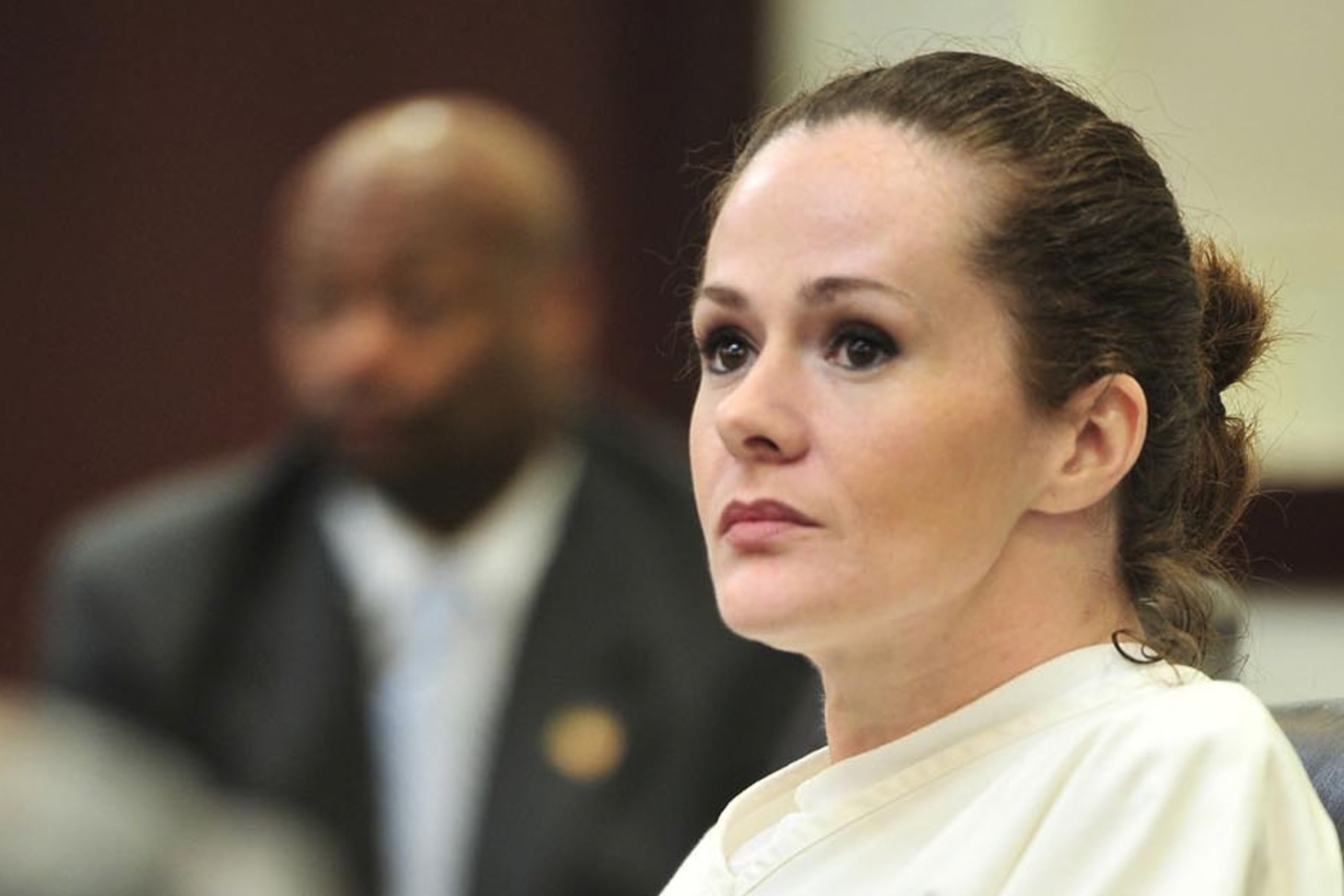
The pursuit of justice is a cornerstone of any civilized society, a promise that the scales will eventually balance for those who have suffered unimaginable loss. However, recent events surrounding the attempted execution of Christa Pike have cast a long shadow over this fundamental principle, leaving victims' families in a state of profound disillusionment. This incident is not merely a procedural failure; it is a deeply emotional ordeal that forces a re-examination of the death penalty and the state's role in delivering closure.
At Azeem USA, we delve into the heart-wrenching account of May Martinez, the mother of Colleen Slemmer, the victim of Christa Pike. Her raw declaration, 'I didn't get justice for my daughter,' resonates with a pain that transcends the legal proceedings, highlighting the human cost of a flawed justice system. This post will explore the details of the failed execution, the profound impact on the victim's family, and the critical questions it raises about capital punishment in America.
📑 Table of Contents
1. The Heinous Crime and its Aftermath
In 1995, the brutal murder of Colleen Slemmer sent shockwaves through the community. Christa Pike, along with accomplices, committed a crime of extreme violence that resulted in Slemmer's death. Pike was subsequently convicted and sentenced to death, becoming the only woman on death row in Tennessee. The case has long been a symbol of the state's application of capital punishment, and the eventual execution date was anticipated with a complex mix of emotions for all involved. The passage of time, however, does not diminish the gravity of the original offense or the enduring pain of the victim's loved ones.
For May Martinez, the mother of Colleen Slemmer, the journey toward closure has been an agonizingly long one, marked by decades of waiting. The anticipation of an execution date, while fraught with the specter of state-sanctioned death, also represented a potential, albeit grim, finality. It was a point where the legal process, however imperfect, was meant to reach its intended conclusion, offering a form of justice for a life tragically cut short. The finality of a sentence, when carried out, can provide a sense of resolution, allowing families to begin the long process of healing.
The Slemmer Family's Long Wait
The Slemmer family endured years of appeals and legal maneuvering, a common reality in death penalty cases. Each step in the legal process brought renewed hope or despair, prolonging their wait for what they perceived as justice. The emotional toll of such protracted legal battles cannot be overstated, as it keeps the wound perpetually open.
2. The Failed Execution: A State's Incompetence?
The recent attempt to execute Christa Pike by lethal injection took a dramatic and disturbing turn when the procedure failed. Reports indicate that Pike survived the initial administration of the lethal drug, leading to the procedure being halted. This unprecedented event immediately thrust Tennessee's execution protocols under intense scrutiny. The state's department of correction later confirmed that Pike was receiving life-saving medical treatment following the failed attempt, highlighting the severity of the situation and the immediate consequences of the botched procedure.
The failure of an execution is not merely a technical glitch; it is a profound indictment of the systems and individuals responsible for carrying out such a solemn and irreversible act. Questions immediately arise about the training of personnel, the quality of the drugs used, and the overall oversight of the process. When an execution fails, it not only raises ethical concerns about the use of the death penalty but also practical and procedural ones about the state's capacity to perform its most critical duty without error or unnecessary suffering.
Technical Difficulties and Ethical Dilemmas
The specifics of why the lethal injection failed remain a subject of investigation and public debate. However, the outcome is undeniable: the intended execution did not occur, and the condemned prisoner required medical intervention. This situation presents a complex ethical quandary, forcing a re-evaluation of whether the state can ethically proceed with a subsequent attempt, given the demonstrated failures in the initial one.
3. A Mother's Anguish: The True Cost of Failure

For May Martinez, the news of the failed execution was not a moment of relief, but one of profound disappointment and renewed pain. She had traveled to Nashville, anticipating the finality of the execution, only to be met with the reality that justice, in her eyes, had once again been denied. Her words, 'I didn't get justice for my daughter,' spoken to the Associated Press, encapsulate the deep emotional wound that this failed procedure has reopened. The state's inability to carry out the sentence as intended has, for her, effectively stripped away the closure she had long sought.
Martinez’s sentiment underscores a critical point: the justice system is not an abstract entity; it is a human construct with profound emotional consequences for those directly affected. When the system falters, it is the victims' families who bear the brunt of that failure, their grief compounded by the perceived incompetence or inability of the state to fulfill its promise. The pursuit of justice, for them, is intrinsically linked to the finality of the punishment, and any deviation from that path is experienced as a personal affront and a deepening of their suffering.
The Erosion of Trust
This incident can erode the trust that victims' families place in the judicial and penal systems. When the state cannot even perform a death sentence without mishap, it raises doubts about its competence in all aspects of its responsibilities, particularly those that directly impact the emotional well-being of those who have suffered loss.
4. Broader Implications for Capital Punishment
The failed execution of Christa Pike is not an isolated incident; it adds to a growing body of evidence suggesting systemic issues within the administration of capital punishment in the United States. Botched executions, challenges with drug procurement, and lengthy appeals have consistently plagued the death penalty system, leading to debates about its efficacy, morality, and practicality. This event serves as a stark reminder of the inherent risks and complexities involved in state-sanctioned killing.
Critics of the death penalty have long pointed to these failures as evidence that capital punishment is a cruel and unusual punishment, incompatible with modern standards of justice and human rights. The possibility of executing an innocent person, the disproportionate application based on race and socioeconomic status, and the immense psychological toll on all involved—including prison staff—are frequently cited concerns. A failed execution, especially one that requires medical intervention for the condemned, only amplifies these ethical objections.
The Constitutionality Question
The Eighth Amendment of the U.S. Constitution prohibits cruel and unusual punishments. Arguments have been made that the uncertainty and potential for extreme suffering inherent in lethal injection, particularly when procedures go awry, could constitute a violation of this amendment. The Pike case is likely to fuel further legal challenges on these grounds.
5. Moving Forward: Reforming a Broken System
The reverberations of this failed execution extend far beyond the prison walls. It compels a national conversation about the future of capital punishment and the broader pursuit of justice. States that still employ the death penalty must confront the systemic failures that have been laid bare. This might involve a thorough review and overhaul of execution protocols, increased transparency, and a commitment to ensuring that any future attempts are carried out humanely and without the possibility of such profound error.
Ultimately, the goal of the justice system should be to provide a sense of resolution and fairness to victims and their families, while upholding the highest ethical standards. The experience of May Martinez highlights the urgent need for the system to function reliably and with compassion. Whether this means reforming capital punishment to an unassailable standard or reconsidering its use altogether, the path forward must prioritize accountability, humanity, and the genuine delivery of justice, not just for the state, but for every individual impacted by crime.
The Need for Transparency and Accountability
Moving forward, there must be an unwavering commitment to transparency in the execution process. Independent oversight and rigorous accountability mechanisms are essential to prevent future failures and to restore faith in the justice system for victims' families like the Slemmer's.
🔥 Share your thoughts on the justice system and capital punishment in the comments below.
Conclusion
The failed execution of Christa Pike and the subsequent anguish of May Martinez serve as a critical juncture in the ongoing debate surrounding capital punishment. The quest for justice is a deeply personal and often fraught journey for victims' families, and when the state's ultimate act of retribution falters, it amplifies their pain and erodes faith in the system designed to bring them solace.
This event demands more than just a procedural review; it calls for a profound re-evaluation of whether the current application of the death penalty truly serves the interests of justice, or if it perpetuates a cycle of suffering and doubt. As we look ahead, the focus must remain on ensuring that any system of justice operates with the utmost integrity, transparency, and humanity, striving to offer genuine closure to those who have endured the deepest losses.
❓ FAQ
Who is Christa Pike?
Christa Pike is a woman convicted of murder in Tennessee and was on death row. She recently survived an attempted execution by lethal injection.
Who was Colleen Slemmer?
Colleen Slemmer was the victim of Christa Pike's crime in 1995. Her mother, May Martinez, has expressed her feelings of injustice following the failed execution.
Why did Christa Pike's execution fail?
The exact reasons for the failure of the lethal injection procedure are still under investigation, but reports indicate the prisoner survived the initial administration of the drugs and required medical treatment.
What does 'justice denied' mean in this context?
For Colleen Slemmer's mother, 'justice denied' refers to the belief that the failed execution prevented the finality of the sentence, which she saw as the completion of justice for her daughter's murder.
What are the broader implications of this event for the death penalty?
This failed execution raises significant questions about the reliability, ethicality, and constitutionality of capital punishment, particularly concerning lethal injection procedures and the potential for cruel and unusual punishment.
Comments
Post a Comment