
Violent unrest grips the nation, prompting stark warnings about the direction of French policy and its societal impact.
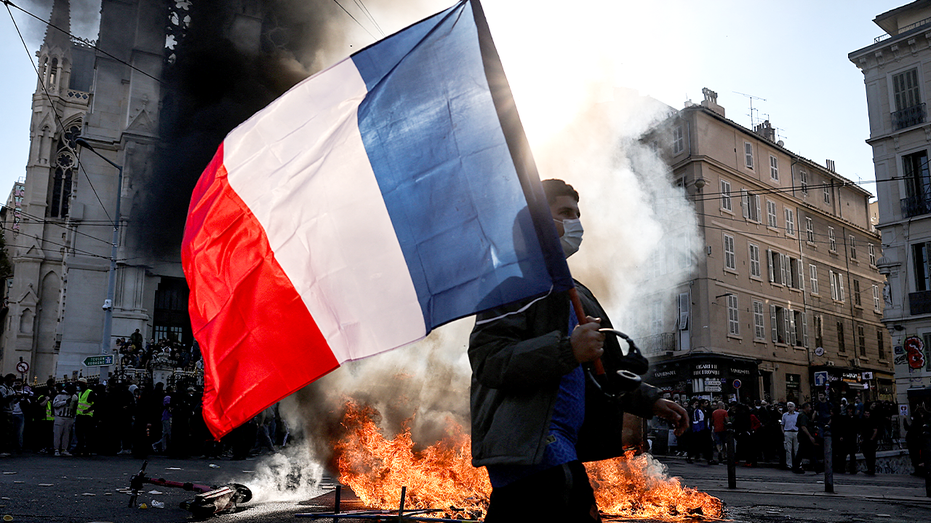
- The Lead: Violent riots, looting, and widespread chaos have erupted across France, triggered by the fatal police shooting of a teenager.
- The Context: French AI entrepreneur Brivael Le Pogam has linked the unrest to the country's socialist policies, calling it the 'dead end of socialism'.
- The Impact: The nation faces significant disruption, damage to property, and a deepening political and social divide.
- What's Next: Authorities are working to restore order while political leaders grapple with the underlying causes of the unrest and public anger.
A wave of 'purely chaotic' riots, marked by looting and widespread destruction, has engulfed France, leaving cities scarred and a nation grappling with profound questions about its future. The unrest, which began in the Paris suburbs following the fatal police shooting of a teenager, Nahel Merzouk, has since spread with alarming speed, forcing a national reckoning with issues of race, policing, and social inequality.
Amidst the unfolding crisis, prominent voices from the business community are drawing sharp ideological lines. French AI entrepreneur Brivael Le Pogam has issued a dire warning, asserting that the current turmoil demonstrates France has reached the "dead end of socialism." This briefing delves into the immediate events, the historical context, the ensuing reactions, and the critical debates sparked by this volatile situation.
France Gripped by Unrest: What We Know So Far
The visual landscape across France has been one of chaos and destruction. From the banlieues of Paris to cities like Marseille, Lyon, and Lille, scenes of burning cars, ransacked shops, and clashes with law enforcement have dominated headlines. The immediate catalyst was the shooting of 17-year-old Nahel Merzouk by police during a traffic stop on June 27th. His death ignited long-simmering frustrations among marginalized communities, particularly those of North African descent, who often feel targeted by authorities and excluded from mainstream French society.
Authorities have responded with a significant deployment of police and gendarmerie, attempting to regain control and quell the violence. The scale of the response underscores the severity of the situation, with thousands of arrests reported. While the immediate focus remains on restoring public order, the underlying grievances driving these protests are complex and deeply rooted, pointing to systemic issues that extend far beyond a single tragic incident.
The Spark and the Spread
The initial protests were largely concentrated in working-class suburbs, but the intensity and nature of the violence quickly escalated. Looting became rampant, with stores, including luxury retailers and supermarkets, being targeted. The rapid spread of the unrest has been attributed, in part, to social media, which has facilitated coordination and amplified the sense of collective grievance.
“These purely chaotic events prove that France has reached the dead end of socialism.”
The Roots of Rage: How France Arrived Here
The current crisis did not emerge in a vacuum. France has a history of social unrest, often linked to issues of integration, economic disparity, and policing practices. Decades of policies aimed at social inclusion have, for some critics, inadvertently fostered dependency and failed to create genuine economic opportunity in disadvantaged areas. The concept of 'laïcité,' while intended to ensure secularism, is also seen by some as contributing to a sense of alienation among minority groups.
The economic model, heavily influenced by state intervention and social welfare programs, has long been a subject of debate. While providing a safety net, critics argue that it can stifle innovation, create rigid labor markets, and foster a culture where state support is prioritized over individual enterprise. This backdrop of persistent social challenges and ongoing ideological debates about the role of the state provides fertile ground for the kind of explosive discontent now on display.
A History of Discontent
Previous waves of unrest, such as those in 2005 and 2018, also exposed deep fractures within French society. These events often followed incidents involving police or perceived injustices, revealing persistent issues of discrimination and marginalization in urban peripheries. The recurring nature of such uprisings signals a failure to address fundamental structural problems effectively.
Reactions & Fallout: Cities Under Siege
The immediate aftermath of the riots has been marked by widespread damage and economic disruption. Businesses have suffered significant losses, with many storefronts boarded up or destroyed. The emotional toll on communities, particularly those directly affected by the violence and looting, is profound. Public spaces have been damaged, and the sense of security in affected areas has been severely compromised.
Politicians have been quick to react, though their responses have often reflected existing ideological divides. President Emmanuel Macron's government has condemned the violence and vowed to restore order, while also acknowledging the need to address underlying issues. Critics, however, have accused the government of being too slow to act or of failing to implement effective long-term solutions. The business community, represented by figures like Brivael Le Pogam, has been particularly vocal, using the crisis to underscore their long-held criticisms of French economic policy.
Economic and Social Scars
The economic impact extends beyond immediate property damage. The perception of instability could deter foreign investment and tourism, further impacting France's economic outlook. Socially, the events have exacerbated divisions, hardening attitudes and potentially making reconciliation more difficult. The narrative of 'dead end socialism' presented by some business leaders adds a potent ideological layer to these already complex dynamics.

Clashing Ideologies: Socialism Under Fire
The assertion by Brivael Le Pogam that France has reached the "dead end of socialism" encapsulates a significant critique leveled against the nation's governance and economic framework. This perspective argues that extensive state intervention, high taxes, and a comprehensive welfare system, while well-intentioned, ultimately stifle individual initiative, create economic stagnation, and foster a dependency culture. The argument suggests that the current social contract, built on socialist principles, is no longer sustainable or conducive to prosperity and social cohesion.
Conversely, proponents of France's model emphasize the importance of social solidarity, the reduction of inequality, and the provision of essential public services. They contend that the riots are not a product of socialism, but rather of persistent social inequalities, systemic racism, and inadequate policing, which have been exacerbated by austerity measures and a weakening of social programs. This viewpoint calls for strengthening, not dismantling, the social safety net and investing further in community programs and equitable development.
The State's Role in Society
The debate highlights a fundamental tension in modern governance: the balance between individual liberty and collective responsibility, and the appropriate scope of state intervention in the economy and social life. The current unrest forces a re-examination of whether France's long-standing commitment to a robust social model is adequate to address the challenges of the 21st century, or if a significant ideological recalibration is indeed required.
Looking Ahead: The Path to Stability
Restoring order is the immediate priority for the French government. This involves not only a strong law enforcement presence but also efforts to de-escalate tensions and engage with community leaders. The long-term challenge, however, lies in addressing the deep-seated issues that fuel such recurring unrest. This will likely require a multi-faceted approach, encompassing reforms in policing, education, economic development in disadvantaged areas, and potentially a re-evaluation of social policies.
The political ramifications of these riots are significant. The government faces pressure to demonstrate effective leadership and to implement policies that can bridge societal divides and foster greater opportunity. Opposition parties will likely use the events to criticize the government's handling of social and economic issues. The debate ignited by figures like Le Pogam suggests that the ideological underpinnings of French policy may be increasingly scrutinized, potentially leading to calls for substantial economic and social reforms.
Signals to Watch
Key indicators to monitor in the coming weeks and months will include the sustained presence of law enforcement, the success of community outreach efforts, any legislative proposals aimed at addressing root causes, and shifts in public opinion regarding the direction of French policy. The international perception of France's stability and its economic model will also be a critical factor.
The Bottom Line
The 'purely chaotic' riots sweeping France are more than just isolated acts of violence; they represent a critical juncture where deep-seated social grievances, amplified by economic anxieties and ideological rifts, have erupted into national crisis. The stark accusation from a prominent tech CEO that these events signal the 'dead end of socialism' frames the conflict as a referendum on France's foundational socio-economic model, forcing a national conversation about the efficacy of state intervention versus market-driven solutions in addressing inequality and social cohesion.
As France works to restore order and reckon with the immediate damage, the enduring challenge will be to address the systemic issues that have festered for years. Whether this crisis precipitates genuine reform or merely a temporary return to a fragile status quo will depend on the government's ability to implement policies that foster inclusive growth and rebuild trust across fractured communities. The coming weeks and months will be crucial in determining whether France can chart a more stable and equitable path forward.
🎯 The Bottom Line
The events in France serve as a potent reminder that societal stability is intrinsically linked to economic opportunity and a sense of shared belonging. The debate over socialism versus alternative economic models is now at the forefront, demanding thoughtful solutions that can address both immediate security concerns and the long-term aspirations of all French citizens.
Thank you for joining us for The Azeem USA Briefing. Stay informed, stay engaged.
Subscribe to The Azeem USA Briefing for daily insights into the stories shaping our world.
📬 Reader Q&A: Key Questions Answered
Q: What triggered the recent riots in France?
The riots were primarily triggered by the fatal police shooting of 17-year-old Nahel Merzouk during a traffic stop on June 27th, sparking long-standing anger over police conduct and racial inequality.
Q: What is the 'dead end of socialism' argument?
This argument, made by figures like AI entrepreneur Brivael Le Pogam, suggests that France's extensive state intervention, high taxes, and welfare programs have led to economic stagnation and a lack of individual initiative, proving unsustainable.
Q: How have authorities responded to the unrest?
French authorities have deployed thousands of police and gendarmes to restore order, leading to numerous arrests and attempts to quell looting and destruction.
Q: What is the historical context for these riots?
France has experienced similar waves of unrest in previous years (e.g., 2005, 2018), often linked to issues of social inequality, discrimination, and policing in marginalized urban communities.
Q: What are the potential long-term consequences?
The riots could lead to significant political and economic policy debates, potentially influencing France's economic model, social contract, and international image, alongside immediate efforts to rebuild and address underlying grievances.
Comments
Post a Comment