House Control at Stake: Democrats vs. Republicans' Path to Power 🚨 Breaking News Analysis 📸 Image Credit: yahoo.com By Azeem-USA · Mon Oct 12 2026 English (en-US) With less than a month until the 2026 midterm elections, the fight for control of the U.S. House of Representatives has reached its critical phase. Every district, every vote, now carries immense weight as Democrats and Republicans make their final appeals to the electorate. This analysis dissects the specific conditions and strategies each party must employ to secure or maintain their grip on the chamber, examining the electoral map, key demographic shifts, and the overarching political climate that will shape the outcome. 📑 Table of Contents The Crucial November Vote Democratic Pathways to Power Republican Fortresses and Vulnerabilities The Presidential Influence Factor What Happens Next: The Road Ahead FAQ #Azeem_USA #Breakingnews #Azeem_USA #Breakingnews 1. The Crucial N...

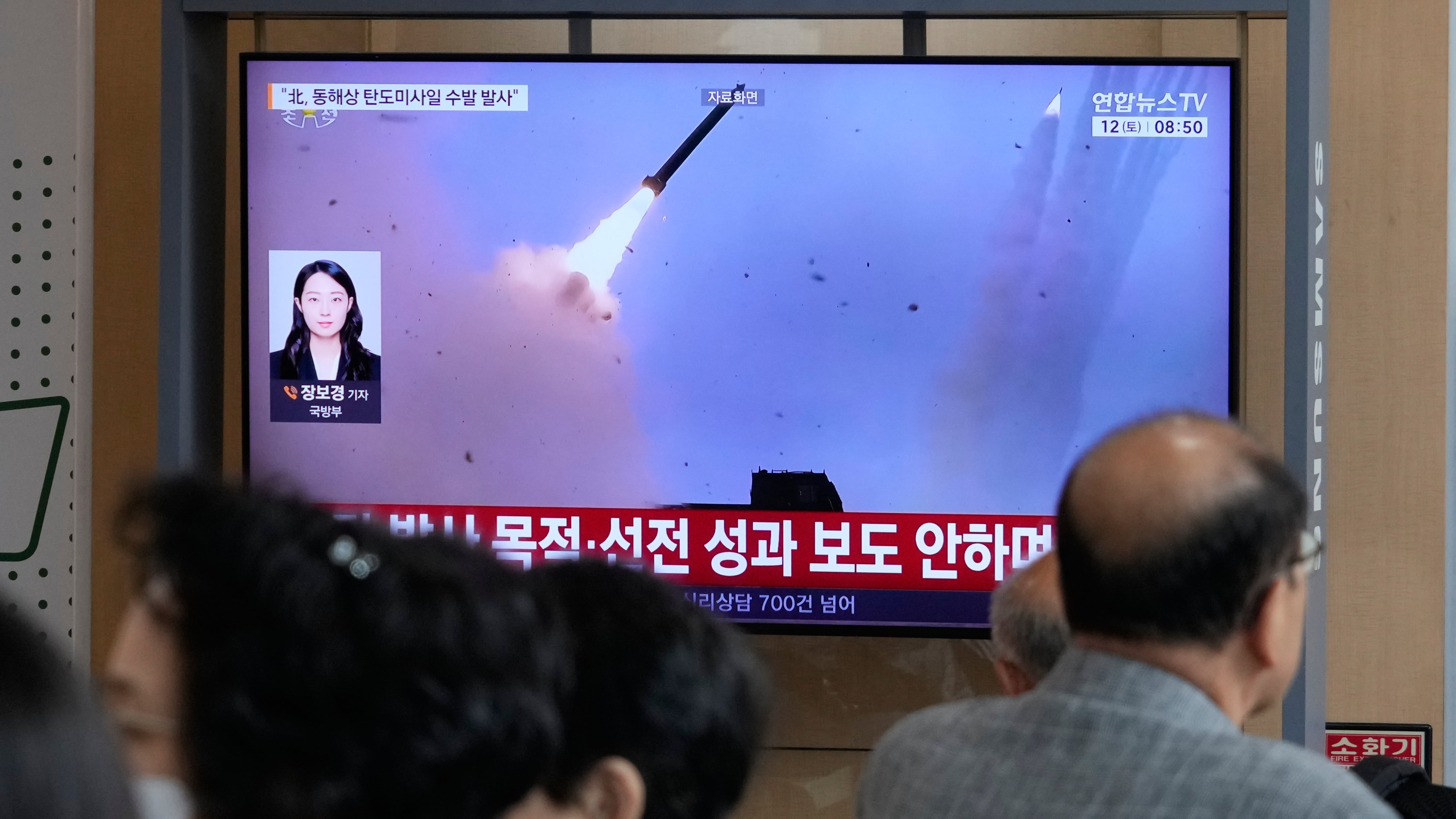
The Korean Peninsula is once again on edge as North Korea conducted a rapid succession of missile launches, firing two projectiles within hours of each other. This latest military demonstration, occurring on a Sunday, has amplified existing concerns about regional security and the volatile geopolitical landscape.
At Azeem USA, we delve into the details of these provocative tests, exploring the immediate context, the potential capabilities involved, and the far-reaching implications for international relations. Stay informed as we unpack the significance of North Korea's escalating actions.
📑 Table of Contents
1. Understanding the Latest Launches
On a single Sunday, North Korea demonstrated its missile prowess by launching two distinct projectiles off its eastern coast. The first launch, identified by South Korea's defense ministry as a short-range ballistic missile (SRBM), was detected in the afternoon, soaring toward the East Sea. This event alone would have been cause for concern, but just three hours later, Pyongyang conducted a second launch, firing an unidentified projectile.
The swiftness of these two launches is particularly noteworthy. It suggests a deliberate and perhaps rehearsed display of readiness and capability. The fact that the second launch followed so closely on the heels of the first raises questions about the operational tempo North Korea is capable of maintaining and its willingness to push the boundaries of established norms in the region.
Assessing the Initial Reports
South Korean and potentially U.S. intelligence agencies would have been working diligently to gather data on both launches, including trajectory, altitude, range, and the specific type of missile or projectile involved. The confirmation of the second launch as a ballistic missile would mark a significant escalation, indicating two consecutive ballistic missile tests in a short period.
2. The Context: Accusations and Drills
These latest launches did not occur in a vacuum. North Korea has been vocal in its criticism of the United States and its allies, particularly regarding ongoing military drills in the region. Pyongyang has frequently accused Washington of creating a tense atmosphere on the Korean Peninsula through these exercises, which it views as provocative and preparatory for invasion. The timing of these missile tests, coming days after such accusations, appears to be a direct response or a strategic maneuver to counter perceived threats.
The United States and South Korea routinely conduct joint military exercises to enhance their combined defense capabilities and readiness. While both nations assert these drills are defensive in nature, North Korea consistently interprets them as aggressive posturing. This cycle of accusation and counter-action has become a familiar pattern, but the recent rapid-fire missile launches add a new layer of urgency to the ongoing tensions.
North Korea's Strategic Messaging
Beyond the technical aspects of the launches, the political messaging is undeniable. By conducting these tests, North Korea is sending a clear signal to both regional powers and the international community. It underscores its continued development of missile technology and its determination to pursue its military objectives despite international sanctions and condemnation.
3. Analyzing the Missile Types and Capabilities

The classification of the launched projectiles is crucial for understanding their potential threat. The first missile was identified as a short-range ballistic missile (SRBM). SRBMs are designed to travel relatively short distances, typically under 1,000 kilometers, and can be launched from various platforms. Their primary threat lies in their ability to deliver conventional or potentially unconventional payloads rapidly to nearby targets.
The significance of the second launch hinges on its confirmation as a ballistic missile. If confirmed, it would indicate a deliberate effort by North Korea to test its ballistic missile capabilities twice in quick succession. Ballistic missiles are characterized by their trajectory, which involves ascending into space before re-entering the atmosphere to strike a target. The development and testing of ballistic missiles are particularly concerning due to their range and the potential for them to be armed with nuclear warheads, although North Korea has not conducted a nuclear test recently.
Implications of SRBM and Potential Ballistic Missile Tests
The testing of SRBMs, especially in rapid succession, highlights North Korea's efforts to diversify its missile arsenal and improve its tactical strike capabilities. If the second projectile was indeed a ballistic missile, it could represent tests of different types of ballistic missiles or variations thereof, aimed at improving accuracy, range, or evasion capabilities. This continuous development poses a direct challenge to the security of South Korea and Japan, as well as U.S. forces stationed in the region.
4. Regional and Global Ramifications
The immediate impact of North Korea's missile launches is felt most acutely by its neighbors. South Korea, which shares a heavily fortified border with the North, remains on high alert. Japan, also a close neighbor and a key U.S. ally, has expressed grave concern, as its territory could potentially be within range of certain North Korean missile systems. These launches invariably increase military readiness and heighten the risk of miscalculation or unintended escalation.
On a broader geopolitical scale, these tests serve as a stark reminder of the persistent security challenges posed by North Korea's nuclear and missile programs. They complicate diplomatic efforts aimed at denuclearization and peace on the Korean Peninsula. The international community, particularly the United Nations Security Council, faces renewed pressure to respond, though finding a unified and effective approach has historically been challenging due to differing interests among member states.
Impact on Diplomacy and Sanctions
North Korea's provocative actions often lead to increased international scrutiny and calls for stricter enforcement of existing sanctions. However, Pyongyang has shown remarkable resilience in the face of these measures, often using them as further justification for its military buildup. The current launches are likely to further entrench the stalemate in denuclearization talks, making a breakthrough in dialogue even more distant.
5. Looking Ahead: The Path to De-escalation?
The recent missile launches by North Korea present a critical juncture for regional stability. The immediate future will likely involve heightened military postures from South Korea, Japan, and the United States, coupled with strong condemnations from international bodies. The key question remains whether this cycle of provocation and response can be broken or if it will continue to escalate, leading to an even more precarious security environment.
Finding a sustainable path towards de-escalation requires a multi-faceted approach. This includes consistent communication channels, even amid tensions, to prevent misinterpretations. It also necessitates a re-evaluation of diplomatic strategies that can incentivize North Korea to return to dialogue while upholding international norms and security interests. The long-term goal of a denuclearized and peaceful Korean Peninsula remains elusive, demanding sustained international effort and a willingness to explore all avenues for constructive engagement.
The Role of International Cooperation
Effective management of the North Korean threat relies heavily on coordinated international efforts. This includes intelligence sharing, joint military preparedness, and a unified diplomatic front. While North Korea's actions pose a direct challenge, a measured and strategic response from the global community, prioritizing de-escalation and dialogue where possible, will be crucial in navigating these turbulent times.
🔥 Stay informed on critical global security developments by following Azeem USA.
Conclusion
North Korea's recent double missile launch within hours underscores the persistent and evolving security challenges on the Korean Peninsula. These actions, framed against a backdrop of accusations and military drills, highlight Pyongyang's continued commitment to advancing its missile capabilities and asserting its strategic position.
As tensions rise, the international community faces the critical task of managing this volatile situation. The path forward demands careful diplomacy, robust regional security cooperation, and a clear-eyed understanding of North Korea's motivations and capabilities. Azeem USA will continue to monitor these developments and provide insightful analysis on their global implications.
❓ FAQ
What did North Korea launch on Sunday?
North Korea launched two projectiles off its eastern coast. The first was identified as a short-range ballistic missile (SRBM), and the second was an unidentified projectile, which South Korea was working to confirm as a ballistic missile.
How soon after each other were the launches?
The two launches occurred within approximately three hours of each other.
What is the context behind these launches?
North Korea accused the U.S. of driving tensions through military drills, and these launches occurred days after those accusations, suggesting a response or strategic maneuver.
What are the potential implications of these launches?
The launches increase regional tensions, heighten military readiness in South Korea and Japan, and complicate diplomatic efforts for denuclearization and peace on the Korean Peninsula.
What is a short-range ballistic missile (SRBM)?
An SRBM is a missile designed for relatively short distances, typically under 1,000 kilometers, capable of delivering payloads quickly to nearby targets.
Comments
Post a Comment