2028 Presidential Race: Dems Eyeing a White House Bid 📸 Image Credit: newsmax.com By Azeem-USA · Wed Sep 23 2026 English (en-US) The political landscape is always evolving, and as the next presidential election cycle looms, whispers of potential candidacies for 2028 are growing louder. While the current administration focuses on immediate challenges, ambitious Democrats are strategically positioning themselves for a future White House bid. This post delves into the prominent figures within the Democratic Party who are reportedly exploring a run for the presidency in 2028. We will examine the early signals, strategic moves, and the potential pathways for leaders like Kamala Harris, Gavin Newsom, and Alexandria Ocasio-Cortez, offering an insightful look at the unfolding dynamics of the next presidential race. 📑 Table of Contents The Shifting Sands of Democratic Ambition Kamala Harris: Building Momentum Gavin Newsom: California's Influence Alex...

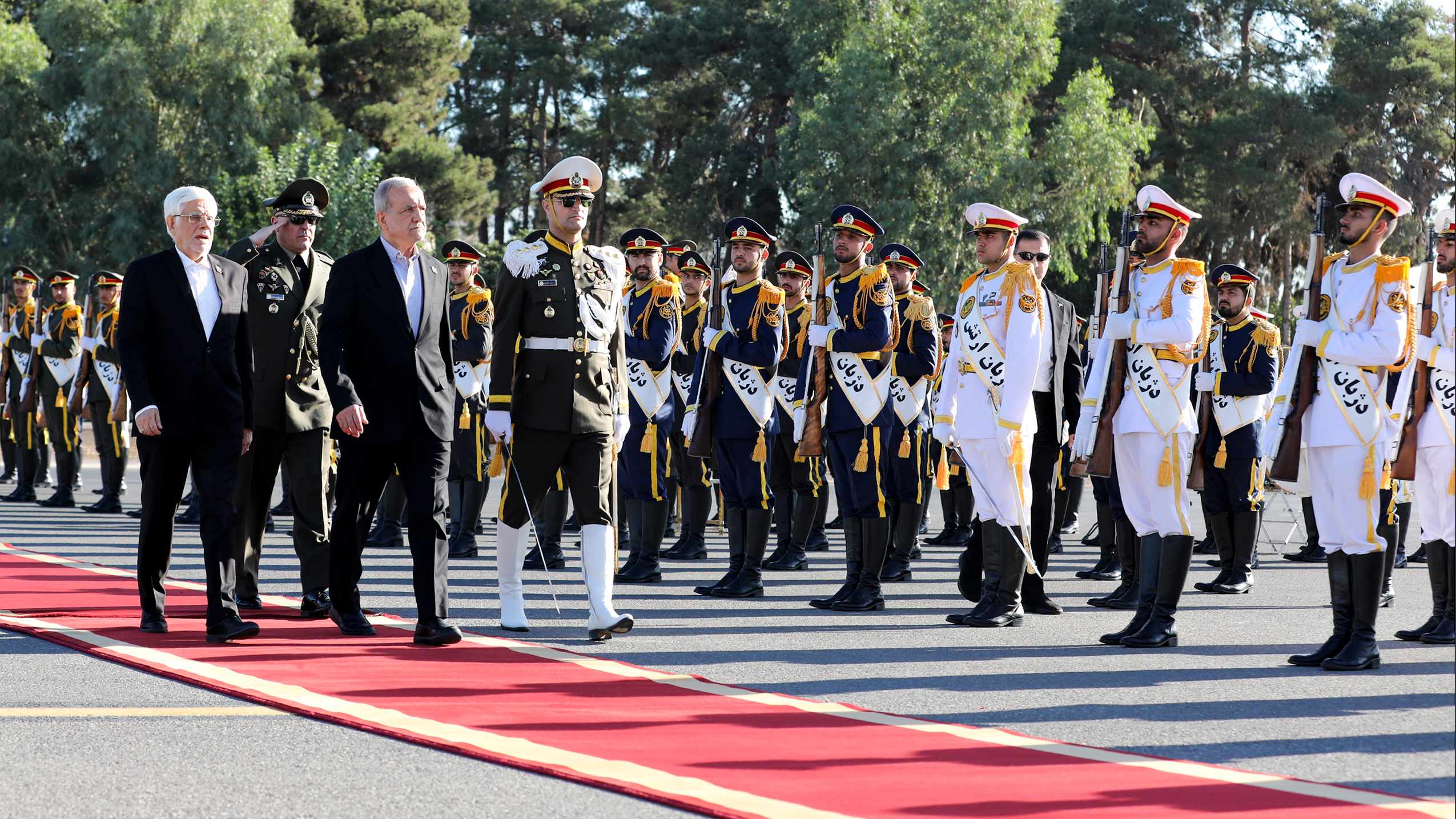
In a move that has captured global attention, Iranian President Masoud Pezeshkian has landed in the United States for a crucial United Nations summit. His arrival comes at a precarious moment, with President Donald Trump reportedly weighing a monumental decision that could dramatically alter the trajectory of U.S.-Iran relations and the stability of the Middle East.
This visit presents a pivotal opportunity for dialogue, or perhaps, a heightened confrontation. Azeem USA delves into the complexities of this developing situation, examining the potential paths forward and the profound implications for international diplomacy and regional security.
📑 Table of Contents
1. The Diplomatic Stage: Pezeshkian's Arrival
President Masoud Pezeshkian's presence in New York for the UN summit marks a significant diplomatic gambit. Arriving late Tuesday night, his mission, as stated before his departure, is to 'firmly defend' Iran's positions and to 'convey Iran's plight' to the international community. This suggests a strategy focused on humanizing Iran's narrative amidst sanctions and regional tensions, aiming to garner sympathy and understanding.
The UN General Assembly, a global forum for dialogue, provides a platform for leaders to articulate their nation's perspectives. Pezeshkian's address is anticipated to outline Iran's grievances, potentially focusing on the impact of sanctions and perceived external interference in regional affairs. The effectiveness of this diplomatic offensive will hinge on his ability to resonate with a diverse audience of world leaders, each with their own geopolitical interests.
The Significance of the UN Platform
Utilizing the UN platform is a strategic choice for Iran. It allows for direct engagement with a broad spectrum of international actors, bypassing traditional media filters and offering a chance to present Iran's case on its own terms.
2. Trump's Dilemma: Deal or Escalation?
On the other side of the diplomatic equation stands U.S. President Donald Trump, who has openly declared a 'big decision to make' regarding Iran. The phrasing suggests a critical juncture where the administration is contemplating a fundamental shift in policy. The options appear stark: pursue a new deal that could de-escalate tensions, or intensify pressure, potentially driving Iran towards an even more dire economic and political situation, a scenario described as 'into hell.'
This dichotomy reflects a long-standing debate within U.S. foreign policy circles regarding the best approach to deter Iran's regional activities and nuclear ambitions. A deal, however improbable it may seem given past failures, could involve complex negotiations on various fronts, including Iran's ballistic missile program and its support for proxy groups. Conversely, a path of maximum pressure, characterized by stringent sanctions and heightened rhetoric, risks unpredictable escalations and potential military confrontations.
Weighing the Economic and Military Levers
The Trump administration's approach has historically favored leveraging economic sanctions as a primary tool. However, the mention of a 'big decision' implies that military options or a fundamental renegotiation of existing frameworks are also on the table.
3. Iran's Stated Goals: 'Conveying Plight'

President Pezeshkian's pre-departure statement, emphasizing the need to 'convey Iran's plight,' offers a crucial insight into the immediate objectives of his delegation. This phrasing suggests a focus on the humanitarian and economic consequences faced by the Iranian populace due to international sanctions and regional instability. The aim appears to be to elicit empathy and potentially to rally support for sanctions relief or a more lenient U.S. policy.
The Iranian leadership is likely seeking to present a narrative that contrasts with the image of an aggressive state, instead highlighting the resilience of its people and the challenges they endure. This strategy aims to create diplomatic space by framing the conflict not as a clash of ideologies, but as a humanitarian crisis exacerbated by external pressures. Such an approach, if successful, could complicate the unified stance often presented by U.S. allies regarding Iran.
The Human Element in Geopolitics
By focusing on 'plight,' Iran seeks to shift the narrative from geopolitical maneuvering to the human cost of international disputes, a tactic designed to appeal to a global conscience.
4. Historical Context and Precedents
The current standoff between the U.S. and Iran is not an isolated event but rather a continuation of decades of complex and often adversarial relations. The 1953 coup, the 1979 revolution, the hostage crisis, and more recent confrontations over Iran's nuclear program have all shaped the current dynamic. Each historical juncture has left its imprint, influencing the deep-seated mistrust and the strategic calculations of both nations.
The current U.S. administration's 'maximum pressure' campaign, initiated after withdrawing from the Joint Comprehensive Plan of Action (JCPOA), aimed to force Iran back to the negotiating table for a 'better deal.' However, this strategy has led to increased regional tensions, including attacks on oil tankers and facilities, and has arguably pushed Iran's nuclear program further than before. Pezeshkian's visit and Trump's contemplation of a 'big decision' suggest that the efficacy of this pressure campaign is now being re-evaluated.
Lessons from Past Negotiations
The history of U.S.-Iran negotiations, particularly the intricate path to the JCPOA and its subsequent unraveling, provides a rich dataset of what works and what doesn't in engaging with Tehran.
5. The Global Ramifications and Future Outlook
The decisions made in Washington and articulated in New York will have far-reaching consequences, extending beyond the bilateral relationship. A de-escalation could ease tensions across the Middle East, potentially impacting conflicts in Syria, Yemen, and Iraq, and stabilizing energy markets. Conversely, an escalation could further destabilize a region already grappling with numerous challenges, potentially drawing in other global powers and increasing the risk of wider conflict.
The international community, particularly U.S. allies in Europe and Asia, will be closely watching. Their own economic interests and security concerns are deeply intertwined with the stability of the Persian Gulf. A unilateral U.S. decision, whether for a new deal or intensified pressure, could strain these alliances if not managed through robust consultation. The path forward is uncertain, but the stakes – for Iran, the U.S., and the global order – could not be higher.
Navigating a Complex Geopolitical Landscape
The current moment demands careful diplomacy, strategic foresight, and a clear understanding of the potential ripple effects of any decision made regarding U.S.-Iran relations.
🔥 Stay informed on critical geopolitical developments with Azeem USA.
Conclusion
President Pezeshkian's visit to the U.S. for the UN summit places Iran's narrative and its 'plight' on the global stage, while President Trump stands at a critical decision point regarding the future of U.S.-Iran relations. The dichotomy of pursuing a new deal versus intensifying pressure presents a significant challenge with profound implications.
As the world watches, the choices made in the coming days will undoubtedly shape regional stability, international diplomacy, and the lives of millions. The path forward requires astute statesmanship and a commitment to understanding the complex dynamics at play.
❓ FAQ
Who is the current President of Iran?
The current President of Iran is Masoud Pezeshkian.
What is the significance of President Pezeshkian's visit to the US?
His visit is for the UN summit, providing a platform to 'defend Iran's positions' and 'convey Iran's plight' amidst high U.S.-Iran tensions and President Trump's decision-making.
What is President Trump reportedly considering regarding Iran?
President Trump is reportedly weighing a 'big decision' on whether to make a new deal with Iran or to further increase pressure on the country.
What does Iran mean by 'conveying its plight'?
This likely refers to highlighting the humanitarian and economic hardships faced by Iran due to sanctions and regional instability, seeking international sympathy and policy changes.
What are the potential consequences of U.S. policy decisions on Iran?
Decisions could lead to either de-escalation, fostering regional stability and easing global economic pressures, or escalation, potentially destabilizing the Middle East further and increasing the risk of wider conflict.
Comments
Post a Comment