Breaking: Trump Warns Iran of Annihilation in UN General Assembly Speech 🚨 Breaking News Analysis 📸 Image Credit: uk.news.yahoo.com By Azeem-USA · Tue Sep 22 2026 English (en-US) President Donald Trump delivered a stark ultimatum at the United Nations General Assembly on Tuesday, issuing a direct threat to the Islamic Republic of Iran if a nuclear agreement is not reached. Speaking before global world leaders, the President asserted that his administration has successfully prevented Tehran from acquiring nuclear weapons, while demanding a coordinated global economic blockade of the regime. This analysis examines the implications of Trump's aggressive rhetoric, the strategic timing relative to the November midterm elections, and the potential for a significant escalation of conflict in the Middle East. 📑 Table of Contents The Ultimatum in New York A Strategy of Maximum Pressure The Midterm Factor and Diplomatic Timing Geopolitical Risks an...

🚨 Breaking News Analysis
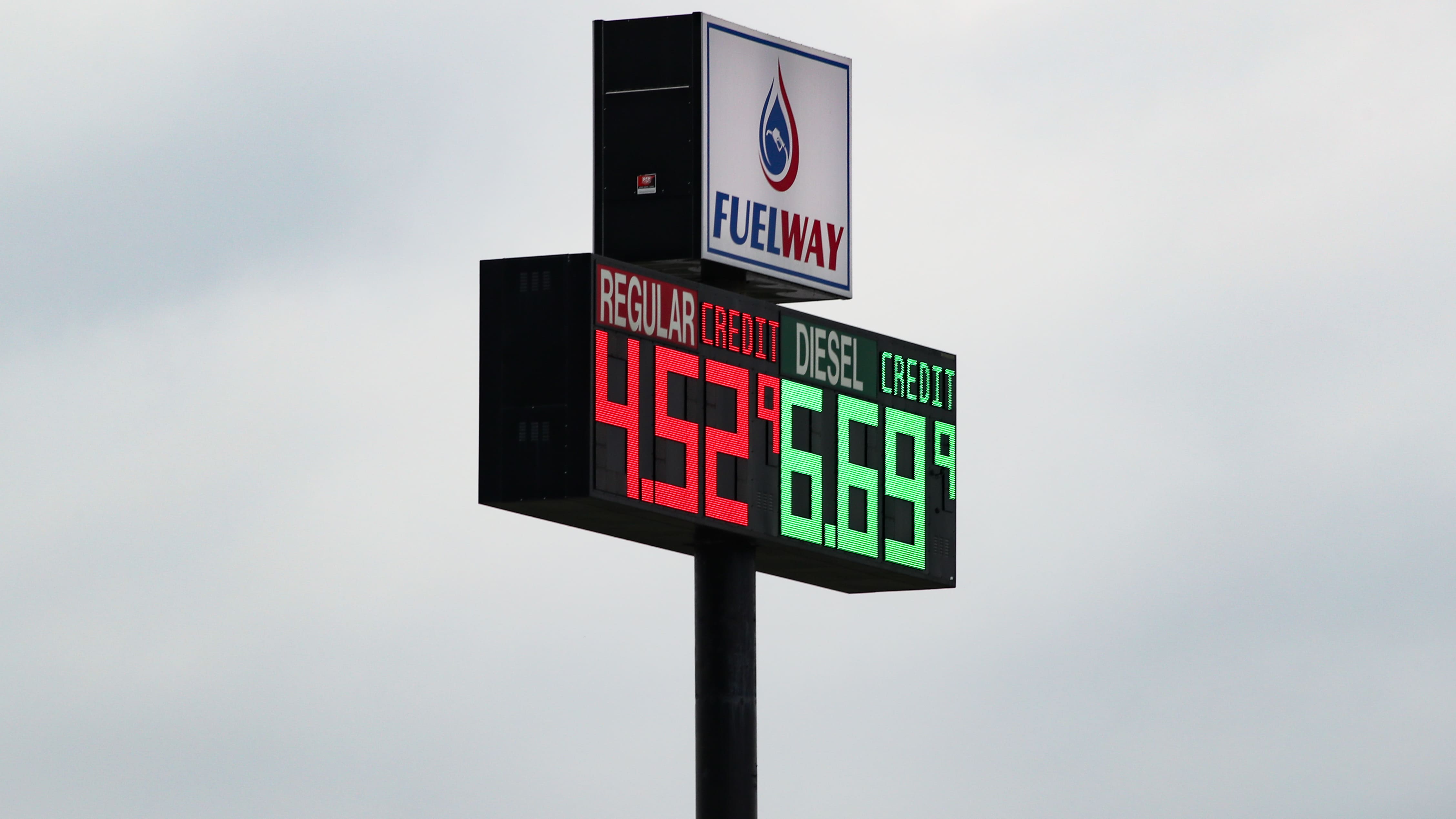
President Trump has signaled a move to ban the export of U.S. diesel fuel as domestic prices surge to a record $6.52 per gallon. Speaking on the sidelines of the UN General Assembly on Tuesday, the President indicated a sharp shift in American energy policy aimed at prioritizing domestic supply chains over global market demands.
This analysis examines the mechanics of the proposed export ban, the economic pressures driving this sudden decision, and the potential consequences for international energy security and trade alliances.
📑 Table of Contents
1. The Policy Shock
President Trump's announcement has sent shockwaves through the energy sector and financial markets. By explicitly stating, 'I've said let's not send out the diesel,' the administration is proposing a fundamental departure from the United States' role as a leading exporter of petroleum products. This is not merely a suggestion but a stated directive intended to turn the domestic energy strategy inward at a time when consumers and businesses are finding fuel prohibitively expensive.
Treasury Secretary Scott Bessent confirmed that the administration is actively examining the feasibility of such a ban. The timing is critical, with diesel prices hitting a historic high of $6.52, placing immense pressure on transportation, agriculture, and industrial sectors across the country.
A Shift in Energy Posture
The administration's focus reflects an 'America First' approach to energy, suggesting that the domestic market must be saturated to stabilize local costs before any is sold to international buyers.
2. The Logic Behind Domestic Protection
The President's rationale centers on the concept of 'flow balance' within the energy market. Trump noted that the outflow of diesel can have a direct effect on the availability and pricing of regular gasoline. By restricting the supply sent abroad, the administration hopes to create an artificial surplus within the domestic market, thereby driving down prices for American consumers and logistics companies.
Diesel is the lifeblood of the economy. It powers heavy-duty trucking, shipping, trains, and farm machinery. When diesel prices spike, the cost of moving goods rises immediately. The proposed ban is framed as a tool to combat inflation at the source by lowering operational costs for industries.
Prioritizing the American Consumer
The administration argues that the U.S. should not be exporting energy to foreign nations while its own citizens are struggling with record-breaking fuel costs.
3. Market Volatility and Economic Ripplewaves

Analysts suggest that a sudden export ban could trigger extreme global price volatility. The U.S. is one of the world's largest diesel suppliers; removing that supply from the global market would likely cause prices to spike in Europe and Asia, which rely on U.S. refining capacity.
Domestically, the impact is more complex. While domestic supply might increase initially, refineries often operate on narrow margins dictated by global demand. If they cannot sell abroad, their margins could be squeezed, potentially leading to a decrease in investment in refining capacity, which would eventually blow back on the very domestic prices the policy seeks to lower.
The Risk of Supply Chain Friction
While the goal is to lower prices, the disruption of established export routes could lead to unintended bottlenecks in the domestic distribution infrastructure.
4. Geopolitical Fallout and Trade Relations
The geopolitical implications of a diesel ban are profound. Many United States allies depend on U.S. diesel to power their own economies, especially following disruptions in global energy markets. A unilateral ban could be viewed as a breach of energy security cooperation, potentially straining relations with NATO partners and Asian trading allies.
Furthermore, such a move might face challenges under international trade agreements. While the U.S. has significant leeway in domestic energy policy, the sudden withdrawal of a major commodity could lead to retaliatory tariffs on other sectors of the U.S. economy, such as agriculture or manufacturing.
Straining Global Alliances
Allies may find themselves forced to seek energy sources elsewhere, potentially shifting the geopolitical balance of power away from U.S.-led energy markets.
5. The Path Ahead for Implementation
What happens next depends on the Treasury Department and the Department of Energy. Implementing a ban on exports would require complex legal frameworks and likely executive orders or new legislation to bypass existing trade protocols. The market is currently watching for any formal regulatory filings that would indicate a timeline for this shift.
In the short term, we expect continued volatility as energy traders price in the possibility of a restricted supply. If the ban is enacted, the immediate effect on domestic prices may be a downward trend as the market adjusts to the new reality of a closed-only supply.
Monitoring the Treasury
The next critical indicator will be whether Secretary Bessent releases a formal report on the economic impact and legal viability of the export restriction.
🔥 Follow Azeem-USA for live updates on this breaking energy policy development.
Conclusion
President Trump's proposal to ban diesel exports is a radical move to combat domestic inflation reaching $6.52. While the intent is to protect American consumers, the move risks global energy instability and potential international trade disputes.
Watch for official statements from Treasury Secretary Scott Bessent and reactions from the global energy market in the coming days.
❓ FAQ
Why is Trump proposing a diesel ban?
Diesel prices have hit a record $6.52 per gallon, causing economic pressure on domestic industries.
Will the ban happen immediately?
No, the President has only expressed support, and the Treasury is currently examining the feasibility.
How will this affect global prices?
Global prices are likely to rise because the U.S. is a major exporter of diesel.
Does diesel affect gasoline prices?
The President suggests a 'flow balance' between the two; restricting diesel could stabilize gasoline.
Who is leading the review?
Treasury Secretary Scott Bessent is overseeing the examination of the potential export ban.
Comments
Post a Comment