Trump's Iran Stance: A Bold New Strategy Unveiled 📸 Image Credit: uk.news.yahoo.com By Azeem-USA · Tue Sep 22 2026 English (en-US) In a significant address at the United Nations General Assembly, US President Donald Trump laid bare his administration's robust stance on Iran, outlining a strategy characterized by both firm warnings and a conditional offer for negotiation. This pivotal moment in international diplomacy warrants a deep dive into the President's messaging, the underlying policies, and the potential ripple effects across the global landscape. Azeem USA is here to break down the key components of Trump's speech, offering an authoritative and forward-thinking perspective on this critical geopolitical development. Understanding the nuances of this policy is essential for navigating the complexities of international relations and the future of global security. 📑 Table of Contents The President's Platform: Trump at the...

🚨 Breaking News Analysis
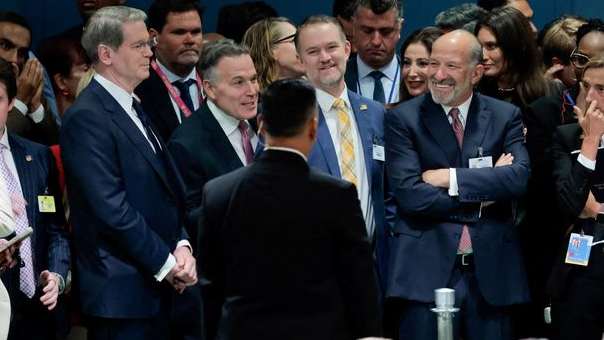
President Donald Trump delivered a stark ultimatum at the United Nations General Assembly on Tuesday, issuing a direct threat to the Islamic Republic of Iran if a nuclear agreement is not reached. Speaking before global world leaders, the President asserted that his administration has successfully prevented Tehran from acquiring nuclear weapons, while demanding a coordinated global economic blockade of the regime.
This analysis examines the implications of Trump's aggressive rhetoric, the strategic timing relative to the November midterm elections, and the potential for a significant escalation of conflict in the Middle East.
📑 Table of Contents
1. The Ultimatum in New York
The stage of the UN General Assembly is typically reserved for diplomatic maneuvering, but President Trump utilized the platform to project a message of uncompromising resolve. His warning was clear: the United States' patience with Iran's nuclear ambitions has reached its limit. By using the word 'annihilate,' the President shifted the discourse from standard diplomatic sanctions to the realm of existential military threat against the Iranian state.
Trump framed his previous policies not as mere containment, but as a successful defense that has kept Iran off the nuclear threshold. He argued that the status quo is unsustainable and that the international community must pivot in alignment with American interests to ensure long-term security.
The Rhetoric of Force
The use of such extreme language serves to signal to both the Iranian leadership and its allies that the U.S. is no longer seeking incremental concessions, but is instead prepared for catastrophic consequences for Tehran's perceived actions.
2. A Strategy of Maximum Pressure
The core of the President's argument rests on the concept of 'Maximum Pressure.' Trump explicitly called on other world nations to join America in isolating Iran economically. The objective is clear: starve the Iranian economy to the point where the leadership is forced to return to the negotiating table under terms acceptable to the United States.
This approach mirrors previous strategies employed by the administration but adds a heightened layer of urgency through military threat. By demanding global participation at the UN, Trump is challenging the European allies who have historically maintained economic ties with Iran despite the JCPOA.
Economic Isolation as a Tool
Analysts suggest that by framing the isolation as a global necessity, Trump is attempting to close loopholes left in previous sanctions regimes, ensuring that Iran feels the full weight of the international financial system.
3. The Midterm Factor and Diplomatic Timing

A pivotal element of Trump's speech was his mention of the upcoming November 3 US midterm elections. He predicted that his administration would strike a peace deal with Iran following the elections. This suggests that the current aggressive stance is part of a calculated tactical phase designed to build leverage before a post-election political mandate is secured.
By tying the foreign policy goal to the election results, the President is signaling to his domestic base that strength is the only path to peace. Simultaneously, he is signaling to Tehran that the window for de-escalation is closing as the post-election political landscape shifts.
Domestic Politics and Foreign Policy
Linking international security threats to election cycles is a common tactic, but in the context of Iran, it risks miscalculation if the Iranian regime perceives the threat as a bluff intended for domestic consumption.
4. Geopolitical Risks and Global Fallout
The threat of 'annihilation' carries immense risks for regional stability. Military analysts express concern that such rhetoric could box the Iranian leadership into a corner, leading to a preemptive strike or an acceleration of their nuclear program to gain leverage. The Middle East remains highly volatile, and any direct conflict would impact global energy markets.
Furthermore, the demand for global isolation faces the reality of complex interdependencies. If major trading partners refuse to comply with the demand for total isolation, the United States could find itself diplomatically isolated in its efforts, potentially weakening the very pressure it seeks to exert.
The Risk of Miscalculation
The primary danger in high-stakes diplomacy is miscalculation—where one party interprets a rhetorical threat as an imminent military action, leading to a conflict that neither side originally intended to start.
5. What Lies Ahead for Iran Relations
Moving forward, the world will be watching to see if Tehran responds with de-escalation or further provocation of its nuclear capabilities. The administration's next moves will likely involve the implementation of even stricter sanctions and the testing of international allies' willingness to follow the U.S. lead.
The next few months leading up to the midterms will be critical. If the economic pressure does not yield a breakthrough in negotiations, the rhetorical threat of military action may move from a diplomatic tool to an operational reality for the Pentagon and the NSC.
Monitoring the Red Lines
Observers should look for shifts in Iranian nuclear activity and changes in regional naval movements, as these will be the primary indicators of how the UN ultimatum is being received.
🔥 Follow for updates as this breaking international story develops.
Conclusion
President Trump has significantly escalated the rhetoric regarding Iran, utilizing the threat of total annihilation to demand global economic isolation. His strategy relies on using maximum pressure to force a peace deal in the wake of the midterm elections.
What to watch next is Iran's immediate reaction to these threats and whether international allies are willing to implement the U.S. demand for total isolation.
❓ FAQ
What was President Trump's main threat at the UN?
He warned that he could 'annihilate' the Islamic Republic if no nuclear deal is reached with Iran.
What is the goal of the call for global economic isolation?
To force Iran back to the negotiating table by applying maximum economic pressure.
How do the US midterm elections play into this situation?
Trump predicted a peace deal would be struck after the November 3 midterm elections.
Has the U.S. successfully prevented Iran from going nuclear?
Trump claimed his administration has successfully prevented Tehran from obtaining a nuclear weapon so far.
What are the risks of this rhetoric?
Analysts point to risks of regional instability, military miscalculation, and impacts on global energy markets.
Comments
Post a Comment