Breaking: Federal Agents Search Rep. Ilhan Omar's Home Amid Criminal Probe 🚨 Breaking News Analysis 📸 Image Credit: yahoo.com By Azeem-USA · Mon Oct 12 2026 English (en-US) Federal agents executed a search warrant at the Minnesota home of U.S. Rep. Ilhan Omar on Monday morning, marking a significant escalation in an ongoing criminal investigation. The probe, being conducted by Homeland Security Investigations (HSI), has sent immediate shockwaves through Washington and her home state. This analysis will delve into the known facts surrounding the search, explore the potential scope of the criminal inquiry, examine the political context and implications for Representative Omar and the Democratic Party, and assess what developments might follow in this rapidly unfolding situation. 📑 Table of Contents The Search Unfolds What We Know About the Investigation Political Ramifications and Context Stakeholder Reactions and Silence Looking Ahead: Wha...

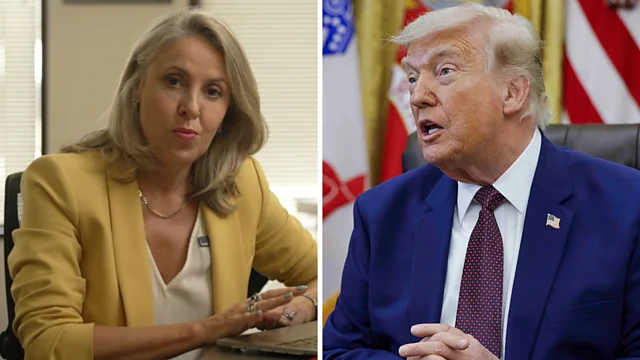
In a significant moment for international relations, former President Donald Trump has directly addressed the nature of his relationship with Israeli Prime Minister Benjamin Netanyahu. Amidst swirling speculation and media narratives, Trump's recent comments to the BBC offer a clear, albeit concise, clarification that Netanyahu has not defied him. This statement carries considerable weight, particularly given the complex geopolitical landscape of the Middle East.
At Azeem USA, we delve into the implications of Trump's assertion, exploring what it signifies for the US-Israel alliance, regional stability, and the broader political discourse. Understanding this dynamic is crucial for anyone seeking to grasp the intricate foreign policy decisions shaping our world.
📑 Table of Contents
1. The BBC Interview: Setting the Record Straight
The context for Trump's statement emerged from an interview with the BBC's Sarah Smith. During their conversation, the topic shifted towards the ongoing situation in the Middle East and, specifically, Trump's rapport with the Israeli leader. When questioned about any perceived defiance from Netanyahu, Trump's response was unequivocal. He stated that the Israeli Prime Minister had not defied him, effectively shutting down a line of questioning that sought to portray a fractured relationship.
This direct denial is noteworthy. Political leaders often navigate a complex web of communication, and the perception of their relationships can be as impactful as the reality. Trump's blunt assertion serves to counter narratives that might suggest discord or disagreement between two prominent figures whose political fortunes have often been intertwined.
The Power of a Direct Denial
In the fast-paced world of political news, a simple denial can be a powerful tool. It aims to control the narrative and prevent misinterpretations from taking root. Trump's history suggests a preference for clear, direct communication, and this instance appears to be no different.
2. Decoding Trump's Stance on Netanyahu
Trump's reaffirmation of his relationship with Netanyahu goes beyond a simple personal endorsement; it touches upon a strategic alignment that has characterized much of their past interactions. During Trump's presidency, the US-Israel relationship saw significant shifts, including the relocation of the US embassy to Jerusalem and brokering normalization deals between Israel and several Arab nations. These actions were often seen as strongly supportive of the Israeli government's agenda.
By stating that Netanyahu has not defied him, Trump is implicitly endorsing Netanyahu's decisions and actions, at least from his perspective. This suggests that, despite potential external pressures or differing viewpoints on specific strategies, the fundamental understanding and mutual support between them remain intact. It frames their relationship as one of partnership rather than subservience or conflict.
Implications for Israeli Leadership
For Prime Minister Netanyahu, this public backing from a former US president, who still holds considerable sway within certain political circles, is a significant boost. It reinforces his position both domestically and internationally, potentially bolstering his confidence in navigating challenging regional issues.
3. Geopolitical Ripples and Strategic Alliances

The Middle East is a region perpetually in flux, and the dynamics between key players like the US and Israel have profound implications for regional stability. Trump's comments, while focused on his personal relationship with Netanyahu, inevitably cast a light on the broader strategic alliance between the two nations. A perceived alignment between these leaders can influence the calculations of other regional actors, including adversaries and allies alike.
This statement comes at a time when various regional security concerns are paramount. Whether it pertains to Iran's nuclear program, the ongoing conflicts, or the broader efforts towards regional integration, the perceived strength and unity of the US-Israel relationship are critical factors. Trump's reassurance can be interpreted as a signal that, from his viewpoint, this crucial alliance remains a cornerstone of US foreign policy considerations, regardless of current administrative leadership.
The Iran Factor
The BBC interview specifically mentioned the 'war in Iran,' indicating that the discussion likely touched upon regional security challenges where Iran's influence is a central concern. Trump's administration took a hard line against Iran, withdrawing from the Joint Comprehensive Plan of Action (JCPOA) and imposing significant sanctions. His statement about Netanyahu could imply a shared stance on how to address the challenges posed by Iran.
4. Examining the Nuances of the US-Israel Relationship
The relationship between the United States and Israel is historically deep and multifaceted, built on shared democratic values, strategic interests, and a robust bipartisan consensus in the US for many years. However, like any bilateral relationship, it is subject to shifts in political leadership, evolving regional dynamics, and differing approaches to diplomacy and security.
During Trump's tenure, this relationship was often characterized by bold policy decisions that aligned closely with the Israeli government's priorities. His clear articulation of support for Netanyahu, even after leaving office, suggests a belief that this specific partnership remains strategically vital. It underscores a perspective that prioritizes strong, direct relationships with key allies as a means of achieving foreign policy objectives.
Beyond Personal Ties: Policy Alignment
While personal rapport is important, the enduring strength of the US-Israel relationship lies in its policy alignment on critical security issues. Trump's comments, in this regard, signal that he views Netanyahu as a reliable partner with whom he shares fundamental strategic outlooks, particularly concerning regional security and stability.
5. Looking Ahead: Future Implications
As the political landscape continues to evolve, the statements made by influential figures like Donald Trump resonate far beyond the immediate news cycle. His clear assertion regarding Netanyahu serves to reinforce a specific vision of international relations, one that emphasizes strong personal ties and decisive policy actions. For followers of US foreign policy and Middle Eastern affairs, this provides valuable insight into potential future directions.
The enduring nature of the US-Israel alliance is a constant in global politics. Trump's comments, by clarifying his relationship with Netanyahu, provide a snapshot of how he perceives this crucial partnership and its role in addressing complex global challenges. It’s a reminder that even in opposition, former leaders can significantly shape perceptions and influence ongoing geopolitical dialogues.
The Role of Perceptions in Diplomacy
Ultimately, diplomacy often hinges on perceptions as much as on concrete actions. Trump's direct address to the BBC aims to shape the perception of his relationship with Netanyahu, presenting it as one of mutual respect and strategic alignment. This clarity, whether intended to bolster Netanyahu or to reinforce his own foreign policy legacy, is a significant development in the ongoing narrative of Middle Eastern geopolitics.
🔥 Stay informed on critical geopolitical developments by following Azeem USA.
Conclusion
Donald Trump's direct statement to the BBC, clarifying that Benjamin Netanyahu has not defied him, serves as a critical piece of information in understanding their relationship and its broader geopolitical context. It underscores a perceived strategic alignment and mutual respect that has defined a significant period of US-Israel relations.
As we continue to monitor the intricate dynamics of international diplomacy, statements like these offer valuable insights into the perspectives of key global figures and their potential impact on regional stability and future policy decisions. The clarity provided by Trump is a testament to the enduring significance of the US-Israel alliance.
❓ FAQ
Did Trump say Netanyahu defied him?
No, Donald Trump explicitly told the BBC that Prime Minister Benjamin Netanyahu did not defy him.
What was the context of Trump's statement?
The statement was made during an interview with the BBC's Sarah Smith, where the conversation touched upon the war in Iran and Trump's relationship with the Israeli leader.
What does Trump's statement imply about the US-Israel relationship?
It implies a continued strategic alignment and mutual respect between Trump and Netanyahu, suggesting their fundamental understanding remains intact despite external pressures.
How might this impact regional politics?
A perceived strong alliance between the US (represented by Trump's perspective) and Israel can influence the strategic calculations of other regional actors.
Is this the first time Trump has commented on his relationship with Netanyahu?
While Trump has often spoken positively about his relationship with Netanyahu, this specific clarification in response to a direct question about defiance is a notable moment.
Comments
Post a Comment