Washington's decision to boycott a peer review marks a sharp rebuke to the UN Human Rights Council, raising questions about global accountability.
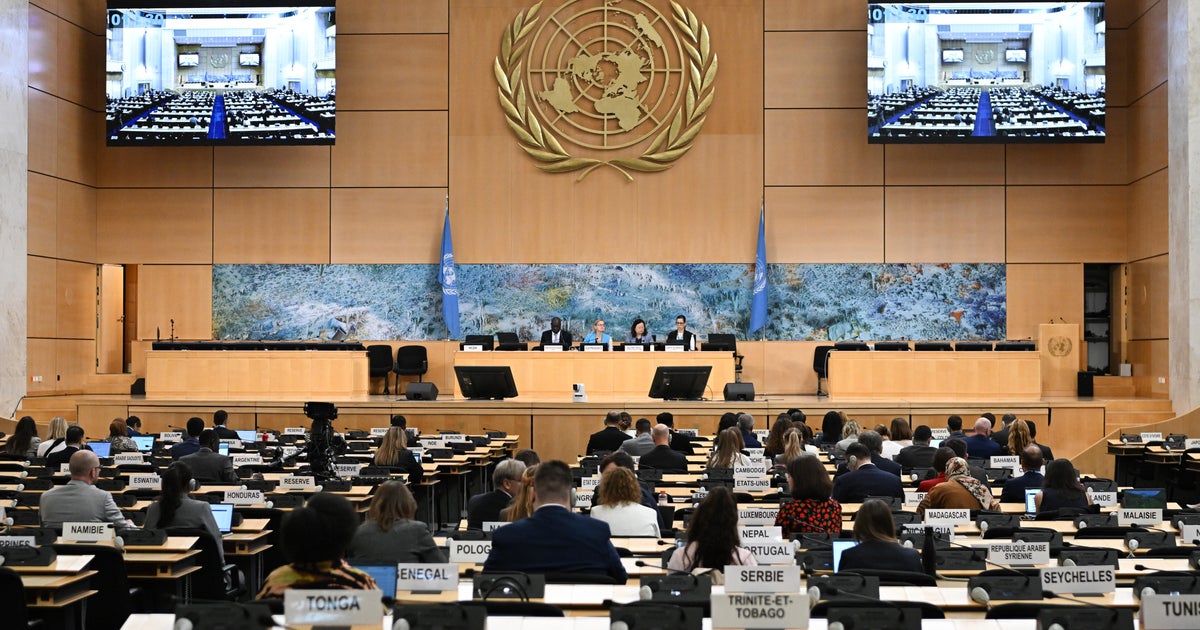
- The Lead: The U.S. has announced it will not participate in its scheduled Universal Periodic Review (UPR) at the United Nations Human Rights Council.
- The Context: Washington cites consistent failures and anti-American bias within the Council as the primary reasons for its boycott.
- The Impact: This marks the first time a nation has refused a UPR, potentially undermining the review process and prompting questions about U.S. commitment to multilateral human rights bodies.
- What's Next: Other nations may follow suit, and the Council's legitimacy faces renewed scrutiny amidst calls for reform.
In an unprecedented move, the United States has declared it will not participate in its scheduled Universal Periodic Review (UPR) before the United Nations Human Rights Council (UNHRC). The decision, announced by the State Department, marks a dramatic escalation of U.S. criticism against the Geneva-based body and sets a new precedent for diplomatic engagement, or disengagement, on the global stage.
The U.S. government's firm stance suggests a fundamental breakdown in trust, viewing the UNHRC not as a venue for constructive dialogue but as a platform for politically motivated attacks. This briefing dissects the reasons behind this historic boycott, its implications for the U.S. and the international community, and what the future may hold for global human rights mechanisms.
US Declines UN Review: What We Know So Far
The State Department issued a blunt statement confirming the U.S. refusal to engage in its Universal Periodic Review, a process where UN member states are assessed on their human rights records by their peers. This review was slated to take place in Geneva, a critical hub for international diplomacy. The spokesperson's statement was unequivocal, labeling the council as 'irredeemable' and accusing it of consistently failing to uphold its stated values while promoting 'anti-American rhetoric.' This marks the first time any nation has outright refused to participate in its UPR, a core component of the Human Rights Council's mandate since its inception.
The U.S. has historically had a complex relationship with the UNHRC, having withdrawn during the Trump administration and rejoined under President Biden with stated intentions to reform it from within. However, this latest action suggests that internal reform efforts have fallen short of American expectations, leading to a decision to disengage rather than continue what is perceived as a flawed and politicized process. The immediate impact is a void in the review process for the United States, leaving its human rights record unexamined by this specific international body at this time.
State Department's Rationale
The core of the U.S. argument centers on what it describes as the Council's pervasive bias against certain countries, particularly Israel, and its failure to adequately address human rights abuses in other states. By refusing the review, the U.S. aims to draw attention to these perceived systemic flaws and potentially galvanize efforts for significant structural changes within the UNHRC.
“This irredeemable body makes a mockery of human rights through consistent failures to uphold its own 'values' as it pushes anti-American rhetoric.”
A Tumultuous History: The US and the UNHRC
The United Nations Human Rights Council, established in 2006 to replace the Commission on Human Rights, was designed to promote and protect human rights worldwide. However, from its inception, it has faced criticism for the composition of its membership, which has often included countries with questionable human rights records. The U.S. initially chose not to join the Council, citing concerns over its effectiveness and the membership of states like Libya and Cuba.
This stance shifted under the Obama administration, which sought to engage with the Council to influence its agenda and outcomes. The U.S. joined the UNHRC in 2009. However, this engagement was short-lived. In 2018, the Trump administration announced the U.S. withdrawal, citing the Council's 'chronic bias against Israel' and its failure to hold human rights abusers accountable. The Biden administration rejoined in 2021, pledging to work towards reform and to push for greater accountability within the organization.
Rejoining with Reservations
The decision to rejoin was framed as an effort to 'lead by example' and to ensure that the U.S. could effectively challenge the Council's shortcomings. However, the persistent criticisms and the recent boycott indicate that the challenges of reforming a deeply entrenched international body have proven formidable, leading to a renewed sense of disillusionment in Washington.
Reactions and Diplomatic Fallout
The U.S. decision has predictably drawn a range of reactions from international actors. Human rights organizations, while often critical of the UNHRC's performance, have expressed mixed views. Some see the U.S. move as a potentially damaging blow to the multilateral system, arguing that engagement, even with a flawed body, is more productive than disengagement. Others acknowledge the validity of the U.S. concerns about the Council's effectiveness and bias.
Diplomatic circles in Geneva and New York are buzzing with speculation about the implications. Critics of the U.S. stance may point to this as further evidence of American unilateralism and a disregard for international institutions. Conversely, allies who share U.S. frustrations may see this as a bold, albeit risky, move to force a reckoning within the UN system. The boycott could embolden other nations critical of the Council to reconsider their own participation or to demand more significant reforms.
Market and Political Tremors
While the direct economic impact is likely minimal, the political fallout could be substantial. The move reinforces a narrative of international division and could complicate U.S. foreign policy efforts in areas where multilateral cooperation is crucial. It also provides ammunition for domestic political opponents who may argue the U.S. is isolating itself on the world stage or, conversely, for those who believe the U.S. should prioritize its own interests above international bodies it deems ineffective.

The Competing Arguments: Legitimacy vs. Bias
At the heart of the U.S. decision lies a fundamental debate about the legitimacy and efficacy of the UN Human Rights Council. The State Department's position is clear: the Council, in its current form, is compromised. Its consistent focus on singling out specific nations, particularly Israel, while overlooking severe human rights abuses elsewhere, is seen as a dereliction of its core mission. The U.S. argues that participating in reviews under such conditions lends a false sense of legitimacy to a flawed process.
Conversely, proponents of the Council, including many member states and human rights advocates, argue that the UPR process is vital for global human rights monitoring. They contend that even imperfect mechanisms provide a platform for dialogue, scrutiny, and potential improvement. Critics of the U.S. position suggest that withdrawing from the review process cedes ground to those who would prefer less oversight and that the U.S. should use its influence to push for reforms from within, rather than abandoning the arena. The risk, they warn, is that the Council could become even less effective and more politically charged without the scrutiny of a major global power.
The Precedent of Non-Participation
The U.S. action sets a significant precedent. If other nations begin to refuse reviews based on similar grievances, the Universal Periodic Review system, a cornerstone of the UNHRC's work, could be severely weakened. This raises the stakes for the Council itself, forcing it to confront the criticisms leveled against it more directly, or risk losing credibility entirely.
Looking Ahead: What This Means for Global Rights
The U.S. refusal to participate in its UN Human Rights Council review is more than just a diplomatic snub; it's a signal about the future of multilateralism and human rights accountability. The move underscores a growing skepticism in some quarters about the effectiveness of international institutions when they become overly politicized. It forces a re-evaluation of how human rights are monitored and enforced on a global scale, and whether existing frameworks are fit for purpose in the current geopolitical climate.
Moving forward, the international community will be watching closely to see if other nations follow the U.S. lead, or if the UNHRC can initiate meaningful reforms to address the criticisms. The U.S. stated intention to continue promoting human rights globally through other avenues will also be scrutinized. This episode highlights the inherent tension between the ideals of universal human rights and the often messy realities of international politics and institutional dynamics.
Key Questions for the Future
Will this boycott lead to substantive reform within the UNHRC, or will it further isolate the U.S. and weaken the Council's overall impact? The answer will shape the landscape of international human rights advocacy for years to come.
🎯 The Bottom Line
The bottom line is that the United States has made a high-stakes gamble by refusing to engage in its UN Human Rights Council review. By labeling the body 'irredeemable,' Washington is forcing a confrontation over the Council's legitimacy and effectiveness, potentially at the cost of its own participation in a key global human rights forum. The long-term consequences for both U.S. diplomacy and the future of international human rights oversight remain uncertain.
Thank you for joining us for this critical briefing. We will continue to monitor developments and provide in-depth analysis. Stay informed, stay engaged.
Subscribe to The Azeem USA Briefing for daily insights into the stories shaping America and the world.
📬 Reader Q&A: Key Questions Answered
Q: What is the UN Human Rights Council's Universal Periodic Review (UPR)?
The UPR is a unique process where the human rights records of all UN Member States are reviewed every few years by fellow member states. It aims to ensure accountability and promote human rights globally.
Q: Why did the U.S. previously withdraw from the UNHRC?
The U.S. withdrew under the Trump administration in 2018, citing what it called 'chronic bias against Israel' and the Council's failure to hold human rights abusers accountable.
Q: Did the U.S. rejoin the UNHRC?
Yes, the Biden administration rejoined the UNHRC in 2021, stating an intention to reform the body from within and lead by example.
Q: What are the main criticisms of the UNHRC?
Key criticisms include the membership of countries with poor human rights records, a perceived bias against certain nations (notably Israel), and a failure to consistently address widespread human rights abuses.
Q: What is the potential impact of the U.S. boycott?
The U.S. boycott could weaken the UPR process, embolden other nations to disengage, and raise questions about the UNHRC's legitimacy and effectiveness. It may also prompt calls for more significant reforms.
Comments
Post a Comment