
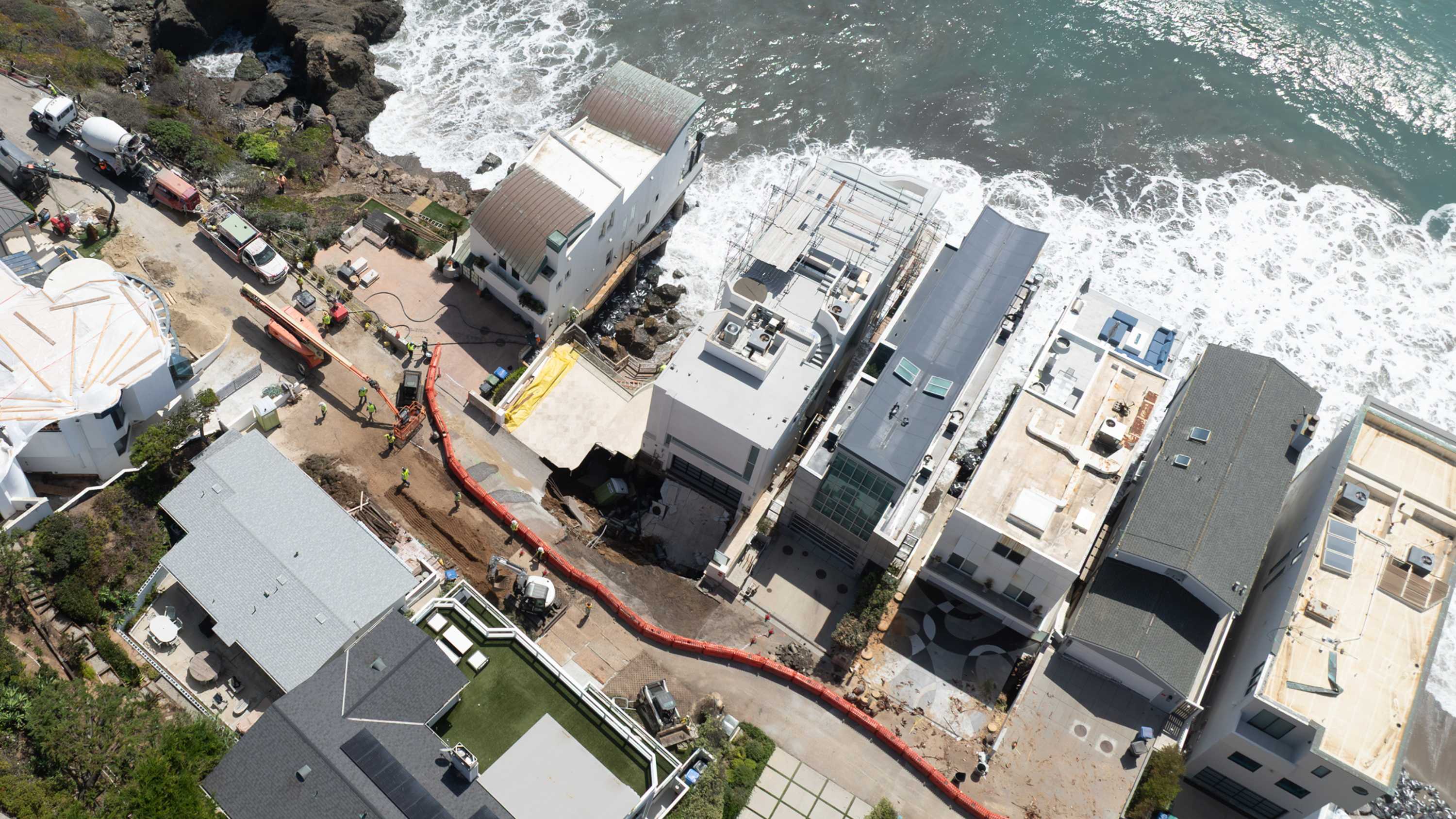
The Pacific Ocean is currently hosting a massive oceanic disturbance that could reshape the coastal reality of the United States. A powerful Kelvin wave, fueled by the intensity of a Super El Niño event, is traveling toward North America, bringing with it the threat of significant sea level increases.
In this in-depth analysis, we explore the scientific mechanics of this oceanic phenomenon, its connection to global climate patterns, and what California residents need to prepare for as water levels climb over the coming months.
📑 Table of Contents
1. Understanding the Kelvin Wave Phenomenon
A Kelvin wave is a type of wave that travels along the boundary of a fluid, such as the ocean's edge. Unlike surface waves that dissipate across the open sea, Kelvin waves are trapped by the coastline, allowing them to carry energy over vast distances with minimal loss. These waves are characterized by a height gradient where the water level is significantly higher near the shore than further offshore.
In the Pacific context, Kelvin waves are often associated with large shifts in warm water. When these waves move along the coast, they push a mound of warm water toward the land, causing a localized rise in sea level that can be distinct from the global average trend.
The Physics of Coastal Wave Trapping
The physics of these waves relies on the balance between the Coriolis force and the pressure gradient. In the Northern Hemisphere, the Coriolis force pushes water toward the western coast, creating the characteristic sloping water surface that researchers observe.
2. The Role of Super El Niño in Propagation
The current Kelvin wave is not a random occurrence but a direct consequence of a Super El Niño. This phenomenon occurs when surface temperatures in the central and eastern Pacific become unusually warm, disrupting the standard atmospheric patterns. This thermal energy acts as a catalyst, launching massive Kelvin waves that travel equator along the eastern edge of the South American continent.
As the wave hit the coast of South America in late August, it began its northward journey. Because the El Niño event is classified as 'super,' the resulting Kelvin wave is significantly more powerful and voluminous than those seen during milder warming cycles.
Thermal Energy and Oceanic Momentum
The intensity of the El Niño determines the amplitude of the Kelvin wave. The warmer the ocean surface, the higher the water level is pushed against the shore as the wave moves toward North America.
3. Impact on the California Coastline

Researchers warn that as this wave reaches the California shores, it could raise local sea levels by up to 1 foot (30 centimeters). While a foot may seem small in the context of global sea-level rise over decades, a sudden increase of this magnitude can have devastating effects on high tide flooding and coastal erosion.
Coastal infrastructure, including roads, beaches, and residential properties, is at immediate risk. The additional volume of water means that high tides will penetrate much further inland than usual, potentially overwhelming drainage systems that were not designed for such baselines.
Vulnerability of Coastal Infrastructure
California's coastline is heavily developed and ecologically sensitive. A sustained 1-foot rise in sea level can lead to chronic 'nuisance flooding' where even minor tides cause water to flood streets.
4. Why the Wave Persists for Months
One of the most concerning aspects of this specific Kelvin wave is its duration. Unlike a storm surge that passes in days, a Kelvin wave can linger off the coast for several months. This is due to the sheer volume of warm water involved and the slow rate at which the energy dissipates along the boundary.
This persistence means that coastal communities must deal with elevated water levels for an extended period. Such prolonged stress increases the likelihood of saltwater intrusion into coastal freshwater aquifers and disrupts local marine ecosystems that are sensitive to temperature and salinity-level changes.
The Dynamics of Standing Water Masses
The deep nature of the wave ensures that the energy is not easily lost to surface friction, allowing the elevated sea level to remain until the thermal gradient finally stabilizes.
5. Mitigation and Future Outlook
Preparing for these events requires a combination of real-time monitoring and long-term urban planning. Local governments must utilize satellite altimetry and buoy data to track the wave's progress and provide early warnings to coastal residents. Temporary barriers or adjusted flood modeling may be necessary during the peak months.
Looking ahead, as global temperatures rise, the frequency and intensity of 'super' El Niño events may increase. Understanding the behavior of Kelvin waves is therefore critical for building resilient coastal cities that can withstand a more volatile oceanic future.
Adaptation in a Changing Climate
Investment in sea walls and natural marsh restoration is no longer optional but necessary to mitigate the impact of these recurring oceanic pulses.
🔥 Subscribe to Azeem-USA for the latest updates on global climate and oceanic trends.
Conclusion
The approaching Kelvin wave is a stark reminder of the powerful interconnectedness of our oceans and atmosphere. While the 1-foot rise in sea level is a temporary event, its impact poses a significant challenge to California's infrastructure and safety.
As we monitor this Super El Niño event, the focus must remain on preparedness and understanding the long-term trends that define our changing planet planet.
❓ FAQ
What is a Kelvin wave?
A Kelvin wave is an oceanic wave that travels along a coastline, often causing a localized rise in sea level.
Why is the sea level rising now?
It is being triggered by a Super El Niño event which launched powerful Kelvin waves along the Pacific.
How much will sea levels rise in California?
Researchers predict a rise of up to 1 foot (30 centimeters).
How long will the effect last?
The wave can persist off the coast for several months.
Is this dangerous for coastal residents?
Yes, it can lead to increased high tide flooding, coastal erosion, and damage to infrastructure.
Comments
Post a Comment