
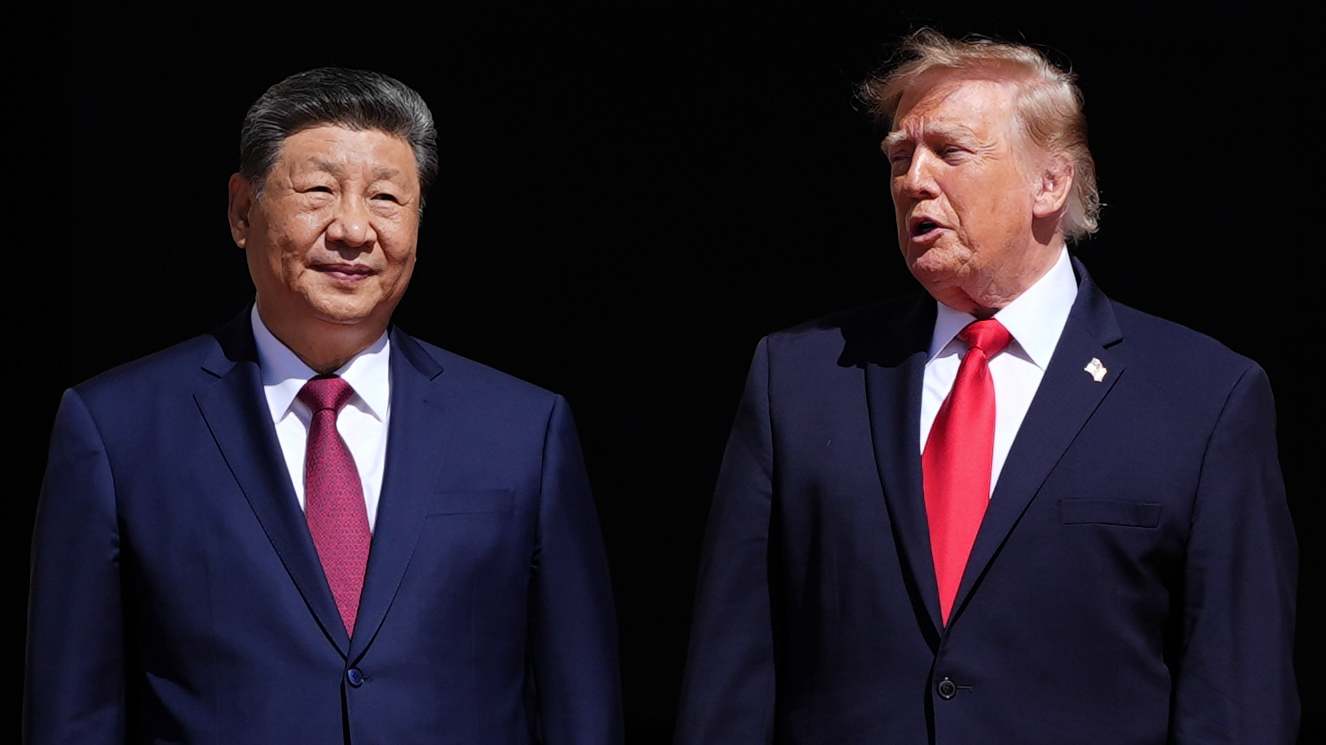
In a move that has sent ripples through the international political and security communities, President Donald Trump reportedly extended an unusual offer to Chinese President Xi Jinping: the possibility of China purchasing American weaponry. This revelation, disclosed by U.S. Ambassador to China David Perdue, represents a significant departure from established diplomatic norms and raises profound questions about the future of U.S.-China relations and global security.
At Azeem USA, we delve into the remarkable details of this alleged conversation, examining its immediate context, potential long-term consequences, and what it signifies about the evolving dynamics between two of the world's most powerful nations. Understanding this development is crucial for anyone tracking the complex landscape of international diplomacy and strategic competition.
📑 Table of Contents
1. The Ambassador's Revelation: A Stunning Diplomatic Overture
The source of this extraordinary claim is David Perdue, President Trump's ambassador to China. Speaking on a recent broadcast, Perdue detailed a conversation where Trump, while discussing ongoing U.S. arms sales to Taiwan, allegedly posed the question directly to President Xi about his interest in acquiring American arms. This framing of the U.S. arms sales to Taiwan—as merely one of many such transactions globally—and the subsequent offer to China, positions the interaction as highly unconventional, bordering on audacious.
Perdue's account suggests that Trump sought to normalize the Taiwan arms sales by framing them as standard international commerce, a tactic that might have been intended to allay Chinese concerns. However, the pivot to directly asking Xi if China itself would be interested in purchasing U.S. arms transforms the discussion from a defensive justification to an expansive, and potentially destabilizing, proposal. Such an offer, if seriously considered or pursued, would represent a seismic shift in decades of U.S. foreign policy and strategic thinking regarding China.
The Strategic Rationale Behind the Remark
Ambassador Perdue indicated that Trump's approach aimed to present the Taiwan arms sales in a less confrontational light. By suggesting that the U.S. is a global arms supplier without specific geopolitical favoritism, Trump may have been attempting to diffuse Beijing's objections. The follow-up question to Xi, however, moves beyond mere appeasement and into the realm of speculative deal-making, potentially aimed at leveraging economic or strategic interests in a novel way.
2. Contextualizing the Offer: Taiwan and US Policy
The United States' policy toward Taiwan is complex, governed by the Taiwan Relations Act, which mandates that the U.S. assist Taiwan in maintaining its self-defense capability. This has historically translated into significant U.S. arms sales to Taiwan, a move consistently met with strong disapproval from Beijing, which views Taiwan as a renegade province and a core national interest. These sales are a critical component of U.S. strategy to deter potential Chinese aggression against the island democracy.
Trump's alleged comments and offer to Xi must be understood against this backdrop. By downplaying the Taiwan sales as routine, Trump might have been trying to signal a transactional approach to foreign policy, where even sensitive security issues could be framed within a broader commercial context. The hypothetical offer to sell arms to China itself, however, directly challenges the underlying assumption of U.S. policy: that Taiwan's security is paramount and that China is a potential adversary in the region.
A Departure from Decades of Policy
For generations, the U.S. has maintained a delicate balance, providing Taiwan with the means to defend itself while engaging economically with mainland China. Selling advanced U.S. weaponry to China would fundamentally alter this dynamic. It could be interpreted as a tacit acceptance of China's regional ambitions or, alternatively, a bold attempt to create new economic dependencies while potentially gaining insights into Chinese military capabilities.
3. Potential Implications for US Technology and Security

The most immediate concern surrounding such an offer, even if hypothetical, is the risk of U.S. technology falling into the hands of a geopolitical rival. American military hardware often incorporates cutting-edge technology, the proliferation of which could significantly enhance the capabilities of potential adversaries. This raises critical questions about export controls, intellectual property protection, and the long-term strategic advantage the U.S. might forfeit.
If China were to acquire U.S. arms, it could potentially reverse-engineer the technology, leading to advancements in their own military programs. Furthermore, the sale of advanced weaponry could embolden China, potentially leading to increased assertiveness in territorial disputes or a more rapid modernization of its forces. This scenario could destabilize regional military balances and create new security challenges for the U.S. and its allies.
Economic vs. Strategic Considerations
From an economic perspective, a massive arms deal with China could be lucrative for U.S. defense contractors. However, the strategic implications could far outweigh any short-term financial gains. The U.S. defense industry is a cornerstone of national security, and its products are often developed with specific threat assessments in mind. Supplying these to a nation increasingly viewed as a strategic competitor presents a profound dilemma.
4. The Broader Geopolitical Chessboard
This reported exchange places the U.S.-China relationship under an even more intense spotlight. The two nations are engaged in multifaceted competition, spanning trade, technology, and military influence. President Trump's approach, characterized by its transactional and often unconventional nature, seems to view these complex issues through a lens of potential negotiation and deal-making.
The offer to sell arms to China could be interpreted in various ways: as a genuine, albeit risky, attempt to reshape the relationship; as a tactic to gain leverage in other areas of negotiation, such as trade; or as a rhetorical flourish designed to highlight the President's unique negotiating style. Regardless of intent, the mere prospect of such a sale alters perceptions and adds another layer of complexity to an already intricate global dynamic.
Impact on Allies and Regional Stability
U.S. allies in Asia, particularly those with concerns about China's military expansion, would likely view such an offer with alarm. Countries like Japan, South Korea, and Vietnam rely on U.S. security assurances and the existing regional military balance. A significant shift in U.S. policy, such as arming China, could undermine their confidence in U.S. commitments and potentially trigger regional arms races as nations seek to counterbalance perceived threats.
5. Analyzing the Unconventional Diplomacy
President Trump's foreign policy has consistently defied traditional diplomatic norms. His approach often involves direct, personal engagement with world leaders and a willingness to challenge established international frameworks. This alleged conversation with President Xi appears to be a prime example of that style, blending justification for one policy (arms to Taiwan) with a seemingly unrelated, high-stakes offer (arms to China).
The effectiveness and wisdom of such unconventional diplomacy are subjects of ongoing debate. Proponents might argue that it breaks through bureaucratic inertia and creates new possibilities. Critics, however, would point to the potential for miscalculation, the erosion of trust, and the undermining of long-standing alliances and security architectures. The disclosure by Ambassador Perdue adds a layer of official confirmation, lending weight to the reported exchange.
Navigating a Shifting Global Order
The incident underscores the dynamic and often unpredictable nature of contemporary international relations. As China's economic and military power continues to grow, the United States faces the challenge of managing this rise while protecting its own interests and those of its allies. The reported offer to sell arms to China, whether a serious proposal or a rhetorical gambit, highlights the unconventional strategies being considered or employed in this critical geopolitical competition.
🔥 Stay informed on critical global affairs and their impact on your world.
Conclusion
The reported offer by President Trump to Chinese President Xi Jinping regarding the potential sale of U.S. arms is a development of significant geopolitical consequence. It challenges decades of U.S. policy, raises critical security and technological concerns, and introduces a new layer of complexity to the already fraught U.S.-China relationship.
As the global landscape continues to evolve, understanding these unconventional diplomatic maneuvers and their potential ramifications is essential. The future of international security may well depend on how such bold, and perhaps risky, overtures are navigated by the world's leading powers.
❓ FAQ
Who revealed that President Trump asked China's Xi if he wants to buy U.S. arms?
U.S. Ambassador to China David Perdue disclosed this information.
What was the context of Trump's alleged offer to Xi?
The offer was reportedly made while Trump was justifying ongoing U.S. arms sales to Taiwan to President Xi.
Why are U.S. arms sales to Taiwan significant?
These sales are mandated by the Taiwan Relations Act to help Taiwan maintain self-defense capabilities and are a key part of U.S. strategy to deter Chinese aggression.
What are the potential risks of selling U.S. arms to China?
Risks include the proliferation of advanced U.S. technology to a geopolitical rival, potential reverse-engineering by China, and destabilization of regional military balances.
How does this reported offer align with Trump's foreign policy approach?
It aligns with his characteristic unconventional, transactional, and often bold diplomatic style that challenges traditional norms.
Comments
Post a Comment