
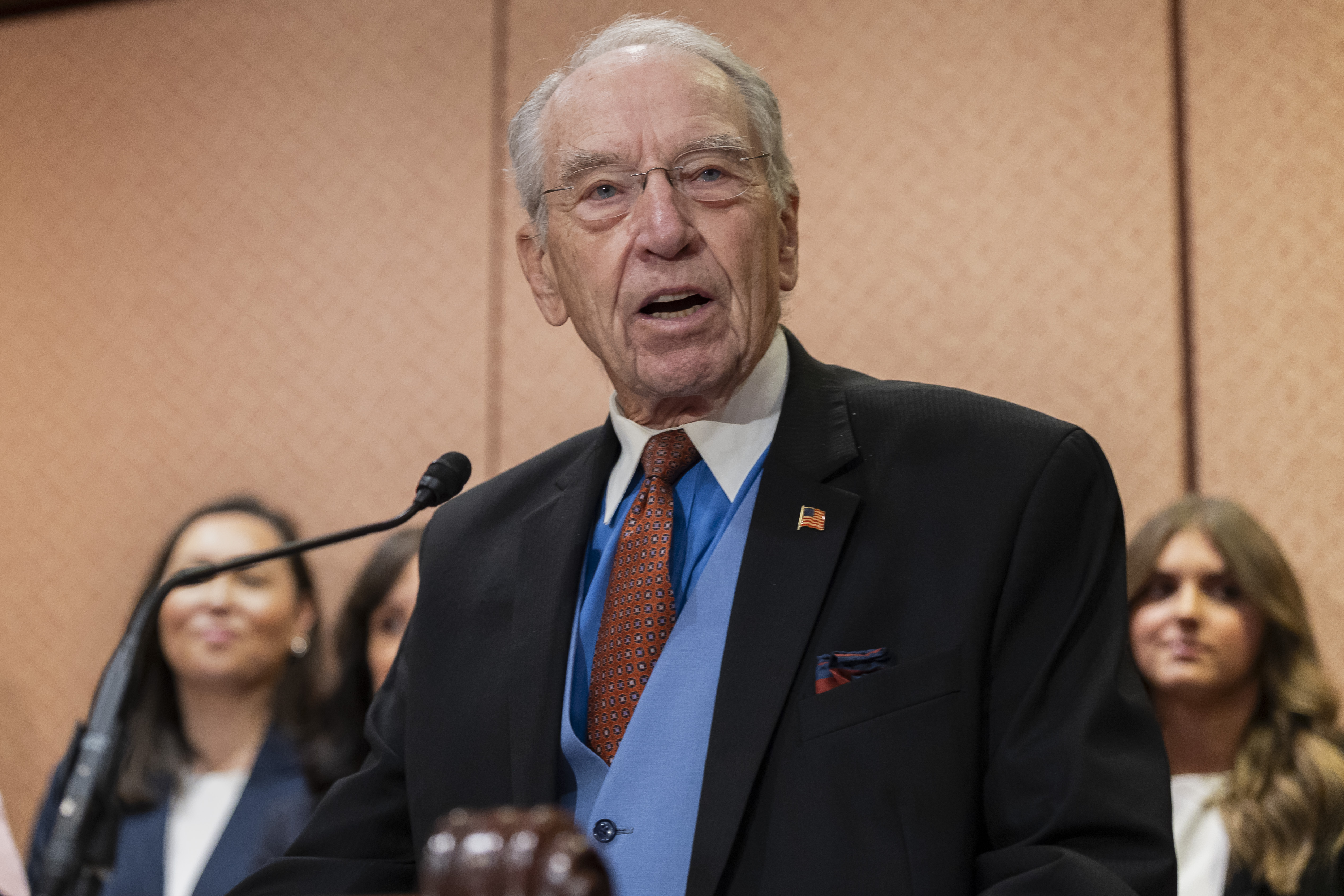
At 93 years old, U.S. Senator Chuck Grassley stands as the longest-serving senator currently in office, a testament to a long and impactful career. However, his advanced age has brought a unique set of considerations to the forefront of political discourse, particularly concerning the hypothetical scenario of his passing while in office.
Recent remarks by Senator Grassley have highlighted a specific concern: the potential for a Democratic governor to appoint his successor. This situation, while rare, touches upon the intricate mechanisms of political succession and the partisan implications that can arise from them. This post will delve into the senator's statement, the legal framework surrounding such events, and the broader questions about age, service, and political representation in America.
📑 Table of Contents
1. The Senator's Statement and Its Context
During a recent Republican gathering in West Des Moines, Senator Chuck Grassley, the oldest member of the U.S. Senate, articulated a notable worry. He expressed his concern about the possibility of a Democratic governor being in a position to appoint his replacement should he die while serving his term. This statement, made at the age of 93, underscores a unique facet of political longevity and the contingencies that accompany it.
Grassley's remarks, captured on video, were delivered during the GOP's annual Reagan Dinner. He conveyed a sense of urgency, stating, "At 93 years of age, I don’t know how many more groups of Republicans like this I’m going to have a chance to talk to." He further elaborated that his concern about who might be elected governor was a significant factor, indicating he does not plan for such an eventuality but acknowledges the political realities.
The Political Undercurrent
The underlying sentiment of Senator Grassley's statement is a concern about the partisan balance of power. If a senator from one party were to pass away, and the state's governor belonged to the opposing party, the appointment of a successor could shift the balance in the U.S. Senate, a prospect that carries significant weight in a closely divided chamber.
2. Understanding Gubernatorial Succession Laws
When a U.S. Senator dies or resigns, the process for filling the vacancy is primarily determined by state law. Most states have provisions that allow the governor to appoint a temporary replacement until a special election can be held, or until the next general election. The specific rules vary significantly from state to state, reflecting different approaches to ensuring representation and political continuity.
In Iowa, the state constitution and statutes dictate the procedure. If a vacancy occurs in the Senate, the Governor has the authority to make an appointment to fill the seat until the next general election. This appointment is a critical power, as it can influence the partisan makeup of the Senate, especially in instances where the state's political landscape is closely contested. The governor's choice is thus a matter of significant political consequence.
The Role of Special Elections
While gubernatorial appointments are common, many states also mandate that a special election be held to fill the remainder of the vacated term. The timing of this election is crucial. If the vacancy occurs close to a general election, the appointed senator may serve until that election, at which point the winner of the general election will take office. This dual mechanism aims to balance the need for immediate representation with the democratic principle of voter choice.
3. The Broader Implications of Age in the Senate

Senator Grassley's age, while notable, is part of a larger trend and discussion about the age of lawmakers in Washington D.C. The U.S. Senate, in particular, has a number of members who are well into their later years, serving for decades. While experience can be invaluable, concerns are often raised about the physical and cognitive demands of the job, and whether advanced age impacts a senator's ability to effectively legislate and represent their constituents.
The senator's expressed worry about his potential successor highlights the intersection of age and political power. It brings to the fore questions about the ideal age for public service, the role of experience versus vitality, and the potential for leadership transitions to be influenced by factors beyond electoral outcomes. This is not to question Senator Grassley's current capabilities, but rather to examine the systemic issues that his situation brings into focus.
Continuity vs. Representation
The debate around age in politics often centers on a tension between the value of institutional knowledge and the need for representatives who can energetically tackle the challenges of modern governance. Long-serving senators bring deep understanding of policy and procedure, but concerns about health and stamina are also legitimate considerations for voters and the political parties they represent.
4. Political Ramifications for Iowa and Beyond
The scenario Senator Grassley described has direct implications for Iowa. If a vacancy were to occur and a Democratic governor were in office, the appointment could potentially lead to a temporary shift in the Senate's partisan balance. This is particularly relevant given how closely divided the Senate often is, where a single seat can determine which party controls the chamber and influences legislative agendas.
Beyond Iowa, Grassley's comments tap into a national conversation about the future of the Republican party and the leadership pipeline. As senior figures remain in office for extended periods, questions arise about the opportunities for newer generations of politicians and the potential for party platforms to evolve. The concern about a governor appointing a successor is, in essence, a concern about the party's ability to maintain its influence and representation through appointed means, rather than direct voter selection.
Partisan Balance in the Senate
The U.S. Senate operates with a delicate partisan balance, often numbering 50-50 or with very slim majorities. In such an environment, any change in party control, whether through election or appointment, can have profound effects on the legislative process, committee chairmanships, and the confirmation of judicial and executive nominees.
5. Looking Ahead: The Future of Political Service
Senator Grassley's candid remarks offer a window into the strategic considerations that shape political careers and party planning. It highlights that even for long-serving incumbents, the future is a constant consideration, involving not just personal electoral prospects but also the broader implications for their party and the political landscape.
As American politics continues to evolve, the discussions around age, succession, and the mechanisms of political appointment will likely persist. The desire for experienced leadership is balanced against the need for new perspectives and the democratic mandate derived from the electorate. The conversation sparked by Senator Grassley's statement is a crucial one for understanding the dynamics of power and representation in the United States.
The Evolving Role of Incumbency
The phenomenon of long-serving incumbents, while providing stability and experience, also raises questions about political competitiveness and the infusion of new ideas. The senator's concern, while specific to his situation, reflects broader anxieties within political parties about maintaining representation and influence in an ever-changing electoral environment.
🔥 Explore more insights on political trends and governance at Azeem USA.
Conclusion
Senator Chuck Grassley's comments about the potential for a Democratic governor to appoint his successor highlight a complex interplay of age, political strategy, and state-level succession laws. His advanced age and position as the Senate's oldest member bring a unique perspective to the discussion of political longevity and its contingencies.
This situation underscores the importance of understanding the rules that govern political vacancies and the significant power vested in state governors during such times. As the political landscape continues to shift, these discussions about representation, party continuity, and the future of public service will remain central to the American democratic process.
❓ FAQ
What did Senator Chuck Grassley express concern about?
Senator Chuck Grassley expressed concern about the possibility of a Democratic governor appointing his successor if he were to die while serving in office, due to his advanced age.
How are U.S. Senate vacancies typically filled?
Vacancies in the U.S. Senate are typically filled according to state law, often involving an appointment by the governor until a special or general election can be held.
What is the significance of a gubernatorial appointment?
A gubernatorial appointment can be significant because it can temporarily alter the partisan balance of the U.S. Senate, especially in closely divided chambers.
What is the age of Senator Chuck Grassley?
As of the time of his remarks, Senator Chuck Grassley is 93 years old, making him the oldest sitting U.S. Senator.
Does Iowa have specific laws regarding Senate vacancies?
Yes, Iowa law allows the governor to appoint a senator to fill a vacancy until the next general election.
Comments
Post a Comment