
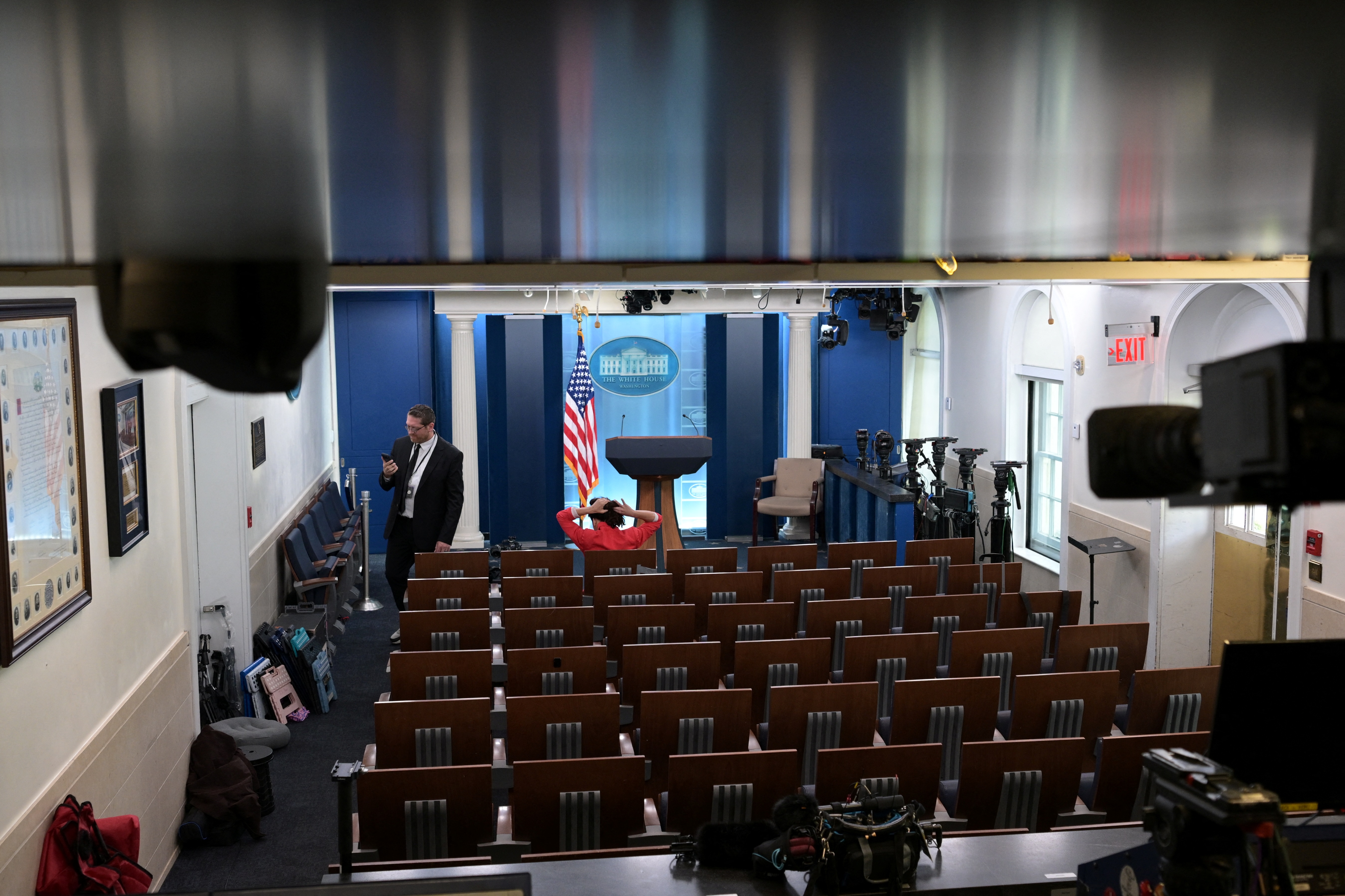
In a move that has sent shockwaves through the nation's capital and beyond, three prominent news organizations have taken legal action against President Donald Trump and top White House officials. The lawsuit, filed in federal court, challenges the recent ban imposed on journalists from CNN, Politico, and MS Now, barring them from the White House grounds and revoking their press credentials.
This unprecedented action raises critical questions about the boundaries of presidential power, the role of the free press in a democracy, and the enduring significance of the First Amendment. Azeem USA delves into the core of this unfolding legal battle, examining the arguments presented and the potential consequences for the future of journalistic access and public discourse.
📑 Table of Contents
1. The Unprecedented Ban: What Happened?
Last week marked a significant escalation in the often-fraught relationship between the Trump administration and segments of the media. Following a contentious press conference, reporters from CNN, Politico, and MS Now found themselves abruptly denied entry to the White House complex. Their press credentials, essential tools for their daily work, were confiscated by the Secret Service, effectively barring them from covering events and interacting with officials within the seat of American executive power.
This action was not preceded by extensive warnings or a clear, documented process for credential revocation. Instead, it was described by the White House as a response to what they deemed unfair or biased coverage. However, the swift and seemingly arbitrary nature of the ban immediately drew sharp criticism from press freedom advocates and legal experts, who viewed it as a punitive measure rather than a standard security or administrative decision.
The Immediate Impact
The immediate consequence of the ban was the practical inability of these journalists to perform their jobs effectively, hindering their ability to gather information, ask questions, and report on White House activities in real-time.
2. The Legal Challenge: A 'Direct Assault'?
In response to this perceived infringement, CNN, Politico, and MS Now collectively announced their intention to file a federal lawsuit. In a joint statement, the news organizations explicitly characterized the White House ban as a "direct assault on the First Amendment." This powerful framing underscores their belief that the administration's actions go beyond mere policy disagreements and strike at the heart of constitutional protections for a free press.
The lawsuit aims to achieve a swift and decisive outcome: the immediate restoration of access for their reporters. By seeking legal recourse, these media outlets are not just fighting for their own access but are positioning themselves as defenders of a broader principle – that the government cannot arbitrarily exclude news organizations it deems critical or unfavorable. The legal strategy centers on demonstrating that the ban violates the constitutional rights of both the press and the public to receive information.
Grounds for the Lawsuit
The core arguments likely revolve around the First Amendment's guarantees of freedom of speech and the press, asserting that the ban constitutes viewpoint discrimination.
3. First Amendment Under Scrutiny

The First Amendment to the U.S. Constitution states, "Congress shall make no law... abridging the freedom of speech, or of the press." While this amendment primarily restricts legislative action, its principles have been interpreted over decades to apply to executive actions as well, particularly when those actions threaten to silence or impede the press. The plaintiffs argue that the White House press ban is an unconstitutional infringement on these fundamental rights.
The legal battleground will likely involve dissecting whether the ban constitutes a form of viewpoint discrimination. Critics of the administration argue that excluding journalists based on the perceived slant of their reporting, rather than objective security concerns or established journalistic misconduct, is precisely the kind of government overreach the First Amendment was designed to prevent. The courts will need to determine if the White House's justifications for the ban are legally sound or merely pretexts for silencing critical voices.
The Public's Right to Know
Beyond the rights of the news organizations themselves, the lawsuit also implicitly champions the public's right to be informed by a diverse and unfettered press.
4. Precedents and Potential Ramifications
Legal experts are closely watching this case, as it could set significant precedents for the future relationship between the presidency and the press corps. Historically, while access has been managed and sometimes restricted, outright bans based on editorial content have been rare and legally contentious. The outcome could influence how future administrations handle press access and how courts interpret the limits of executive power in regulating journalistic activity.
Should the court rule in favor of the news organizations, it could establish a stronger legal framework protecting journalists from arbitrary exclusion from government spaces and events. Conversely, if the administration prevails, it might embolden future leaders to exert greater control over media access, potentially chilling investigative journalism and public scrutiny. The ramifications extend to the very definition of a functioning democracy, where an informed citizenry relies on the ability of journalists to access and report information freely.
The Role of the Press Corps
This situation highlights the vital, often challenging, role of the White House press corps in holding power accountable.
5. The Future of Press Access in the Digital Age
In an era dominated by social media, rapid news cycles, and a polarized information landscape, the physical access granted by White House press credentials holds symbolic and practical importance. While news organizations can report from afar, the ability to be present, observe interactions, and ask immediate follow-up questions is crucial for nuanced and timely reporting. This lawsuit arrives at a time when the very nature of news dissemination and consumption is evolving rapidly.
The outcome of this legal challenge will undoubtedly shape discussions about the evolving role of traditional media versus digital platforms and the government's responsibility in ensuring equitable access for all legitimate news gatherers. It forces a broader conversation about transparency, accountability, and the mechanisms necessary to safeguard the public's right to information in an increasingly complex media environment. As we move forward, the principles at stake in this lawsuit will continue to resonate, influencing how power and the press interact in the years to come.
Navigating a New Media Landscape
The case underscores the need for clear guidelines and protections for journalistic activities in the digital age.
🔥 Stay informed on critical issues shaping our nation by following Azeem USA.
Conclusion
The lawsuit filed by CNN, Politico, and MS Now against President Trump over the White House press ban represents a pivotal moment in the ongoing dialogue between the executive branch and the free press. By framing the ban as a "direct assault on the First Amendment," these news organizations have elevated the dispute beyond a mere administrative grievance to a fundamental constitutional question.
As the legal proceedings unfold, the nation watches closely. The outcome will not only determine the immediate access of these journalists but will also carry significant weight in shaping the future landscape of press freedom, government transparency, and the essential checks and balances that underpin a healthy democracy. The principles debated in this courtroom will echo far beyond the Beltway, impacting how information flows and accountability is maintained in the digital age.
❓ FAQ
Who is suing President Trump?
CNN, Politico, and MS Now are suing President Trump and three top advisers over the White House press ban.
What is the main reason for the lawsuit?
The news organizations argue that the White House press ban is a "direct assault on the First Amendment" and an unconstitutional infringement on press freedom.
What do the news organizations want to achieve?
They seek the immediate restoration of press access for their reporters to the White House complex.
What constitutional amendment is central to this case?
The First Amendment, which protects freedom of speech and the press, is central to the lawsuit.
What are the potential long-term implications of this lawsuit?
The case could set precedents for future interactions between the presidency and the press, influencing the interpretation of executive power and press rights.
Comments
Post a Comment