
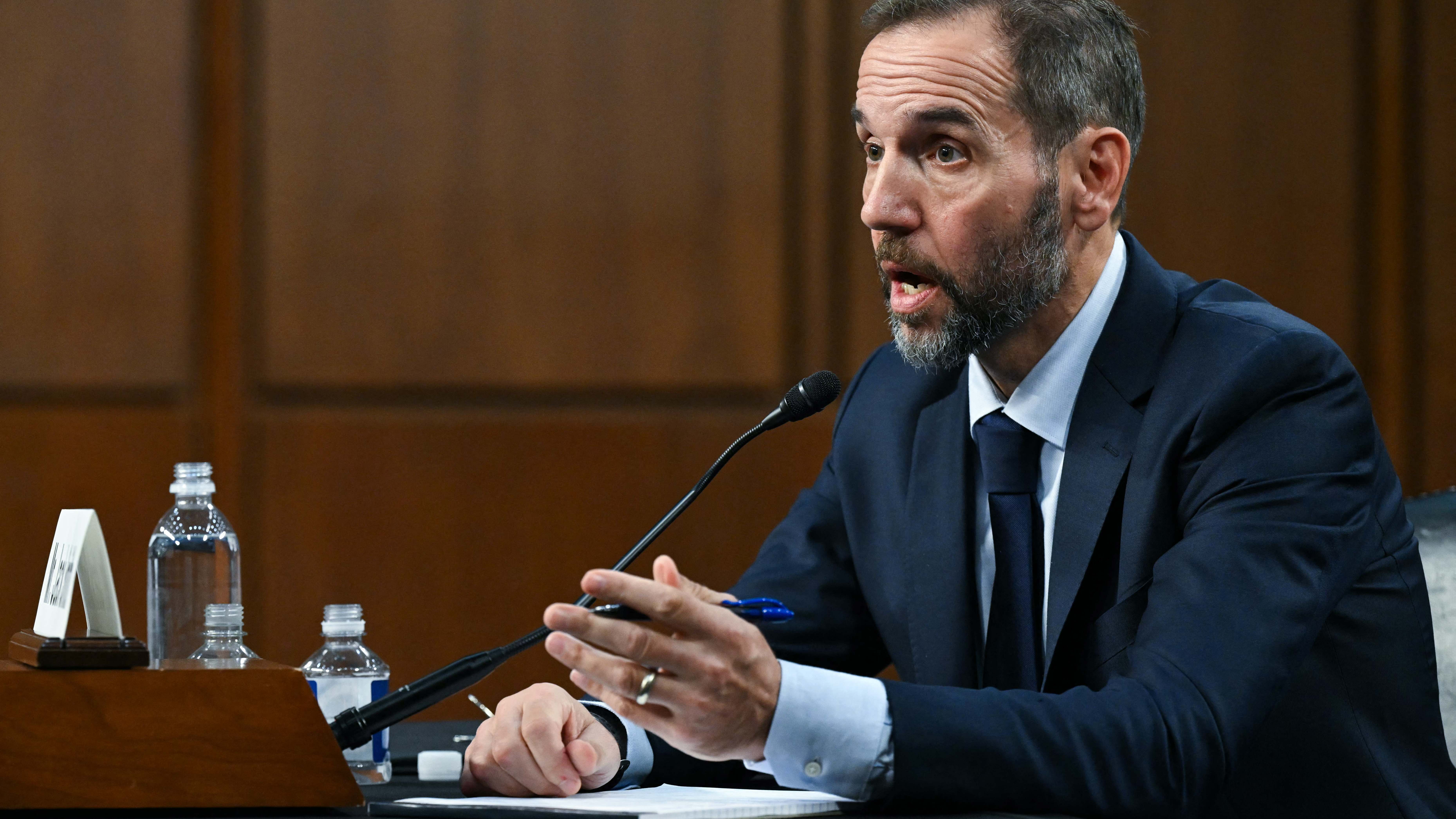
In the often-turbulent waters of American politics, few figures command as much attention as Special Counsel Jack Smith. His dual investigations into former President Donald Trump have placed him at the epicenter of intense legal and political battles. Recently, Smith appeared before the Senate Judiciary Committee, facing a barrage of questions and criticism from Republican senators. This hearing was more than just a procedural appearance; it was a critical moment for Smith to defend his actions and for the public to gain insight into the complexities of these high-profile probes.
This post delves into the key moments and takeaways from Jack Smith's appearance, dissecting the arguments made, the defenses presented, and the broader implications for the ongoing legal landscape surrounding Donald Trump. We will explore the core issues raised by the senators, Smith's responses, and what this signifies for the future of these investigations and the principles of justice they represent.
📑 Table of Contents
1. The Setting: A High-Stakes Confrontation
The Senate Judiciary Committee hearing was charged with political tension. Presided over by Chairman Chuck Grassley, the committee room became a battleground where the Special Counsel's investigative methods were put under the microscope. Republican senators, many of whom have been vocal critics of the Department of Justice's actions against Trump, seized the opportunity to question Smith directly. Their line of inquiry focused on perceived overreach, prosecutorial discretion, and the very foundations of the investigations themselves.
Smith, known for his measured and professional demeanor, navigated the often-combative questioning with a steady hand. He presented his role as one of impartial adherence to the law, emphasizing that his investigations were driven by evidence and legal standards, not political considerations. The senators' questions, however, often veered into partisan territory, reflecting the deep divisions within the political landscape regarding the legitimacy of the probes.
The Stakes Involved
The significance of this hearing cannot be overstated. It provided a public forum for the defense of the Special Counsel's work against a backdrop of accusations of political motivation. Smith's testimony aimed to reinforce the integrity of the Justice Department and the principle that no one is above the law, regardless of their political standing.
2. Defending the Mar-a-Lago Documents Probe
A central focus of the senators' scrutiny was the investigation into the classified documents found at former President Trump's Mar-a-Lago residence. Republicans questioned the necessity of criminal charges, suggesting that alternative resolutions might have been more appropriate. They probed Smith's decision-making process regarding the handling of these sensitive materials and the subsequent legal actions taken.
Smith, in his defense, articulated the gravity of the charges. He highlighted the deliberate retention of national defense information and the alleged obstruction of government efforts to retrieve these documents. He stressed that the indictment was based on a thorough review of evidence, including witness testimony and documents, which pointed towards criminal conduct. His remarks underscored the Justice Department's commitment to upholding laws protecting national security secrets.
Evidence and Legal Basis
The Special Counsel emphasized that the indictment was not a political act but a legal necessity stemming from the evidence gathered. He detailed the legal framework that governs the handling of classified information and the severe consequences for mishandling such materials, reinforcing the seriousness with which these matters are treated under the law.
3. Scrutiny Over the January 6th Investigation

The second major prong of Smith's investigations, concerning the events surrounding January 6th, 2021, and efforts to overturn the 2020 election, also came under fire. Senators questioned the scope and duration of this probe, with some implying it was politically motivated to target a political opponent.
Smith defended this investigation by framing it as a crucial inquiry into alleged conspiracies to obstruct a lawful transfer of presidential power. He reiterated that the investigation was proceeding based on facts and evidence, aiming to hold accountable those responsible for undermining democratic processes. His responses aimed to convey that the investigation was a necessary component of upholding the rule of law and constitutional order.
Upholding Democratic Institutions
The Special Counsel's defense in this area focused on the fundamental importance of protecting democratic institutions. He argued that investigating alleged attempts to subvert the electoral process was not a political choice but a duty mandated by the principles of justice and the Constitution itself.
4. The Subpoena Controversy: Lawmaker Call Logs
A particularly contentious point of discussion was Smith's decision to subpoena the call logs of certain lawmakers as part of his investigations. Republican senators viewed this as an unprecedented and potentially overreaching move, raising concerns about the separation of powers and legislative privilege.
Smith defended the use of subpoenas, including those targeting lawmakers' records, as a necessary investigative tool when probable cause exists. He explained that such actions are not taken lightly and are pursued only when essential for uncovering facts critical to the investigation. He argued that the subpoenas were narrowly tailored and aimed at gathering specific, relevant information, not at infringing upon legislative functions.
Balancing Investigative Needs and Privilege
The Special Counsel sought to strike a balance between the imperative of thorough investigation and the respect for constitutional principles. He asserted that the process involved careful legal consideration to ensure that investigative actions were both lawful and justified, even when they intersected with the activities of elected officials.
5. Smith's Defense: Independence and Rule of Law
Throughout the hearing, Jack Smith consistently positioned himself as an independent prosecutor dedicated to upholding the rule of law. He emphasized his commitment to impartiality, stating that his investigations are guided solely by the facts and the law, free from political influence or partisan considerations.
His defense rested on the principle that the Justice Department must be able to investigate alleged criminal conduct without fear or favor, regardless of the subject's prominence or political affiliation. Smith's testimony aimed to reassure the public and lawmakers that the investigations are being conducted with integrity and a steadfast adherence to legal standards, reinforcing the idea that justice applies equally to all.
The Path Forward
The hearing concluded with the underlying tensions unresolved, but Smith provided a clear account of his office's approach. The ongoing investigations continue, and their outcomes will undoubtedly shape the political and legal landscape for years to come. Smith's defense highlighted the critical role of independent prosecution in maintaining public trust and ensuring accountability within the American justice system.
🔥 Stay informed on critical legal and political developments impacting the nation.
Conclusion
The Senate Judiciary Committee hearing provided a crucial, albeit contentious, platform for Special Counsel Jack Smith to defend his high-profile investigations into former President Donald Trump. Facing sharp criticism and pointed questions from Republican senators, Smith remained steadfast in his defense of the Mar-a-Lago documents probe and the January 6th inquiry, emphasizing evidence, legal standards, and the principle of equal justice under law.
The hearing underscored the deep political divisions surrounding these investigations but also highlighted the critical role of independent prosecutors in navigating complex legal challenges. As these probes continue, Smith's commitment to impartiality and adherence to the rule of law will remain central to maintaining public confidence in the justice system. The events of this hearing serve as a potent reminder of the ongoing efforts to ensure accountability and uphold the integrity of democratic processes in the United States.
❓ FAQ
What was the primary reason for Jack Smith's appearance before the Senate Judiciary Committee?
Jack Smith appeared before the committee to defend his investigations into former President Donald Trump, particularly the Mar-a-Lago classified documents case and the probe into events surrounding January 6th, amid intense scrutiny from Republican senators.
What specific investigations did Jack Smith defend?
He defended the investigation into the classified documents found at Mar-a-Lago and the investigation into alleged efforts to overturn the 2020 election results and the events of January 6th, 2021.
What was the main point of contention regarding subpoenas?
A key point of contention was Jack Smith's decision to subpoena the call logs of certain lawmakers, which Republican senators viewed as potentially overreaching and infringing on legislative privilege.
How did Jack Smith characterize his role and the investigations?
Smith characterized his role as an independent prosecutor committed to impartiality and the rule of law, stating that the investigations are driven solely by facts and evidence, not political considerations.
What is the broader significance of this hearing?
The hearing underscored the political divisions surrounding the Trump investigations, highlighted the importance of independent prosecution, and provided insight into the defense of the Justice Department's actions in pursuing accountability regardless of a subject's political status.
Comments
Post a Comment