
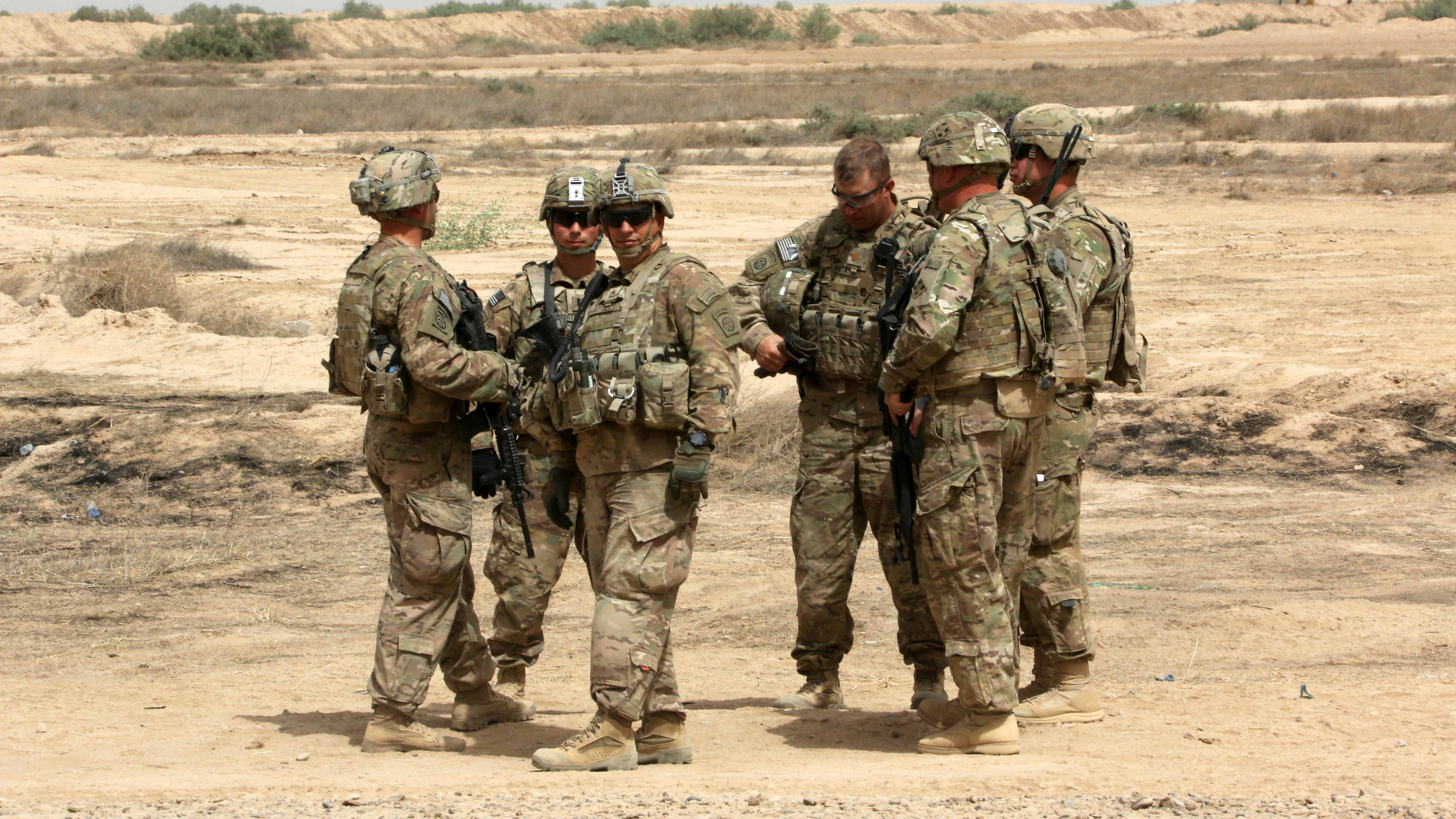
After more than a decade of intricate involvement, the United States has officially completed the withdrawal of its last troops from Iraq. This significant development marks the conclusion of a long and complex military mission that began with the stated aim of combating extremist groups and ensuring regional stability.
As the final soldiers departed an air base in northern Iraq, the world watches to understand the full implications of this withdrawal, not just for Iraq itself, but for the broader geopolitical landscape of the Middle East. Azeem USA provides a comprehensive analysis of this pivotal moment in international relations.
📑 Table of Contents
1. The End of an Era: Withdrawal Confirmed
The announcement from Baghdad confirmed the departure of the last American military personnel, bringing a definitive close to a 12-year presence. This withdrawal was not a sudden event but was finalized following an agreement reached between the Iraqi government and the United States. The mission, primarily focused on degrading and defeating the Islamic State (ISIS) group, saw significant shifts in strategy and objectives over its lifespan.
The final phase of the withdrawal was executed under a pre-arranged framework, ensuring an orderly departure. This move signals a new chapter for Iraq, one where it is expected to shoulder the full responsibility for its internal security and defense. The U.S. military's departure is a momentous occasion, reflecting evolving strategic priorities for both nations.
The Significance of the Final Departure
The physical departure of the last U.S. troops from Iraqi soil is a symbolic and practical milestone. It underscores a commitment made by both governments to transition towards a new phase of bilateral relations, moving away from a direct combat role for U.S. forces to potentially focusing on advisory and training capacities, if any presence remains.
2. A Complex History: From Invasion to ISIS Fight
The U.S. military's engagement in Iraq has a history far longer and more tumultuous than the recent 12-year mission against ISIS. The initial invasion in 2003, aimed at regime change and combating alleged weapons of mass destruction, led to a prolonged insurgency and sectarian violence. The subsequent years were marked by a gradual drawdown, a surge of troops under President Obama, and the eventual need to re-engage against the rise of ISIS.
The fight against ISIS was a critical phase that necessitated a renewed U.S. military presence. American forces played a pivotal role in training, advising, and supporting Iraqi security forces, as well as conducting airstrikes that were instrumental in pushing back the extremist group from vast territories it once controlled. This prolonged struggle highlighted the persistent challenges of counter-terrorism and nation-building in a complex region.
Evolution of U.S. Objectives
Over the years, the strategic objectives of the U.S. in Iraq have evolved significantly. Initially focused on regime change and later on counter-insurgency, the mission shifted towards supporting Iraqi sovereignty and combating the existential threat posed by ISIS. This evolution reflects the dynamic nature of the region and the adaptive strategies employed by international forces.
3. The Deal: Baghdad and Washington's Agreement

The decision to withdraw was solidified in a strategic dialogue between Baghdad and Washington, culminating in an agreement to end the U.S. combat mission. This pact was reportedly reached two years prior to the final withdrawal, setting a timeline for the drawdown of forces. The Iraqi government has consistently advocated for full sovereignty and control over its security apparatus, making the withdrawal a key political objective.
This agreement underscores a mutual understanding that Iraqi forces are now capable of handling the nation's security challenges independently. While the exact terms of any ongoing security cooperation remain subject to interpretation and future discussions, the formal end of the combat mission signifies a major shift in the U.S.-Iraq security relationship. Baghdad views this as a triumph of its diplomatic efforts and a demonstration of its growing national capacity.
The Role of Iraqi Security Forces
The enhanced capabilities of the Iraqi Security Forces (ISF) have been a cornerstone of the argument for U.S. withdrawal. Years of training, equipping, and operational support have aimed to build a robust military and counter-terrorism apparatus capable of securing Iraq's borders and maintaining internal stability. The success of this transition hinges on the continued effectiveness and unity of these forces.
4. Regional Tensions: Iran's Shadow Over Iraq
The U.S. troop withdrawal occurs against a backdrop of heightened tensions between the United States and Iran, a relationship that has frequently spilled over into Iraq. Iran-backed militias have, at times, targeted U.S. forces and interests within Iraq, leading to retaliatory strikes by the U.S. This volatile dynamic adds a layer of complexity to the security calculus in the region.
The departure of U.S. troops could potentially alter the regional power balance. Iran has long exerted significant influence in Iraq through political channels and support for various militia groups. The extent to which this influence may grow or shift following the U.S. withdrawal remains a key concern for regional stability and for those within Iraq seeking to maintain its autonomy from external pressures.
The Impact of Iran-Backed Militias
Iran-backed militias operating within Iraq represent a significant factor in the country's internal politics and security. Their actions have often drawn U.S. responses, exacerbating regional tensions. The withdrawal of U.S. forces may embolden these groups or, conversely, push them towards greater integration within the formal Iraqi security structure, a complex balancing act for Baghdad.
5. Looking Ahead: The Future of Iraq and Regional Stability
The completion of the U.S. troop withdrawal presents Iraq with both opportunities and challenges. The nation must now consolidate its security gains, address lingering political fragilities, and foster economic development without the direct military presence of the United States. The success of this transition will largely depend on the Iraqi government's ability to govern effectively and maintain national unity.
For the broader Middle East, the end of this long U.S. military mission invites questions about future security architectures. It could signal a broader re-evaluation of U.S. military commitments in the region and potentially encourage greater regional dialogue and self-reliance among Middle Eastern nations. The path forward requires careful diplomacy and a commitment to de-escalation to ensure lasting peace and stability.
Challenges and Opportunities for Iraq
Iraq faces the dual challenge of rebuilding its infrastructure and economy while ensuring that its hard-won security gains are not reversed. The withdrawal presents an opportunity for Iraq to assert its full sovereignty and chart its own course, free from direct foreign military intervention, but this path is fraught with internal and external complexities.
🔥 Stay informed on global affairs and geopolitical shifts with Azeem USA.
Conclusion
The conclusion of the U.S. military mission in Iraq after 12 years marks a significant geopolitical shift. While the immediate focus is on the departure of troops, the long-term implications for Iraq's stability, regional security dynamics, and the ongoing fight against terrorism are profound.
As Iraq steps fully into its role of managing its own security, the international community will be observing closely. The success of this transition will not only define Iraq's future but also influence the broader strategic landscape of the Middle East for years to come. Azeem USA will continue to monitor these developments.
❓ FAQ
When did the U.S. first enter Iraq?
The U.S. initially invaded Iraq in 2003.
What was the primary goal of the last 12 years of U.S. presence?
The primary goal was to fight and defeat the Islamic State (ISIS) group.
Was the withdrawal a sudden decision?
No, the withdrawal was based on an agreement reached between Baghdad and Washington two years prior to the final departure.
Are all U.S. personnel completely out of Iraq?
The announcement confirms the withdrawal of all U.S. troops following the completion of the combat mission.
What are the potential implications of this withdrawal for the region?
The withdrawal could alter regional power dynamics, influence the role of Iran-backed militias, and necessitate a greater focus on regional self-reliance for security.
Comments
Post a Comment