Breaking: 8 Navy Sailors in Iran War Group Attempted Suicide 🚨 Breaking News Analysis 📸 Image Credit: cnn.com By Azeem-USA · Wed Sep 23 2026 English (en-US) The United States Navy has confirmed that eight sailors assigned to a carrier strike group involved in the recent conflict with Iran have attempted suicide. This development comes as the unit transitions from a grueling deployment, signaling a severe mental health crisis among personnel exposed to high-intensity combat operations in the Middle East. This analysis examines the circumstances surrounding these attempts, the psychological impact of the Iran war deployment, and the systemic challenges the military faces in addressing personnel welfare post-conflict. 📑 Table of Contents The Incident Report Details The Toll of High-Intensity Combat Operations Mental Health and the Military Readiness Gap Institutional Fallout and Leadership Pressure What Lies Ahead for the Carrier Group FAQ #Az...

🚨 Breaking News Analysis
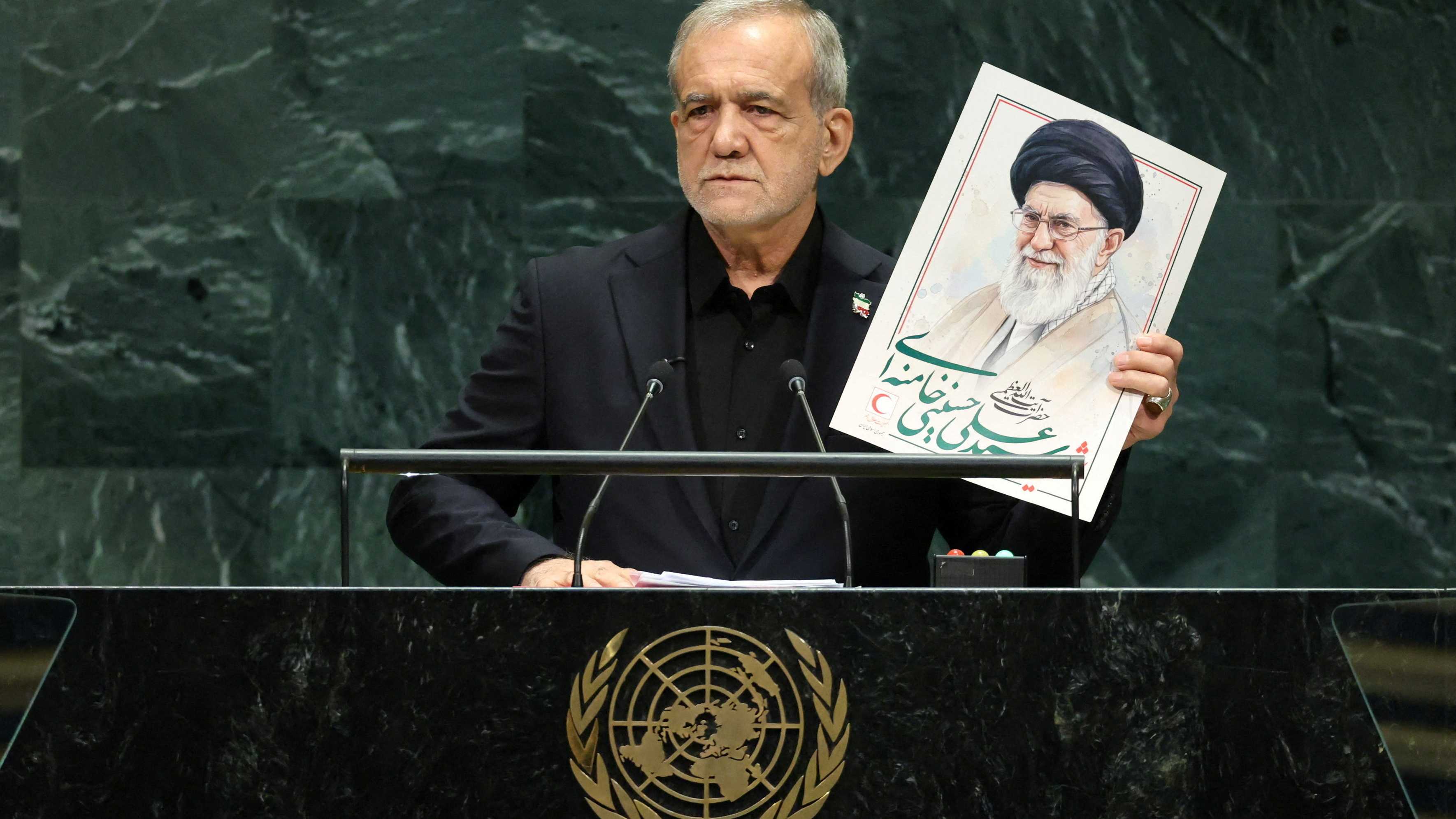
Iran's President Masoud Pezeshkian has declared the nation will not 'bend the knee' despite a dire threat from US President Donald Trump to 'annihilate' the Islamic Republic. Speaking at the UN General Assembly, Pezeshkian signaled a willingness for diplomatic solutions while simultaneously hardening Iran's stance against escalating pressure, setting a critical juncture in US-Iran relations.
This analysis will delve into the nuances of Pezeshkian's statement, dissecting the context of Trump's aggressive rhetoric, Iran's specific diplomatic conditions, and the broader geopolitical ramifications of this high-stakes standoff.
📑 Table of Contents
1. Iran Holds Firm on Sovereignty Amidst External Pressure
President Masoud Pezeshkian's address to the UN General Assembly marks a pivotal moment, drawing a clear line between resistance and surrender. His assertion that Iran will never 'bend the knee' directly counters nearly seven months of escalating conflict and pressure. This declaration is not merely rhetoric; it signals a deep-seated national resolve to preserve sovereignty, particularly in the face of what Iran perceives as bullying tactics from the United States.
The President's statement emphasizes that increased sanctions and pressure will only fortify the Iranian people's determination. This framing positions Iran not as a supplicant seeking terms, but as a nation prepared to endure hardship for its independence. The underlying message is one of resilience, suggesting that external coercion will be met with internal solidarity, a familiar theme in Iranian political discourse.
The Role of Sanctions and Blockades
Crucially, Pezeshkian tied any potential diplomatic resolution to the lifting of the US blockade on Iranian ships. This condition highlights Iran's focus on economic relief and its demand for tangible concessions, not just abstract agreements. The blockade, in Iran's view, is a direct impediment to normalizing relations and a symbol of ongoing economic warfare.
2. The Context of Trump's Stark Threat
US President Donald Trump's threat to 'annihilate' Iran if a deal is not reached injects a dangerous escalation into the already tense geopolitical landscape. This aggressive posture, delivered in the context of international diplomacy, underscores a maximalist approach that prioritizes decisive action over protracted negotiation. Such rhetoric often serves to signal a willingness to use overwhelming force, intended to compel adversaries into accepting US terms.
Trump's strategy has historically involved leveraging economic sanctions and the threat of military action to achieve foreign policy objectives. The 'annihilation' threat, while extreme, aligns with this pattern of applying maximum pressure. It aims to create a sense of existential urgency for Iran, pushing its leadership towards a more compliant stance. However, this approach risks backfiring, potentially solidifying Iranian resistance and deepening regional instability.
Historical Precedents and Strategic Messaging
This is not the first time such stark ultimatums have been issued in international relations, but the directness and severity of Trump's language are notable. It reflects a transactional worldview where perceived threats are met with overwhelming counter-threats. The timing, often coinciding with critical diplomatic forums like the UN General Assembly, suggests a deliberate strategy to dominate the narrative and dictate terms from a position of perceived strength.
3. Navigating the Diplomatic Minefield: Iran's Terms

President Pezeshkian's embrace of diplomacy, while conditional, offers a potential pathway away from conflict. His insistence on a diplomatic solution signals an awareness of the unsustainable costs of prolonged confrontation, both economically and strategically. However, the prerequisites he outlined are significant, indicating that Iran is not prepared for a one-sided agreement.
The demand for an end to the US blockade on Iranian ships is central to Iran's negotiating position. This is not merely about maritime freedom; it signifies a desire for the removal of economic sanctions that have crippled its economy. Iran views these sanctions as collective punishment and a primary obstacle to any meaningful engagement. Therefore, any 'deal' that does not address this core economic grievance would likely be unacceptable to Tehran.
The Balance Between Resistance and Negotiation
Pezeshkian's strategy appears to be a delicate balancing act: projecting strength and resolve against external pressure while keeping the door open for dialogue. This dual approach aims to satisfy domestic hardliners who value national pride and resistance, while also signaling to the international community that Iran is a rational actor seeking a resolution. The success of this strategy hinges on whether the US is willing to engage on terms that acknowledge Iran's core concerns, particularly regarding economic sanctions.
4. Geopolitical Implications and Key Stakeholders
The exchange between President Pezeshkian and President Trump has significant implications for regional and global stability. Trump's aggressive stance could embolden hardliners within Iran, potentially undermining Pezeshkian's more moderate diplomatic overtures. Conversely, if Iran is perceived as unwilling to negotiate seriously, it could provide justification for further US pressure or even military action.
Key stakeholders include Iran's neighbors, particularly those in the Persian Gulf, who are often caught in the crossfire of US-Iran tensions. Russia and China, who have varying degrees of strategic alignment with Iran, will be closely monitoring the situation, potentially seeking to leverage the standoff for their own geopolitical gains. The international community, particularly European allies, will likely urge de-escalation and a return to dialogue, though their influence may be limited given the stark divergence in approaches.
The Impact on Regional Dynamics
The rhetoric and potential actions stemming from this standoff could further destabilize an already volatile region. Increased tensions could lead to proxy conflicts, disruptions to global energy markets, and a heightened risk of miscalculation. The recent history of conflict in the Middle East suggests that aggressive posturing, particularly involving major powers, rarely leads to swift or peaceful resolutions.
5. What Happens Next: A Tightrope Walk
The immediate future hinges on whether either side shifts its position or employs further escalatory measures. President Pezeshkian's offer of diplomacy, though conditional, provides an opening. However, the credibility of this offer depends on reciprocal steps from the US, such as a willingness to discuss sanctions relief or engage in direct talks without preconditions.
Analysts suggest that the coming weeks will be critical. If Trump maintains his maximalist stance, Iran may feel compelled to double down on its resistance narrative, potentially leading to increased militarization or further regional provocations. Conversely, if the US signals a willingness to explore a less confrontational path, even incrementally, it could create space for genuine negotiations. The international community's role in mediating or applying pressure on both sides will also be a significant factor.
Watching for Diplomatic Signals
The world will be watching for concrete diplomatic signals beyond the public statements. This includes any back-channel communications, the actions of foreign ministers, or any adjustments in military postures. The success or failure of this diplomatic gambit will have profound consequences for the future of Iran, the stability of the Middle East, and the broader international order.
🔥 Follow Azeem USA for continuous updates on this developing international crisis.
Conclusion
President Masoud Pezeshkian has presented Iran's position: ready for diplomacy but unwilling to concede on national sovereignty or economic well-being under duress. His rejection of 'bending the knee' in response to President Trump's 'annihilation' threat underscores a commitment to resistance, coupled with a condition for meaningful dialogue: the lifting of US blockades on Iranian shipping.
The coming period represents a critical test for both nations. The potential for de-escalation exists through diplomatic channels, but it requires a willingness from both sides to move beyond maximalist rhetoric and address core grievances. The world watches to see if this tense standoff will lead to conflict or a fragile, hard-won peace.
❓ FAQ
What did Iranian President Pezeshkian state regarding the US threat?
President Pezeshkian stated Iran would not 'bend the knee' and would resist increased pressure, but expressed readiness for a diplomatic solution.
What condition did Iran place on a diplomatic deal?
Iran insisted that any deal must include an end to the US blockade stopping Iranian ships.
What was President Trump's threat towards Iran?
President Trump threatened to 'annihilate' the Islamic Republic if a deal is not reached soon.
Why is the US blockade on Iranian ships significant?
The blockade is significant as Iran views it as a primary economic grievance and a key obstacle to normalizing relations.
What are the potential geopolitical implications?
The standoff could destabilize the region, potentially leading to proxy conflicts, market disruptions, and a heightened risk of miscalculation.
Comments
Post a Comment