
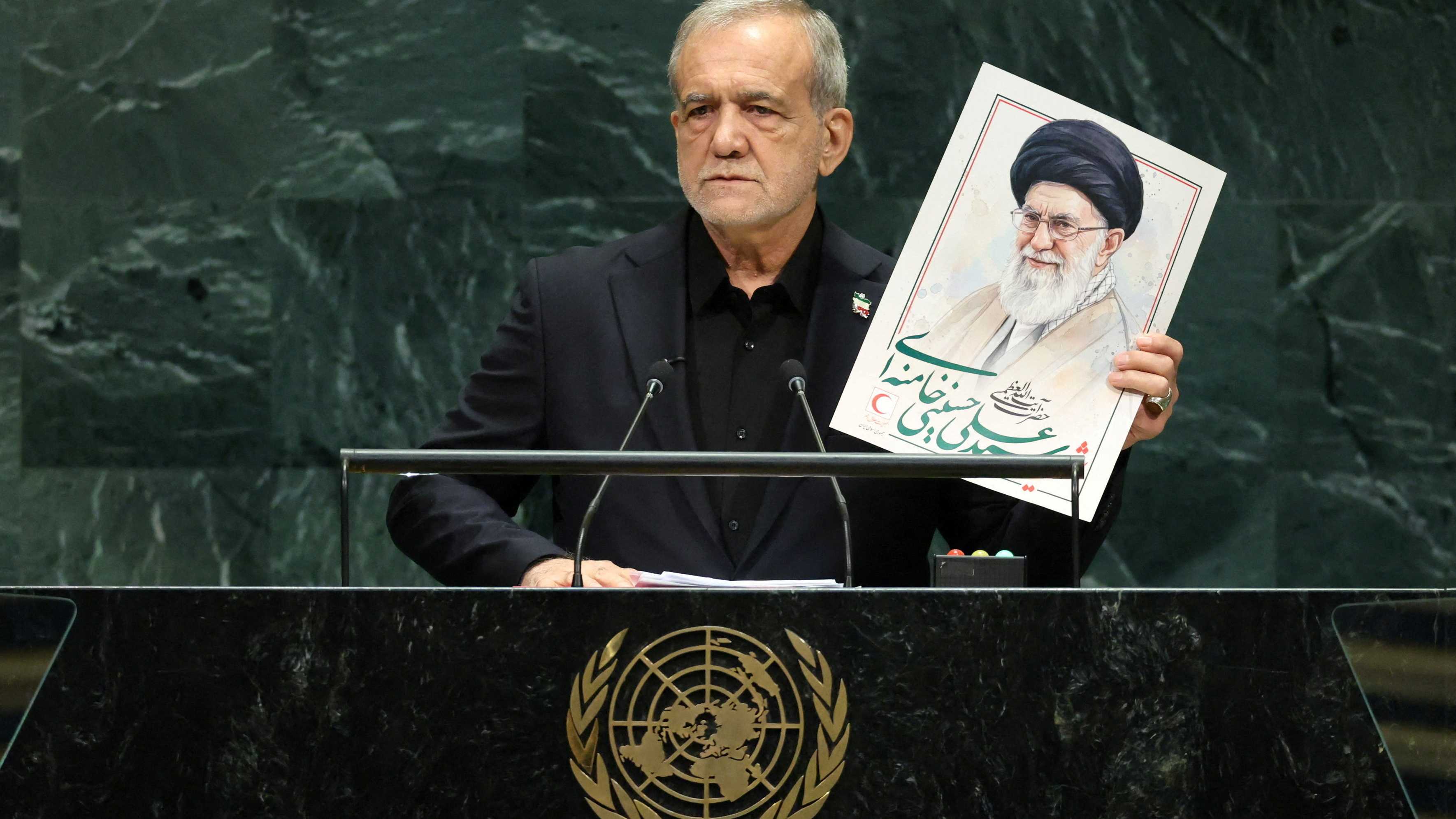
In the high-stakes arena of international diplomacy, the recent exchanges between Iran and the United States have once again captured global attention. Against a backdrop of persistent tensions, Iranian President Masoud Pezeshkian addressed the United Nations General Assembly, articulating a clear message: while Tehran remains open to dialogue, it will not succumb to external pressure or surrender its sovereignty. This statement comes in the wake of pointed rhetoric from US President Donald Trump, setting a complex stage for potential future engagements.
This development is critical for understanding the current trajectory of US-Iran relations. At Azeem USA, we delve into the nuances of President Pezeshkian's address, the implications of Trump's threats, and the arduous but necessary path towards de-escalation. Can diplomacy prevail in an environment fraught with historical animosity and starkly contrasting positions?
📑 Table of Contents
1. The UN Stage: A Tale of Two Speeches
The United Nations General Assembly has long served as a global platform for world leaders to articulate their nation's positions and engage in diplomatic discourse. This year, the speeches delivered by the leaders of Iran and the United States offered a stark contrast, highlighting the deep chasm that often exists in international relations. President Trump’s address, characterized by its direct and forceful language, delivered a clear warning to Iran, threatening severe consequences should the nation continue on its current path. The choice of words, particularly the threat to "annihilate" Iran, immediately set a combative tone.
Following this, President Pezeshkian’s address provided a counterpoint, emphasizing Iran's commitment to diplomacy while firmly rejecting any notion of capitulation. His condemnation of what he termed "signs of a bullying mentality" directly addressed the confrontational stance adopted by the US. This juxtaposition of aggressive posturing and a call for dialogue underscores the complex and often contradictory nature of diplomatic negotiations in the current geopolitical climate.
The Significance of the UN Platform
Delivering messages at the UN General Assembly carries significant weight. It is a moment where nations can project their intentions to a global audience, seeking to garner international support or signal their resolve. For both leaders, the platform offered an opportunity to define their respective positions on the world stage, influencing perceptions and potentially shaping the actions of other international players.
2. President Pezeshkian's Diplomatic Stance
President Pezeshkian’s address to the UN General Assembly was carefully calibrated to project an image of a nation seeking peaceful resolution without compromising its core principles. His assertion that Iran would "never surrender to US pressure" was a clear message to both domestic and international audiences that national sovereignty and dignity remain paramount. This stance is crucial for maintaining internal political stability and projecting strength in the face of perceived external aggression.
The Iranian President’s emphasis on the necessity of continuing diplomatic efforts, despite the wide divergence in views, signals a pragmatic approach. He acknowledged that the path forward is challenging but suggested that dialogue remains the only viable avenue for resolving disputes. This diplomatic overture, however, is intrinsically linked to Iran's refusal to be dictated to, framing any future negotiations within the context of mutual respect and equality, a position that has historically been a point of contention with the United States.
Balancing Firmness with Openness
The dual message of readiness for diplomacy coupled with an unyielding stance against surrender is a hallmark of Iranian foreign policy. It reflects a strategy designed to engage on its own terms, seeking to avoid being cornered into concessions that could be perceived as weakness. The president's words suggested that while Iran is willing to talk, the terms of engagement must be acceptable and not driven by coercion.
3. Trump's 'Annihilate Iran' Threat: A Recalibration?

President Trump’s threat to "annihilate" Iran, delivered at the same forum just days prior, represents a significant escalation in rhetoric. Such strong language often serves multiple purposes in international diplomacy, including signaling resolve to domestic audiences, attempting to intimidate adversaries, and potentially creating leverage for future negotiations. However, it also carries the substantial risk of hardening positions and making diplomatic breakthroughs more difficult.
The immediate aftermath of such a statement often involves careful analysis by all parties involved. For Iran, it reinforces the narrative of US hostility and strengthens the resolve to resist perceived bullying. For international observers, it raises concerns about the potential for miscalculation and unintended escalation. The effectiveness of such a threat as a diplomatic tool is highly debatable, often leading to increased tensions rather than desired concessions.
The Impact on Diplomatic Channels
While President Trump's rhetoric is often characterized by its directness, it can inadvertently close doors to the very dialogue he may seek to initiate. Threats of annihilation, even if intended as strong negotiating tactics, can be perceived as declarations of intent, pushing opposing sides further apart. This makes the task of diplomatic envoys and negotiators considerably more challenging, requiring them to overcome heightened suspicion and animosity.
4. The Narrow Path to De-escalation
Navigating the complex relationship between Iran and the United States requires a delicate balance, especially when high-stakes rhetoric is involved. President Pezeshkian’s insistence on continuing diplomacy, even in the face of such strong US pronouncements, suggests that channels for communication, however strained, are still considered essential. The challenge lies in finding common ground or at least a mutual understanding of red lines that can prevent further deterioration of the situation.
A senior Iranian official’s statement to Reuters, emphasizing that both nations remain "far apart on how to end their war but diplomacy must continue," succinctly captures the current predicament. This implies that while fundamental disagreements persist, the commitment to keep talking is a crucial, albeit fragile, element. De-escalation hinges on a mutual recognition that outright conflict serves no one's interests and that sustained, serious engagement is the only realistic alternative.
Key Areas for Diplomatic Focus
For diplomacy to progress, specific issues need to be addressed, likely including Iran's nuclear program, regional security concerns, and sanctions relief. President Pezeshkian’s call for continued dialogue suggests a willingness to engage on these fronts, provided it is done without coercion. The US, in turn, would need to signal a willingness to move beyond inflammatory rhetoric towards more substantive engagement, potentially involving a review of its existing sanctions regime.
5. Looking Ahead: Challenges and Opportunities
The current dynamic between Iran and the United States presents a critical juncture. President Pezeshkian's approach highlights a desire for a more constructive relationship, grounded in respect and dialogue, while President Trump's rhetoric underscores the deep-seated mistrust and power dynamics at play. The coming months will be crucial in determining whether this tension leads to further confrontation or opens a genuine window for diplomatic progress.
Ultimately, the path forward requires a concerted effort from both sides to de-escalate tensions and engage in meaningful negotiations. The international community will be watching closely, hoping that the calls for diplomacy are not overshadowed by the threats of conflict. For Iran, maintaining its stance of diplomatic engagement without surrender will be key, while for the United States, a shift towards more measured and consistent diplomatic engagement could pave the way for resolving long-standing issues.
The Role of International Cooperation
The success of any diplomatic initiative between Iran and the US is often influenced by the broader international context. Other global powers and regional actors have a vested interest in stability in the Middle East. Their engagement, whether through mediation or by encouraging both sides to adhere to diplomatic norms, can play a significant role in fostering an environment conducive to dialogue and de-escalation.
🔥 Stay informed on critical global affairs and geopolitical shifts with Azeem USA.
Conclusion
The recent exchange at the UN General Assembly underscores the precarious state of US-Iran relations. President Pezeshkian’s clear articulation of Iran's dual commitment to diplomacy and national sovereignty sets a firm tone, while President Trump's aggressive rhetoric highlights the significant challenges that lie ahead.
While the path to resolving the deep-seated issues between these two nations is arduous, the continued emphasis on dialogue, even amidst starkly contrasting positions, offers a glimmer of hope. The world watches to see if this fragile opening can be nurtured into substantive progress, moving away from the precipice of conflict towards a more stable future for the region and beyond.
❓ FAQ
What was the main message from Iran's President Pezeshkian at the UN?
President Pezeshkian stated that Iran backs diplomacy and dialogue but will never surrender to US pressure, condemning perceived "bullying mentality" from the US.
What was President Trump's threat towards Iran?
President Trump threatened to "annihilate" Iran during his speech at the UN General Assembly.
Are Iran and the US close to resolving their disputes?
According to a senior Iranian official, Iran and the US remain "far apart on how to end their war" but agree that diplomacy must continue.
What is Iran's general stance on diplomacy with the US?
Iran's position, as articulated by its president, is that it is open to diplomacy and dialogue but insists on not surrendering to external pressure, emphasizing national sovereignty.
What are the key challenges in US-Iran diplomatic relations?
Key challenges include deep-seated mistrust, differing views on regional security, Iran's nuclear program, sanctions, and the use of strong, often inflammatory, rhetoric by both sides.
Comments
Post a Comment