
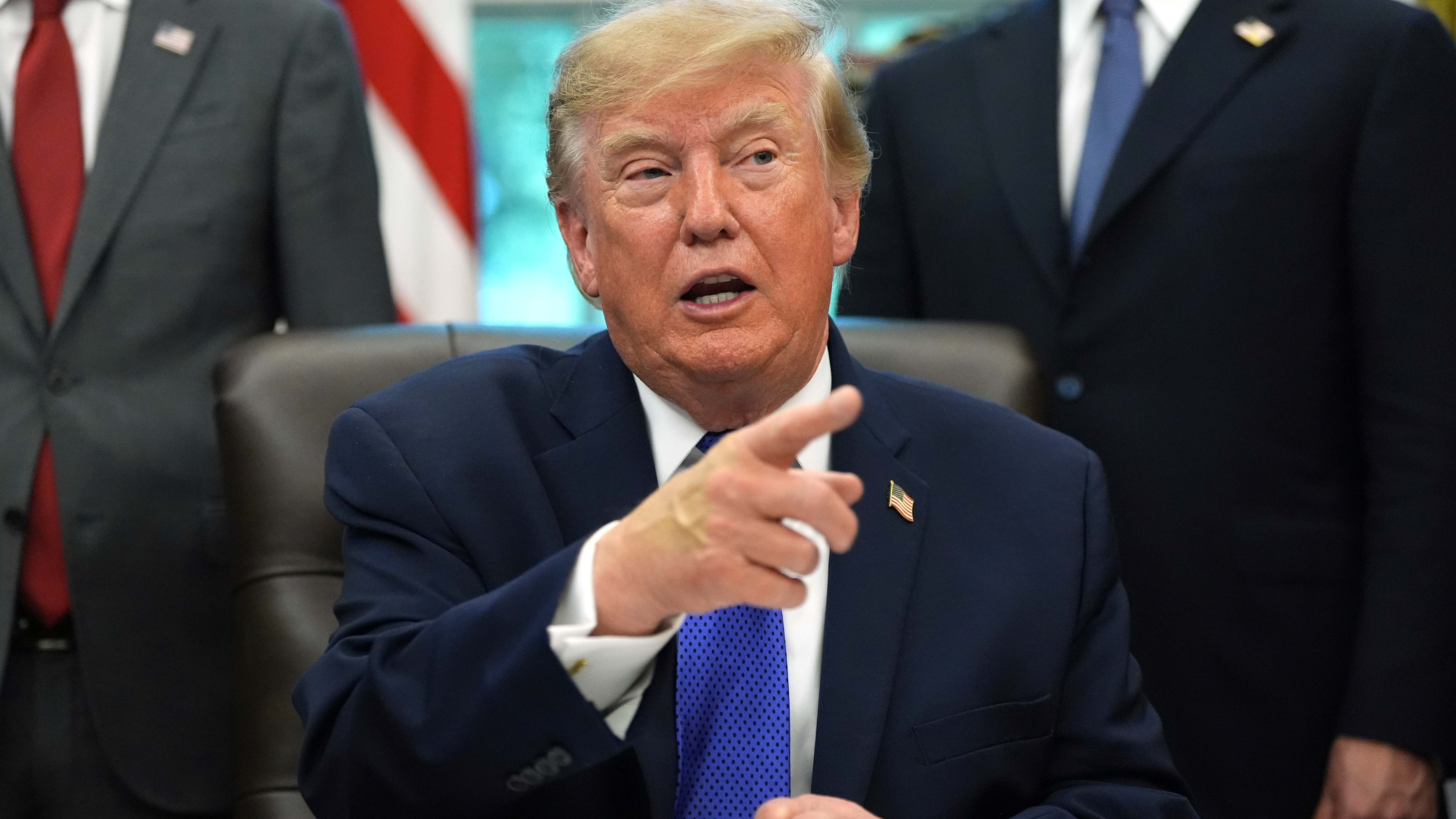
In the complex landscape of American politics, the boundary between official government communication and partisan campaigning has often become blurred. However, a significant rift has emerged within the Republican Party as President Donald Trump moves forward with new government-funded advertisements. This move has sparked a heated debate among Senate Republicans regarding the ethics of using public funds.
In this comprehensive analysis, we explore the nuances of the pushback from GOP senators, the legal and ethical arguments surrounding taxpayer money, and what this internal friction means for the future of the GOP's political strategy.
📑 Table of Contents
1. The Emerging Conflict Over Government-Funded Ads
President Trump has recently introduced a series of government-funded ads aimed at 'casting out the communists, Marxists, and fascists.' While the messaging is framed as a defense of national values, the funding mechanism has sent shockwaves through Capitol Hill. The core of the issue lies in the use of federal resources to deliver a message that many perceive as deeply deeply charged.
The conflict is not necessarily about the content of the message itself, but the source. Many within the Republican ranks agree with the rhetoric regarding radical ideologies, yet they find the use of taxpayer dollars to disseminate these messages to be a departure from established political norms.
The Nature of the Messaging
The ads utilize high-intensity language that mirrors Trump's previous campaign rallies. By framing these as government-sanctioned initiatives, the lines between state policy and presidential campaigning become dangerously thin.
2. Why Senate Republicans are Raising the Alarms
Senate Republicans are increasingly warning the president not to use taxpayer money to promote himself in such a brazenly political way. Their concern is rooted in the precedent this sets for future administrations. If the executive branch can use the federal budget as a megaphone for partisan goals, the integrity of government communication could be permanently compromised.
Critics within the party argue that while they may support the message, it should be funded through private campaign donations rather than public coffers. They point out the resemblance to past campaign advertisements used right before midterm elections as evidence that the intent is electoral rather than informational.
The Argument for Taxpayer Protection
Senators have emphasized that the public should not be forced to fund advertisements that serve a specific political figure's narrative, viewing this as a matter of fundamental fairness and fiscal responsibility.
3. The Fine Line Between Policy and Promotion

The legal and ethical boundary between policy policy and political promotion is narrow. Generally, government ads are intended to inform the public about available services, safety measures, or national policy. When these ads shift toward attacking political opponents or promoting a specific ideological agenda, they enter the territory of the Hatch Act and beyond.
The GOP pushback reflects a desire to protect the party from accusations of weaponizing the state apparatus. By speaking out now, these senators are attempting to maintain a distinction that prevents the government from being viewed as a mere tool for the sitting president.
Defining Official Communication
To maintain public trust, there must be clarity on what constitutes a public service announcement versus a political advertisement. The current strategy fails to provide that clear distinction.
4. Historical Precedents and Ethical Concerns
Looking back, the use of government resources for political gain has always been a point of contention in Washington. However, the scale and intensity of modern digital and broadcast media make the stakes much higher. The current situation is seen by some as a brazen attempt to bypass the traditional fundraising hurdles that every candidate must face.
Ethical concerns also extend to the potential for bias in federal agencies. If government-funded ads are used to push specific political narratives, the agencies responsible for creating them may feel pressured to align with partisan loyalty, potentially leading to a politicization of the civil service.
The Risk of Political Precedent
The primary fear is that once this door is opened, it cannot be closed, leading to a cyclical cycle that many GOP leaders are eager to avoid creating.
5. Future Implications for the Republican Party Dynamics
This internal friction between President Trump and several GOP senators highlights a broader struggle within the party. On one hand, there is a desire for aggressive political messaging; on the other, there is a segment concerned with optics and institutional integrity. This tension will likely define the party's strategy leading into the next election cycles.
As the midterms approach, the debate over how to fund and distribute political messages will only intensify. If the pushback continues, it could lead to formal inquiries or legislative attempts to limit the use of federal funds for messaging, or it could provide ammunition for political opponents regarding the misuse of public funds.
Navigating the Party Divide
The GOP must find a way to support its leadership's vision while adhering to the ethical standards of government spending to ensure long-term political viability and public trust.
🔥 Subscribe to Azeem-USA for more deep dives into US political trends and breaking news.
Conclusion
The pushback from GOP senators against Trump's taxpayer-funded ads underscores a pivotal moment for the Republican Party. While the ideological message may resonate with the base, the method of funding remains a major point of contention that threatens internal party unity.
As the political landscape evolves, the party will have to balance the need for aggressive campaigning with the necessity of maintaining ethical standards regarding public-funded resources.
❓ FAQ
Why are some GOP senators objecting to the ads?
They are concerned that taxpayer money is being used for partisan political promotion rather than official government information.
What is the specific message of the ads?
The ads aim to 'cast out the communists, Marxists, and fascists.'
Does the GOP agree with the message itself?
Many Republican senators have stated they like the message but disagree with the use of public funds to fund it.
What is the potential impact on the Republican party?
It could lead to internal division and provide ammunition for opponents regarding the misuse of funds.
Is the Hatch Act relevant in this context?
Yes, the Hatch Act limits the political activities of federal employees to prevent political influence in government.
Comments
Post a Comment