Trump's Militarized Arch Plan: Legal and Safety Risks 📸 Image Credit: yahoo.com By Azeem-USA · Tue Sep 22 2026 English (en-US) The landscape of American monumental architecture is facing a radical shift following President Donald Trump's latest infrastructure project update. What was once envisioned as a grand triumphal arch near Arlington National Cemetery has now evolved into a controversial military complex. In this analysis, we dive deep into the implications of this militarization plan, the legal roadblocks it faces, and the safety concerns that have alarmed experts and local officials alike. 📑 Table of Contents The Shift from Tourist Landmark to Military Hub National Security Rationale and Truth Social Reveal Legal Hurdles and Federal Review Processes Safety Concerns and Urban Impact The Future of the Arlington Arch Project FAQ #Donald Trump #Arlington National Cemetery #National Security #Military Infrastructure #US Politics #Fe...

🚨 Breaking News Analysis
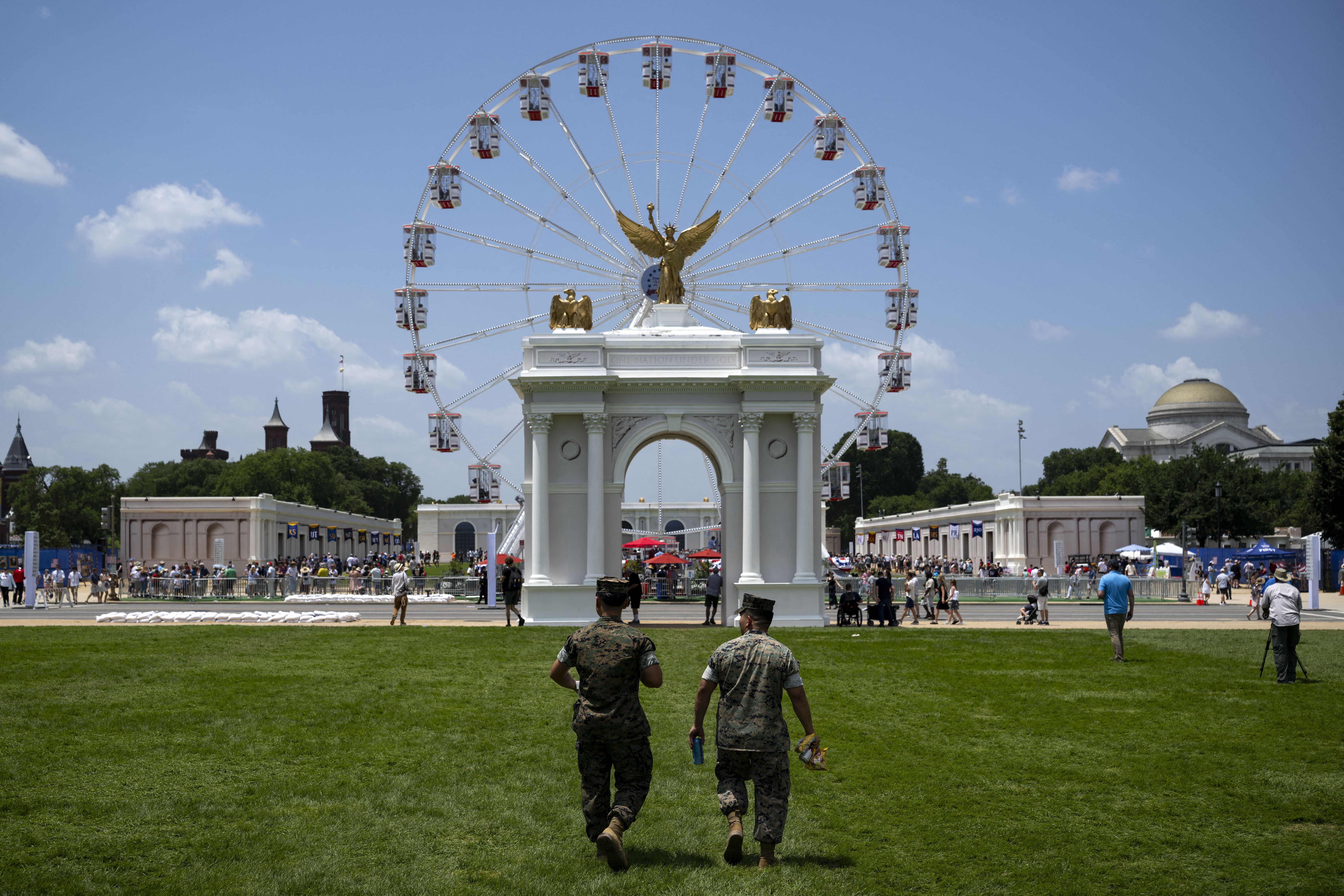
President Donald Trump has abruptly announced a dramatic shift in his controversial plan for a national monument, revealing Sunday on Truth Social that the proposed 250-foot triumphal arch near Arlington National Cemetery will now be repurposed as a military complex housing drones, snipers, and ammunition.
This unexpected pivot, framed by Trump as a request from the U.S. military, fundamentally alters the project's scope and purpose, immediately complicating a required federal review process and igniting a firestorm of new legal, safety, and environmental concerns.
📑 Table of Contents
1. The Sudden Shift: From Tourist Spot to Fortress
For nearly a year, the ambitious arch project was presented primarily as a monument to American greatness, a tourist attraction designed to symbolize national pride. Trump himself has repeatedly championed it as a landmark for visitors and a symbol of past presidential achievements. The sudden announcement that it will now function as a military installation, complete with offensive and defensive capabilities, represents a radical departure from its publicly stated intent.
The revelation came via a social media post, a method often favored by the former president for major policy announcements. Trump claimed the change was made at the behest of the U.S. military, seeking to integrate the structure into national security operations. This justification, however, has yet to be corroborated by official military statements, leaving many questioning the true origins and motivations behind this drastic re-imagining of the project.
Operational Capabilities Unveiled
The specific mention of housing drones, snipers, and ammunition suggests a hardened facility capable of surveillance, rapid response, and sustained tactical operations, a far cry from the envisioned visitor experience.
2. Federal Review Thrown into Chaos
The project is already navigating a complex federal review process, which necessitates rigorous environmental impact assessments, historical preservation considerations, and public comment periods. The introduction of a military operational capacity fundamentally changes the nature of the proposed structure, requiring a complete re-evaluation of all previously submitted documentation and analyses. This means existing environmental reviews, traffic studies, and land-use permits are now likely obsolete.
Government agencies responsible for the review, including potentially the National Park Service and the Army Corps of Engineers, will face immense pressure to adapt. The shift from a passive monument to an active military site introduces entirely new categories of concerns, such as airspace security, potential for collateral damage, and the implications of housing weapons systems near sensitive areas like Arlington National Cemetery. The timeline for any approval is now significantly extended, and the likelihood of outright rejection may have increased.
Jurisdictional Quandaries Emerge
Questions are also arising about which agencies will now have primary oversight and jurisdiction over the militarized arch, potentially creating inter-agency disputes.
3. Why This Matters: Legal and Safety Implications

The proximity of a militarized structure to Arlington National Cemetery, a sacred burial ground for fallen soldiers, is a primary concern. Housing weapons systems and personnel in such a location raises profound ethical and practical questions about the sanctity of the memorial and the potential for unintended consequences during training or in a conflict scenario. Safety protocols for such a facility, especially one integrated into a public monument concept, would need to be extraordinarily robust.
Legally, the repurposing of the land and the project's new function could face significant challenges. Federal land use laws, environmental protection statutes, and potentially even the National Historic Preservation Act could be invoked by opponents. The change in purpose may also violate the terms under which federal land, if any, is being allocated for the project. Furthermore, the claim of a military request needs independent verification to ensure the project isn't merely a politically motivated justification for a controversial construction.
Ethical Red Flags Raised
Critics argue that using a structure intended as a monument for military hardware is disrespectful to the veterans it is meant to honor.
4. The National Security Rationale: A Post-Hoc Justification?
The assertion that the U.S. military requested this transformation to bolster national security appears to be a recent development. For months, the project was discussed in terms of historical commemoration and tourism. Analysts suggest this new rationale might be an attempt to legitimize a project that was already facing significant opposition and logistical hurdles, by reframing it as essential for defense.
The specific military assets mentioned – drones, snipers, and ammunition – are typically housed in secure, dedicated facilities designed for those purposes. Integrating them into a 250-foot arch structure, particularly one conceived for public access and historical display, presents considerable design and security challenges. The feasibility and strategic advantage of such an arrangement, without detailed plans and military endorsement, remain highly questionable. It raises the possibility that this is a political maneuver rather than a genuine operational requirement.
Military Endorsement Uncertain
Without clear, public statements from military leadership confirming the request, skepticism surrounding the national security justification is high.
5. What Happens Next: Scrutiny Intensifies
The immediate next steps involve intense scrutiny from federal agencies, environmental groups, historical preservation advocates, and potentially Congress. Expect legal challenges to be filed rapidly, questioning the legality of the land use, the environmental impact, and the national security justification. The federal review process will undoubtedly be halted and potentially restarted from scratch, with a much higher bar for approval.
Public reaction is also expected to be strongly divided, with supporters viewing it as a bold national security move and opponents decrying it as an inappropriate militarization of a symbolic space. The political implications for former President Trump and any allies supporting the project are significant, as this controversy is likely to grow. The ultimate fate of the arch will depend on the outcome of these legal battles, regulatory reviews, and ongoing political debate.
Key Questions Remain
Will the military officially confirm the request? What are the specific legal grounds for challenging the militarization? How will safety and security be managed in such a unique environment?
🔥 Follow Azeem USA for ongoing analysis and updates on this developing story.
Conclusion
President Trump's decision to pivot his planned triumphal arch into a military complex has introduced a volatile new dimension to the project. The shift from a symbolic monument to a functional military site has triggered immediate legal and safety concerns, thrown federal review processes into disarray, and raised serious questions about the project's true purpose and justification.
The coming weeks will be critical as legal challenges mount, regulatory bodies reassess the plan, and the public grapples with the implications of such a structure. All eyes will be on official military statements and the unfolding regulatory and judicial processes to determine the future of this controversial proposal.
❓ FAQ
What is President Trump's new plan for the arch?
President Trump announced plans to convert his proposed triumphal arch into a military complex housing drones, snipers, and ammunition.
When was this announced?
The announcement was made by President Trump on Sunday via a post to his Truth Social account.
Why is this causing new concerns?
The militarization raises legal, safety, and environmental concerns, especially given its proximity to Arlington National Cemetery, and complicates the federal review process.
What was the original purpose of the arch?
The arch was originally presented as a national monument and tourist attraction symbolizing American greatness.
Has the military confirmed the request?
No official military statements have yet corroborated President Trump's claim that the U.S. military requested this change.
Comments
Post a Comment