Judge Orders White House Press Access Restored: A Press Freedom Win 📸 Image Credit: yahoo.com By Azeem-USA · Thu Sep 24 2026 English (en-US) In a significant development for American press freedom, a federal judge has issued a temporary restraining order compelling the White House to reinstate press credentials for CNN, MS NOW, and Politico. This ruling comes after President Donald Trump's administration revoked access for these outlets following critical coverage, sparking a heated debate about the role of a free press in a democracy. This decision is more than just a procedural victory; it underscores the vital importance of unimpeded access for journalists to report on the workings of the government. At Azeem USA, we believe in the power of informed citizens, and this ruling is a crucial step in ensuring that the public receives diverse and unfiltered information from the nation's capital. 📑 Table of Contents The Initial Ban and Legal...

🚨 Breaking News Analysis
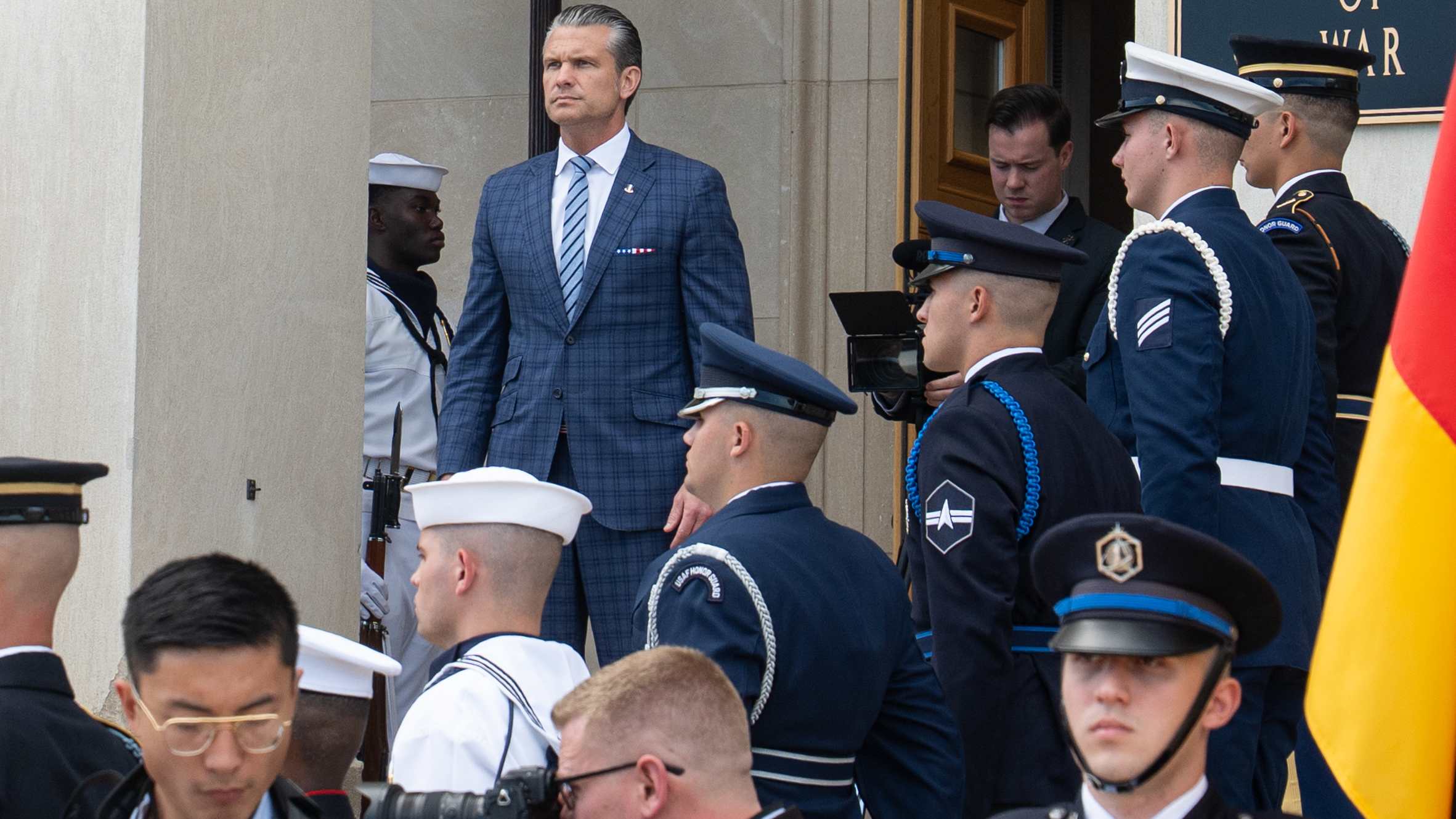
Defense Secretary Pete Hegseth announced Tuesday a radical overhaul of the Pentagon's senior promotion process, introducing a mandatory battlefield-style assessment for officers seeking the rank of general or admiral. This move marks a decisive departure from traditional administrative-based promotion paths, signaling a pivot toward prioritizing combat readiness over bureaucratic experience.
This analysis examines the mechanics of the new Joint Warfighter Evaluation, the ideological shift behind the Secretary's decision, and the potential implications for the Department of Defense's leadership structure.
📑 Table of Contents
1. The Joint Warfighter Evaluation Announced
Defense Secretary Pete Hegseth utilized social media to announce the rollout of the Joint Warfighter Evaluation, a new program set for this year. The program is specifically targeted at eligible colonels and Navy captains who are on the track for one-star general or admiral ranks. Rather than relying solely on performance reviews and years served, the Pentagon will now subject these officers to high-stakes, battlefield-style assessments.
Hegseth stated the evaluation is designed to screen officers on their fundamental ability to 'fight, adapt, and win.' By integrating these tests directly into the promotion pipeline, the Defense Department aims to ensure that the highest tiers of military leadership are composed of individuals capable of navigating modern combat environments.
Immediate Implementation and Target Group
The rollout is expected to begin immediately, suggesting that the administration is eager to move quickly on structural reforms within the Pentagon without waiting for the next fiscal year budget cycle.
2. A Shift Toward Meritocracy Over Bureaucracy
The core philosophy behind this announcement is a critique of the current military-industrial complex and its internal de-conflict of officers. Hegseth has argued that the existing system has become too bogged down in bureaucracy, potentially rewarding administrative navigation rather than raw tactical brilliance. The Joint Warfighter Evaluation is presented as a tool to enforce a 'true meritocracy' across the senior ranks.
For decades, the path to general rank has involved a complex series of board reviews, staff officer assignments, and political confirmations. By introducing a physical and tactical battlefield test, the Secretary is attempting to bypass the perceived 'softness' of the modern officer corps in favor of warrior-centric leadership.
Challenging the 'Brass' Culture
Analysts suggest this move is a direct challenge to the traditional staff-heavy culture of the Pentagon, which may lead to significant internal friction within the senior officer class.
3. Why This Shift Matters for Military Readiness

The implications for U.S. military readiness are profound. In an era of peer-peer competition in regions like the Indo-Pacific and Eastern Europe, the Pentagon believes that leadership must be tactically proficient at the operational and strategic levels. If the top tier of the military is more proficient in policy-making than in battlefield command, the Secretary argues the entire force is at a disadvantage during high-intensity conflict.
Furthermore, this shift serves as a signal to the entire officer corps. The message is clear: the path to the top is no longer guaranteed by longevity or high-level administrative success. This could lead to a significant change in how colonels and captains manage their careers, potentially prioritizing field deployments over Pentagon-based staff roles.
Redefining the Officer Corps
By focusing on the ability to adapt and win, the administration is attempting to re-align the military's identity with its primary mission of winning wars.
4. Institutional Friction and Potential Fallout
While the announcement has been welcomed by proponents of military reform, it is likely to face intense resistance from the military establishment. The Pentagon is a massive organization that relies on institutional stability and established administrative processes. Critics of the new plan may argue that 'battlefield tests' for generals overlook the complex diplomatic, logistical, and strategic skills required to lead a multi-billion dollar global military.
There is also the question of how these tests will be standardized. If the criteria are perceived as subjective or politically motivated, it could lead to legal challenges or morale issues within the officer ranks. The logistical challenge of conducting 'battlefield-style assessments' for hundreds of officers annually is also a significant hurdle for the Defense Department.
Logistics and Talent Retention
The Defense Department must determine how to implement these tests without alienating the very talent it needs to run complex global military operations.
5. The Path Ahead for Senior Leadership
What happens next will be determined by the specific criteria established for the Joint Warfighter Evaluation. The Pentagon will need to define exactly what 'ability to fight' looks like in a modern context that includes cyber warfare and space operations. The first wave of officers to undergo this testing will serve as a litmus test for the administration's broader vision for the military.
As the year progresses, watch for how the Navy and Army-specific promotion boards adapt to these new requirements. If the tests result in a high failure rate among previously-considered candidates, it could trigger a leadership crisis or force a total rethink of how the U.S. identifies its top talent.
Monitoring the First Cohort
The coming months will be critical as the Pentagon moves from policy announcement to the practical execution of these high-stakes promotion tests.
🔥 Follow Azeem-USA for real-time updates as the Joint Warfighter Evaluation develops.
Conclusion
Defense Secretary Hegseth has initiated a fundamental shift in how the U.S. military selects its future top leaders. The Joint Warfighter Evaluation aims to strip away bureaucracy in favor of merit-based battlefield proficiency.
The success of this initiative will depend on the clarity of its tests and the military's ability to absorb such institutional change.
❓ FAQ
What is the Joint Warfighter Evaluation?
It is a new battlefield-style assessment for colonels and Navy captains seeking promotion to rank of general or admiral.
Who is eligible for this new test?
Eligible colonels and Navy captains aiming for one-star general or admiral ranks.
Why is Hegseth implementing this?
To cut bureaucracy and demand a true meritocracy based on the ability to fight and win.
When will the program start?
Secretary Hegseth announced the program will roll out later this year.
Does this replace all promotion boards?
No, it specifically targets the transition to the one-star general and admiral ranks.
Comments
Post a Comment