EU and Canada Alliance: Why Carney Says They Are Stronger Together 📸 Image Credit: uk.finance.yahoo.com By Azeem-USA · Thu Sep 17 2026 English (en-US) The global geopolitical landscape is undergoing a seismic shift as traditional alliances are tested by new economic pressures. In a bold move that has resonated from Strasbourg to Ottawa, Canadian Prime Minister Mark Carney has advocated for a deepened strategic bond between Canada and the European Union. In this deep dive, we analyze the implications of Carney's speech, the impact of US trade threats, and how this emerging alliance could redefine the rule of democratic markets worldwide. 📑 Table of Contents The Geopolitical Shift in the Atlantic Carney's Vision for Transatlantic Partnership The Trump Factor: Trade Tensions Rise Protecting Democracy and Market Stability Future Outlook for Global Blocs FAQ #Mark Carney #European Union #Canada Trade #Global Economy #Geopolitics #Internatio...
🚨 Breaking News Analysis
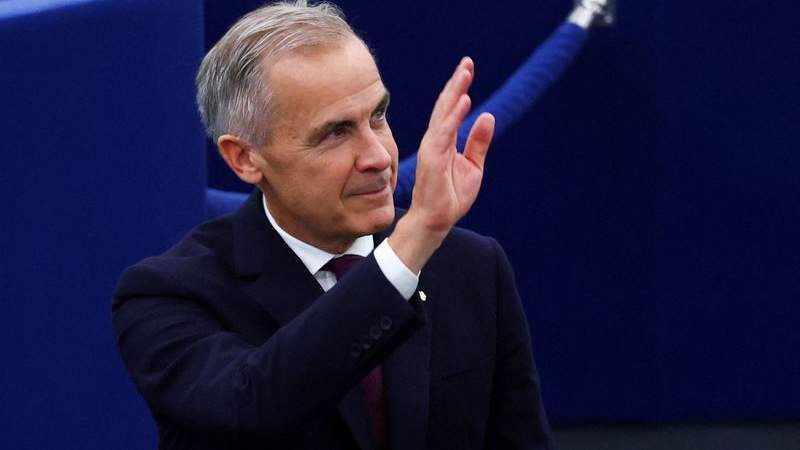
Canada and Europe are signaling a deepening strategic alliance, with Canadian Prime Minister Mark Carney urging closer cooperation to defend shared values and economic interests against the rising influence of the United States and China. This push for unity comes as U.S. President Donald Trump escalates trade tensions, threatening sanctions against European nations.
This analysis delves into Carney's address, the immediate context of U.S. trade pressures, the strategic importance of this burgeoning partnership, potential fallout, and what this means for the future of global trade and diplomacy.
📑 Table of Contents
1. Carney's Call to Arms
Speaking before the European Parliament, Prime Minister Mark Carney on Thursday issued a strong call for Canada and Europe to stand together. He articulated a vision of a united front, essential for protecting their respective markets, democratic institutions, and the rule of law. This appeal was met with significant applause, underscoring a receptive audience within the EU.
Carney's remarks were framed against the backdrop of a world increasingly defined by the economic and geopolitical might of the United States and China. His speech also followed an EU proposal to grant Canada 'associate member' status, a symbolic gesture indicating a desire for closer integration and collaboration.
A Shared Vision for Stability
The core message revolved around mutual defense of economic and political systems. Carney stressed the need for a coordinated strategy to navigate an increasingly complex international landscape, where multilateralism is under strain and protectionist tendencies are on the rise.
2. The Context: Trump's Trade Volatility
The timing of Carney's speech is critical. It directly followed threats of trade sanctions from U.S. President Donald Trump, reportedly in response to a proposal by European Commission President Ursula von der Leyen. This move by Trump highlights a persistent pattern of using trade as a geopolitical lever, creating uncertainty and friction within established alliances.
The U.S. president's consistent challenging of existing trade agreements and his willingness to impose tariffs have created an environment where traditional allies are reassessing their dependencies. This has pushed nations like Canada and EU member states to explore alternative partnerships and strengthen existing ones to mitigate potential economic damage and political pressure.
Escalating Trade Tensions
The specific trigger for Trump's latest threat was not immediately detailed in the initial reports, but it aligns with ongoing disputes over trade imbalances and market access. The EU has been a frequent target of Trump's trade rhetoric, leading to retaliatory measures and a strained transatlantic relationship.
3. Why This Alliance Matters Now

The burgeoning EU-Canada alignment is more than just rhetorical; it represents a strategic realignment in response to perceived external pressures. In an era where the United States under Trump has demonstrated a transactional approach to foreign policy and trade, and China continues its assertive global expansion, democratic nations are seeking solidarity.
This partnership is crucial for maintaining a rules-based international order. By presenting a more unified front, Canada and the EU can exert greater collective influence in global forums, negotiate trade deals from a stronger position, and push back against protectionist policies that undermine global economic stability. It also serves as a bulwark for democratic values and the rule of law in a world where these principles are increasingly contested.
Economic and Political Imperatives
Economically, closer ties can lead to expanded trade, investment, and coordinated regulatory approaches, creating a more stable and predictable environment for businesses. Politically, it bolsters the diplomatic clout of both entities on the world stage, providing a counterweight to the dominant powers and fostering a more balanced global dynamic.
4. Stakeholder Reactions and Implications
The warm reception Carney received in the European Parliament suggests strong political will within the EU to deepen ties with Canada. European leaders have consistently expressed frustration with the unpredictability of U.S. trade policy and are actively seeking to diversify their international partnerships. This sentiment was echoed by applause for Carney's message of unity.
For Canada, aligning more closely with the EU offers a significant strategic advantage. It provides an important economic and diplomatic counterbalance to the United States, particularly in the face of ongoing trade disputes. This move could also signal a broader shift in Canadian foreign policy, seeking greater engagement with multilateral institutions and like-minded partners.
Potential for Further Integration
The 'associate member' proposal, while symbolic, hints at potential future avenues for deeper cooperation, possibly including coordinated policy stances on international issues, joint research and development initiatives, or even closer security cooperation. The implications extend to how global supply chains might be reconfigured and how international trade rules are shaped in the coming years.
5. Looking Ahead: The Shifting Global Order
Carney's call for an EU-Canada alliance is a significant development reflecting the profound shifts occurring in the global geopolitical and economic landscape. It underscores a growing realization among mid-tier powers that collective action is necessary to safeguard their interests in an increasingly multipolar world, characterized by both the assertive actions of superpowers and the erosion of established international norms.
The immediate future will likely see both Canada and the EU working to formalize and expand areas of cooperation. This could involve concrete steps towards new trade agreements, joint initiatives on digital regulation, climate action, or security. The effectiveness of this alliance will depend on sustained political commitment and the ability to navigate potential divergences in national interests.
A New Era of Transatlantic Cooperation?
This strengthening bond between Europe and Canada could herald a new phase of transatlantic cooperation, less dependent on the immediate policy shifts within the United States and more focused on shared long-term strategic objectives. It signals a proactive approach to shaping the future global order, rather than simply reacting to the actions of dominant powers.
🔥 Follow Azeem USA for breaking news analysis and updates on global alliances.
Conclusion
Prime Minister Mark Carney has articulated a clear imperative for Canada and the EU to forge a stronger alliance, driven by the need to protect shared markets and democratic values amidst rising global powers and U.S. trade volatility. The European Parliament's positive reception highlights a strong desire for such cooperation.
As global dynamics continue to shift, watch for concrete steps towards increased economic and political integration between Canada and the EU. This alliance could become a crucial pillar in maintaining a stable, rules-based international order and serve as a significant counterweight in global affairs.
❓ FAQ
Who called for the EU-Canada alliance?
Canadian Prime Minister Mark Carney called for a stronger alliance between Canada and Europe.
What prompted this call for unity?
The call was made in response to President Donald Trump's threats of trade sanctions and the broader geopolitical landscape dominated by the US and China.
What is the proposed status for Canada within the EU?
An EU proposal suggested making Canada an 'associate member'.
Why is this alliance strategically important?
It aims to protect shared markets, democracies, and the rule of law against external pressures and to strengthen collective bargaining power on the global stage.
What does 'associate member' status imply?
While symbolic, it suggests a desire for closer integration, coordinated policy, and enhanced cooperation beyond traditional trade relations.
Comments
Post a Comment