
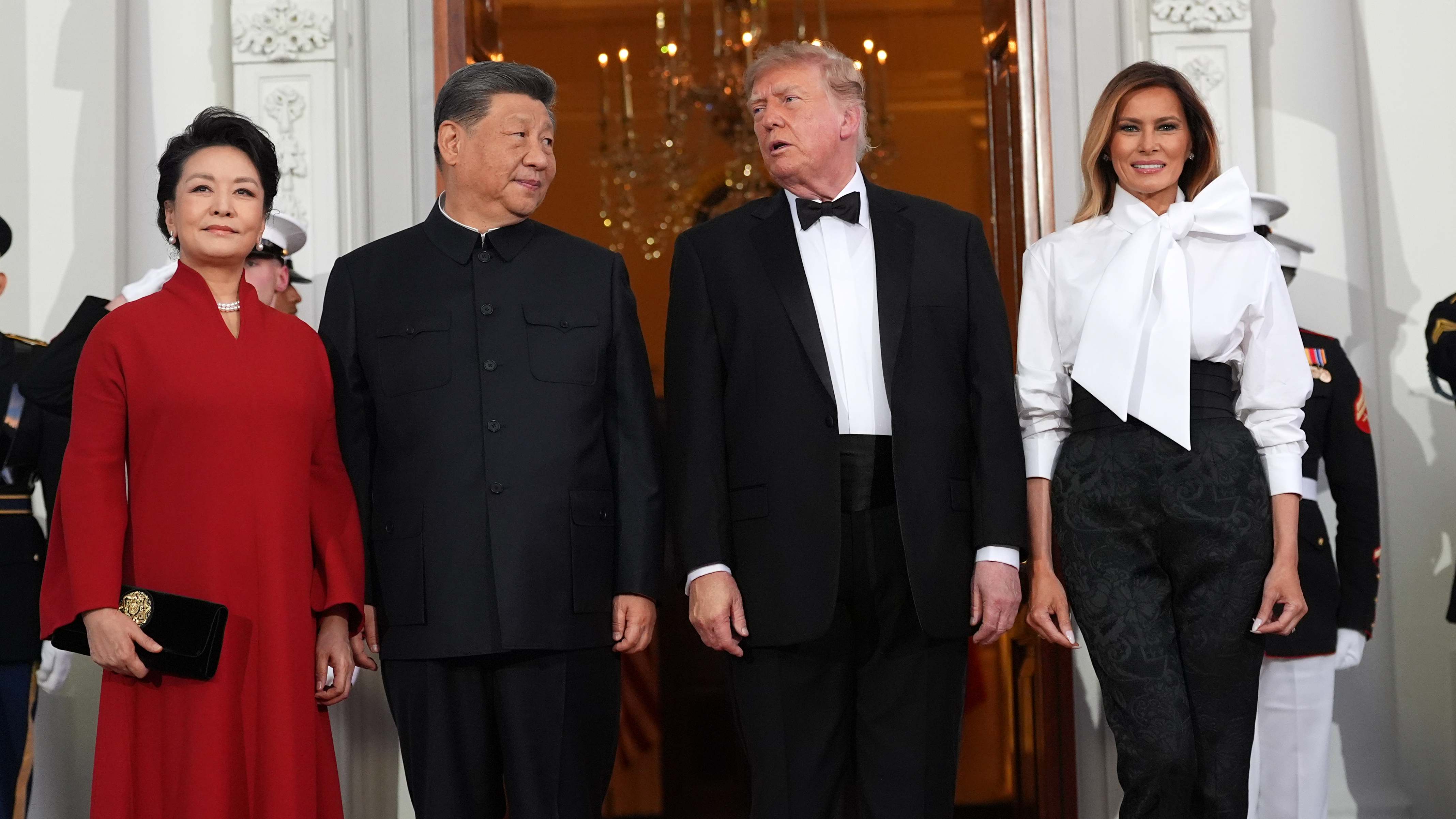
In a move that sent ripples through the journalistic community and beyond, prominent news organizations found themselves barred from a significant White House event. This incident, involving a state dinner honoring China's President Xi Jinping, raises critical questions about the boundaries of press access and the executive branch's relationship with the media.
At Azeem USA, we delve into the details of this controversial decision, examining the legal challenges, the White House's response, and the profound implications for the future of journalism and public discourse. Understanding this event is crucial for anyone concerned with the checks and balances of power in the modern era.
📑 Table of Contents
1. The Unprecedented White House Press Ban
The White House state dinner for President Xi Jinping was meant to be a high-profile diplomatic event, a stage for international relations and robust reporting. However, for journalists representing CNN and MS Now, the evening took a drastically different turn. Despite the gravity of the occasion and the established norms of covering such events, these outlets were denied full access, a decision that immediately drew condemnation and scrutiny.
The exclusion wasn't a minor oversight; it was a deliberate act that followed a pattern of tension between the Trump administration and certain media organizations. The administration had previously revoked credentials for these outlets, citing reasons that critics argued were politically motivated and unsubstantiated. This latest denial, occurring even after a judicial intervention, underscored a deep-seated conflict over the role and rights of the press.
The initial exclusion and its rationale
The initial ban on CNN and MS Now journalists prior to the state dinner was justified by the White House as a response to what they termed biased reporting. However, such justifications have often been met with skepticism, with many viewing them as attempts to control the narrative and punish unfavorable coverage rather than legitimate security or access concerns.
2. A Judge's Ruling and White House Defiance
Adding a layer of unprecedented legal drama, a federal judge had, just hours before the dinner, ruled that the Trump administration must reinstate press credentials for journalists who had been banned. This court order was a significant victory for press freedom advocates and a direct challenge to the administration's authority to arbitrarily restrict access.
However, the White House's subsequent actions appeared to either disregard or narrowly interpret the court's mandate. While CNN was reportedly offered a compromise – allowing only a photojournalist and audio technician but excluding a reporter and producer – MS Now faced continued exclusion. This selective compliance, or outright defiance, highlighted a contentious battle between the judicial branch and the executive branch over media access.
The limited access granted to CNN
The White House's offer to CNN, restricting their presence to technical staff rather than editorial journalists, was seen by many as a hollow gesture. It allowed for visual and audio documentation but prevented the in-depth reporting, questioning, and analysis that a correspondent would provide, effectively limiting the scope and depth of coverage.
3. Implications for Journalistic Integrity

The denial of access, even with a court order in place, has profound implications for the integrity of journalism and the public's right to information. When news organizations are systematically blocked from covering significant events, it creates a vacuum that can be filled with misinformation or incomplete narratives. This undermines the watchdog function of the press, which is essential for holding powerful institutions accountable.
Furthermore, such actions can chill reporting. Journalists may become hesitant to pursue critical lines of inquiry or publish challenging stories if they fear retribution in the form of credential revocation or exclusion from vital events. This creates an environment where access is contingent on favorable coverage, a dangerous precedent for a democratic society that relies on a free and independent press.
The role of access in reporting
Access is not merely about convenience for journalists; it is fundamental to their ability to gather information, verify facts, and provide comprehensive reporting to the public. Being present at events, asking direct questions, and observing interactions firsthand are crucial components of investigative and observational journalism. Denying this access directly hampers the media's capacity to fulfill its role.
4. The Broader Context of White House-Media Relations
This incident is not an isolated event but rather a symptom of a larger, evolving dynamic between the White House and the press corps. Historically, while tensions have always existed, there has been a general understanding of the importance of maintaining a degree of access for major news outlets. The Trump administration, however, marked a significant shift in this relationship, characterized by frequent verbal sparring, accusations of 'fake news,' and a more aggressive approach to credentialing.
The administration's rationale often centered on perceived bias, with President Trump frequently targeting specific news organizations he deemed unfair. This created a climate of distrust and antagonism, where journalistic scrutiny was framed as an attack. The judicial ruling, and the subsequent partial compliance, only intensified the debate about whether the White House views the press as a partner in informing the public or as an adversary to be managed and controlled.
Historical precedents and current deviations
While presidents have, in the past, expressed frustration with media coverage, the systematic and legally challenged denial of access seen in this case represents a departure from established norms. Previous administrations, regardless of their political leanings, generally upheld the principle of providing access to accredited journalists, even when facing criticism.
5. Navigating the Future of Press Access
The events surrounding the state dinner serve as a stark reminder of the ongoing struggle for press freedom. The outcome of such legal battles and the executive branch's adherence to judicial decisions will shape the landscape of journalistic access for years to come. It underscores the need for vigilance from journalists, media organizations, and the public to defend the principles of open reporting.
Looking forward, it is imperative that institutions like the White House understand that their actions are under intense scrutiny, both domestically and internationally. The ability of journalists to report freely and without undue interference is not just a professional concern; it is a cornerstone of democratic accountability. The path forward requires a recommitment to transparency and a respect for the vital role the press plays in a functioning society.
The importance of protecting journalistic access
Ensuring continued and unfettered access for journalists is paramount. This includes access to public officials, government events, and the ability to ask critical questions without fear of reprisal. Protecting this access is a collective responsibility that benefits not only the media but also the informed citizenry.
🔥 Stay informed on critical issues shaping press freedom and government accountability.
Conclusion
The denial of access to CNN and MS Now journalists at the White House state dinner, despite a federal judge's ruling, represents a significant moment in the ongoing dialogue between the press and the executive branch. It highlights the delicate balance between national security, diplomatic protocols, and the public's right to know.
As we move forward, the precedents set by these events will undoubtedly influence future interactions. Azeem USA remains committed to analyzing these developments and advocating for the principles of transparency and press freedom that are vital to a healthy democracy.
❓ FAQ
Why were CNN and MS Now journalists denied access to the White House dinner?
The White House had previously revoked their credentials, citing reasons such as biased reporting, which critics argued were politically motivated. The denial occurred even after a federal judge ordered their access be reinstated.
Did the White House comply with the court ruling?
The White House's compliance was partial and contentious. CNN was offered limited access with only technical staff, excluding their editorial team, while MS Now remained denied access.
What is the significance of this event for press freedom?
It raises serious concerns about the executive branch's power to restrict media access, potentially undermining the press's watchdog role and the public's right to information.
What is the role of a federal judge's ruling in such cases?
A federal judge's ruling aims to uphold legal rights, in this case, the right to press access. The White House's response to such rulings tests the boundaries of executive authority versus judicial oversight.
How does this event impact the relationship between the White House and the press?
It further strains an already tense relationship, signaling a potential shift towards a more adversarial approach where access may be used as a tool to manage or punish unfavorable coverage.
Comments
Post a Comment