
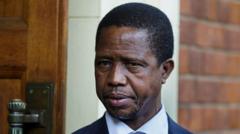
The passing of a national leader often marks a period of reflection and national mourning, but in Zambia, the death of former president Edgar Lungu has ignited a complex legal and political firestorm. Twelve months after his departure, the atmosphere in Lusaka remains far from settled.
In this deep dive, we explore the intricacies of the dispute between the Lungu family and the Zambian government, examining what this conflict means for the future of governance and legacy in the region.
📑 Table of Contents
1. The Aftermath of a Presidential Era
A year since the death of Edgar Lungu, the political landscape of Zambia is still defined by his shadow. Instead of a peaceful transition into memory, the nation has been gripped by a protracted battle over the former president's estate and legacy. This situation highlights the deep-seated tensions between the current administration and the remnants of the previous political structure.
Lungu's tenure was marked by significant economic shifts and political maneuvers that continue to divide the populace. Now, the focus has shifted from policy debates to the courtroom, where the family and the state clash over the tangible and symbolic assets of a man who once held the ultimate power.
A Nation Divided by Posthumous Politics
The transition from a living leader to a historical figure has been fraught with difficulty, as the government seeks to reclaim a narrative that the family seeks to protect.
2. The Core of the Legal Impasse
At the heart of the dispute is the ownership of specific assets and the protocols associated with the former presidency. The Zambian government argues that certain properties and funds belong to the state rather than the private estate of the deceased. Conversely, the family maintains that these are private inheritances that should be handled according to family law.
This legal deadlock has reached a boiling point, with both sides presenting arguments that challenge the legitimacy of their positions. The courts are being called upon to interpret complex laws regarding presidential benefits and private property, a process that is taking much longer than anticipated.
Assets and the Public Interest
The distinction between state-owned resources and personal wealth remains the primary point of contention in the legal proceedings currently unfolding in the courts.
3. Family Rights vs. State Sovereignty

The family of Edgar Lungu asserts their right to protect the dignity of the deceased and the privacy of their estate. They view the government's actions as an attempt to deconstruct a legacy and strip the family of their rightful standing. For them, this is a matter of personal honor and legal entitlement within the family unit.
On the other hand, the government frames its actions as a necessary measure of public accountability. They contend that the resources used during the former president's term must be subjected to the highest level of scrutiny and that any misappropriation of state funds must be addressed regardless of the passage of time.
The Ethical Boundaries of Presidential Power
Defining where a leader's private life ends and their public duty begins is a challenge being faced by many modern democracies today.
4. Political Implications for Zambian Stability
This dispute is not merely a legal matter; it is a deeply political one. The supporters of the former president see the government's actions as political vendettas designed to weaken the opposition. This perception risks further polarizing the electorate in Zambia, particularly among those who remain loyal to the Lungu era.
However, the current administration believes that by setting these precedents, they are ensuring that no future leader feels above the law. By pursuing these claims now, they claim to be sending a message of transparency and integrity, even if it comes at the cost of significant social friction in the short term.
Precedents for Future Leaders
The outcome of this case will likely set the standard for how Zambia handles the transition of power and the scrutiny of former officials.
5. The Future of Accountability in Zambia
Looking forward, the resolution of the Lungu family dispute will be a litmus test for the Zambian judicial system. It will demonstrate whether the courts can balance the rights of individuals with the interests of the state without appearing partisan. The precedent set here could lead to significant changes in how presidential estates are managed nationwide.
As months turn into years, the world watches to see how Zambia navigates this sensitive period. The goal for the nation is to find a path forward that respects the rule of law while honoring the past and upholding the integrity of the state's future.
Navigating the Path Toward Resolution
Zambia stands at a crossroads where legal decisions made today will determine the political legacy of those who came before and the expectations set for those who follow.
🔥 Subscribe to Azeem-USA for more in-depth analysis of African political trends and global news deconstructions.
Conclusion
The dispute between the Lungu family and the Zambian government represents a complex intersection of private rights and public accountability. It remains a defining issue for the current political climate climate.
❓ FAQ
Why is there still a dispute between the Lungu family and the government?
The dispute centers on the ownership of assets and the interpretation of how the former president's estate should be handled.
What is the government's main argument?
The government argues that certain assets belong to the state and must be scrutinized for the sake of accountability.
How does this affect Zambian politics?
It creates polarization between supporters of the former president and those supporting the current administration's reforms.
Is the case fully resolved?
No, the legal battle is ongoing 12 months after the death of the former president.
What is the potential impact on future leaders?
It may set a legal precedent for how former officials' assets and legacies are managed in Zambia.
Comments
Post a Comment