
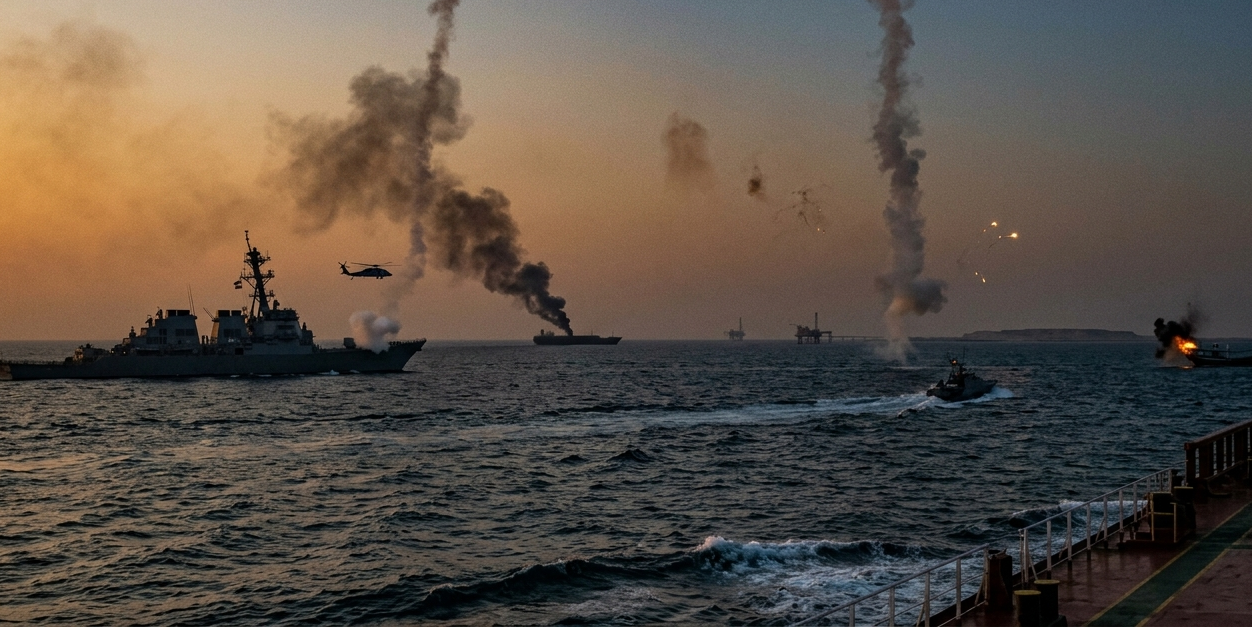
The strategic waters of the Persian Gulf have once again become a theater of military confrontation, as the United States and Iran have reportedly engaged in a series of retaliatory strikes. This latest exchange raises critical questions about the durability of existing ceasefires and the potential for wider regional conflict.
As global powers and regional actors watch with bated breath, understanding the nuances of these events is paramount. Azeem USA breaks down the recent developments, exploring the immediate triggers, the responses, and the far-reaching implications for international security and the delicate balance of power in the Middle East.
📑 Table of Contents
1. Escalation in the Gulf: A New Flashpoint
The recent military engagements between the US and Iran represent a significant escalation in an already tense geopolitical landscape. The Gulf, a critical artery for global energy supplies and a region historically prone to volatility, now finds itself at the center of direct armed conflict. These strikes, occurring against a backdrop of ongoing diplomatic efforts and fragile understandings, serve as a stark reminder of the potential for miscalculation and rapid de-escalation.
The frequency and nature of these exchanges suggest a deliberate testing of boundaries by both sides. Whether intended to signal resolve, deter future aggression, or as a response to perceived provocations, the actions have immediately intensified scrutiny on the region's security architecture. The international community is closely monitoring the situation, seeking clarity on the motivations behind these actions and their potential to unravel ongoing peace initiatives.
The Importance of the Gulf Chokepoint
The Strait of Hormuz, a narrow waterway connecting the Persian Gulf to the open ocean, is a vital chokepoint for international trade and energy transit. Any disruption or conflict in this area has immediate and significant global economic repercussions, making it a focal point of international concern.
2. The Sequence of Events: From Drones to Missiles
Initial reports indicate that the latest round of hostilities began with Iranian actions, including drone launches directed towards neighboring countries and potentially impacting international shipping lanes. The US military confirmed the interception and downing of several Iranian drones, signaling a direct response to perceived threats in the region. This initial phase of the exchange highlights the evolving nature of warfare, with unmanned aerial vehicles playing an increasingly prominent role.
Following these drone incidents, the situation rapidly evolved with reports of further Iranian missile launches targeting areas proximate to Kuwait and Bahrain, in addition to strikes within the Gulf. These actions appear to have triggered a more forceful response from US forces, who subsequently targeted Iranian military sites. The rapid escalation from drone activity to missile launches underscores the volatility and the rapid pace at which conflicts can unfold in this theater.
Cyber and Electronic Warfare Concerns
Beyond kinetic actions, the possibility of cyber and electronic warfare accompanying these physical strikes cannot be discounted. Such capabilities can be used to disrupt communications, disable critical infrastructure, or gain strategic advantages without direct kinetic engagement, adding another layer of complexity to the conflict.
3. US Response and Justification
The United States military stated its actions were in direct response to Iranian attacks and threats against maritime navigation and regional security. The targeting of Iranian radar sites and military infrastructure suggests a strategic effort to degrade Iran's ability to conduct further aggressive actions, particularly those that could imperil international shipping or allied interests in the Gulf.
Pentagon officials emphasized that the strikes were defensive in nature, aimed at deterring future Iranian aggression and protecting US personnel and assets in the region. The justification for such actions often centers on the principle of self-defense and the responsibility to maintain freedom of navigation and international security. The precise nature of the intelligence leading to these strikes and the specific military objectives remain under close observation.
The Role of International Law
The legality and justification of military responses in international waters and airspace are governed by international law, including the UN Charter. Both sides will likely frame their actions within the context of self-defense and the protection of national interests and international norms.
4. Iran's Actions and Regional Neighbors
Iran's reported actions, including drone and missile launches, appear to be a multifaceted strategy. These could be interpreted as attempts to assert regional influence, retaliate against perceived provocations, or demonstrate military capability to both domestic and international audiences. The targeting of areas near Kuwait and Bahrain, while not necessarily direct strikes on those nations, brings them into the immediate orbit of the conflict, highlighting the interconnectedness of regional security.
The Iranian narrative surrounding these events will likely focus on perceived US aggression and its role in regional instability. By striking at what it deems to be US-allied or US-presence areas, Iran may be attempting to deter further US military action and signal its willingness to engage in asymmetric warfare. Understanding Iran's strategic objectives requires analyzing its regional posture and its response to international pressure.
Impact on Diplomatic Channels
These direct military exchanges inevitably complicate any ongoing diplomatic efforts between Iran and the US, or between Iran and other global powers. The atmosphere of hostility generated by strikes makes constructive dialogue more challenging and increases the risk of misinterpretations that could derail negotiation processes.
5. Implications for Regional Stability and Future Ceasefires
The immediate consequence of these US-Iran strikes is a heightened state of alert and increased anxiety across the Middle East. The potential for tit-for-tat escalations is significant, threatening to draw in other regional actors and further destabilize an already volatile region. The impact on global energy markets is also a major concern, as any significant disruption in the Gulf could lead to price spikes and supply chain issues worldwide.
The very notion of a ceasefire or de-escalation in this context is severely tested. These exchanges demonstrate that underlying tensions remain high and that the mechanisms for maintaining peace are fragile. For future ceasefires to hold, there will need to be a clear commitment from both sides to de-escalate, coupled with robust international monitoring and diplomatic engagement. The path forward requires careful navigation to prevent a full-blown conflict and to rebuild trust in the region.
The Future of Gulf Security
The long-term implications for Gulf security are profound. This incident underscores the need for sustained diplomatic engagement, de-escalation strategies, and potentially new frameworks for regional security cooperation that address the core issues fueling conflict and mistrust.
🔥 Stay informed with Azeem USA for ongoing analysis of global security.
Conclusion
The recent exchange of strikes between the United States and Iran in the Gulf represents a critical juncture, severely testing the resilience of any existing ceasefires and raising the specter of wider conflict. The rapid escalation, from drone activity to missile launches and retaliatory strikes, underscores the inherent volatility of the region.
As the world watches, the imperative for de-escalation and renewed diplomatic engagement has never been clearer. The long-term stability of the Middle East, and indeed global security and economic well-being, hinges on the ability of all parties to step back from the brink and pursue pathways toward lasting peace and security.
❓ FAQ
What triggered the latest US and Iran strikes in the Gulf?
Reports indicate the exchange began with Iranian drone launches, followed by US strikes on Iranian radar sites and military infrastructure in retaliation and as a deterrent.
Did Iran target neighboring countries directly?
There were reports of Iranian missiles targeting areas proximate to Kuwait and Bahrain, though the extent of direct impact on these nations is subject to ongoing assessment.
How do these strikes affect the Strait of Hormuz?
Any military engagement in the Gulf, especially near the Strait of Hormuz, raises concerns about freedom of navigation and the security of vital oil transit routes.
What is the US justification for its strikes?
The US military stated its actions were defensive, aimed at deterring future Iranian aggression, protecting US assets, and responding to perceived threats to regional security.
What are the implications for future ceasefires?
These strikes severely test the durability of existing ceasefires and highlight the fragility of peace mechanisms, emphasizing the need for de-escalation and diplomatic efforts.
Comments
Post a Comment