
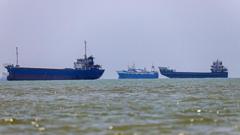
The strategic waterways of the Middle East are once again at the center of global concern, as Iran issues a stark warning regarding the Strait of Hormuz. Following escalating Israeli attacks on Lebanon, Tehran has declared its readiness to close this vital shipping lane, a move that could have profound and far-reaching consequences for international trade and global stability.
This development signals a significant escalation in regional tensions and underscores the delicate balance of power in the Persian Gulf. At Azeem USA, we delve into the complexities of this unfolding situation, examining Iran's motivations, the critical importance of the Strait of Hormuz, and the potential ripple effects across the world.
📑 Table of Contents
1. The Escalating Tensions: Lebanon and Iran's Response
Recent Israeli military operations in Lebanon have pushed regional dynamics to a critical point. These actions, perceived by Iran as a violation of agreements and a direct threat, have prompted a strong reaction from Tehran. Iran's statement suggests a direct link between the ongoing conflict in Lebanon and its willingness to disrupt global maritime traffic through the Strait of Hormuz.
This assertion implies that Tehran views the Israeli actions not just as regional aggression but as a breach of understandings, potentially involving international actors like the United States, that were meant to de-escalate wider conflicts. The declaration serves as a potent signal of Iran's intent to exert pressure and retaliate against perceived provocations, using its strategic geographic position as a formidable leverage point.
The Alleged Breach of Agreement
Iran's narrative centers on the claim that Israel's actions in Lebanon constitute a violation of an agreement with the US to end the war. This framing attempts to place responsibility not only on Israel but also on international powers, suggesting a failure to uphold commitments and potentially drawing them into the regional dispute.
2. Understanding the Strait of Hormuz: A Global Lifeline
The Strait of Hormuz is not merely a body of water; it is one of the world's most critical maritime chokepoints. Situated between the Persian Gulf and the Gulf of Oman, it serves as the sole sea passage to the open ocean for a significant portion of the world's oil supply. Approximately one-fifth of global oil consumption, including crude oil and refined products, passes through this narrow waterway daily.
Its strategic importance cannot be overstated. Any disruption to traffic in the Strait has immediate and severe implications for global energy markets, impacting prices, supply chains, and the economies of nations heavily reliant on oil imports. Control over or the ability to influence traffic through the Strait grants significant geopolitical leverage.
A Vital Artery for Global Trade
Beyond oil, the Strait of Hormuz is also a crucial conduit for other forms of international trade, connecting major economies in the Middle East with markets across Asia, Europe, and North America. Its closure would trigger widespread economic disruption, affecting everything from manufacturing to consumer prices.
3. Iran's Strategic Leverage and Historical Precedents

Iran has historically used the threat of closing the Strait of Hormuz as a potent geopolitical weapon. This strategy is rooted in its strategic geography, which allows it to exert considerable influence over maritime traffic in the region. By leveraging its military capabilities and its control over the surrounding waters, Tehran can create significant uncertainty and pressure its adversaries.
Past incidents and warnings have demonstrated Iran's capacity to disrupt shipping, even if only temporarily or through harassment. These actions are often aimed at drawing international attention to its grievances, seeking concessions, or signaling its resolve in the face of perceived threats. The current threat represents a continuation of this established pattern of strategic brinkmanship.
Echoes of Past Threats
The current declaration echoes previous pronouncements made by Iranian officials, particularly during periods of heightened tensions with the United States and its allies. These historical precedents highlight the seriousness with which Iran views its ability to control this vital waterway and its willingness to contemplate extreme measures when its national interests are perceived to be at stake.
4. Global Economic Repercussions of a Hormuz Closure
The immediate and most significant consequence of closing the Strait of Hormuz would be a severe shock to the global energy market. A sudden halt to oil shipments would lead to a sharp increase in crude oil prices, potentially pushing them to unprecedented levels. This would translate into higher fuel costs for consumers worldwide, impacting transportation, manufacturing, and virtually every sector of the economy.
Beyond oil, the broader economic impact would be substantial. Supply chains, already fragile, would face further disruption. The cost of goods would rise, potentially fueling inflation and exacerbating economic slowdowns in various regions. Nations heavily dependent on imports passing through the Strait would face immediate energy shortages, necessitating rapid adjustments to their energy policies and sourcing.
Impact on Energy Security
For nations that are net energy importers, the closure of the Strait of Hormuz would represent a profound crisis for their energy security. They would be forced to seek alternative, likely more expensive and less readily available, sources of energy, diverting resources and potentially leading to social and political instability.
5. Diplomatic Maneuvers and Future Outlook
In the face of such a significant threat, diplomatic channels are likely to be activated intensely. International powers, including the United States and its allies, have a vested interest in maintaining the free flow of traffic through the Strait. They will likely engage in urgent consultations with Iran and regional actors to de-escalate the situation and prevent a closure.
The coming days and weeks will be crucial in determining whether this threat materializes or remains a potent warning. The response from the international community, the actions taken by Israel and Lebanon, and Iran's own strategic calculations will all play a role in shaping the outcome. Maintaining open lines of communication and seeking de-escalatory measures will be paramount to averting a potentially catastrophic global economic crisis.
The Path to De-escalation
Finding a path towards de-escalation will require careful diplomacy, a clear understanding of each party's red lines, and a commitment to dialogue. The international community's role in mediating and encouraging restraint will be indispensable in navigating this complex geopolitical landscape and preventing a vital global chokepoint from becoming a casualty of regional conflict.
🔥 Stay informed on critical global events and their impact on your world.
Conclusion
Iran's threat to close the Strait of Hormuz represents a serious escalation, directly linking the conflict in Lebanon to its willingness to disrupt global energy and trade. The Strait's critical role as a global chokepoint means any disruption would have immediate and severe worldwide economic repercussions, particularly on oil prices and supply chains.
As the international community watches closely, diplomatic efforts will be crucial in navigating this volatile situation. The potential for widespread economic fallout underscores the urgent need for de-escalation and dialogue to prevent this strategic waterway from becoming a focal point of a larger regional conflict.
❓ FAQ
What is the Strait of Hormuz?
The Strait of Hormuz is a narrow waterway connecting the Persian Gulf with the Gulf of Oman and the open sea. It is a vital chokepoint for global oil transport.
Why is Iran threatening to close the Strait of Hormuz?
Iran has stated its intention to close the Strait in response to Israel's continued attacks in Lebanon, which it claims breach an agreement with the US to end the war.
How much of the world's oil passes through the Strait of Hormuz?
Approximately one-fifth of the world's total oil consumption, including crude oil and refined products, passes through the Strait of Hormuz daily.
What would be the economic impact of closing the Strait of Hormuz?
A closure would likely cause a sharp increase in global oil prices, disrupt supply chains, fuel inflation, and negatively impact economies worldwide, especially those reliant on energy imports.
What is the current geopolitical situation involving Iran, Israel, and Lebanon?
Tensions are high due to ongoing Israeli military operations in Lebanon, which Iran perceives as escalatory and a violation of international agreements. This has led to Iran's threat regarding the Strait of Hormuz.
Comments
Post a Comment