6 States Challenge California's Landmark Plastics Law: US States vs. California: The Plastics Law Showdown


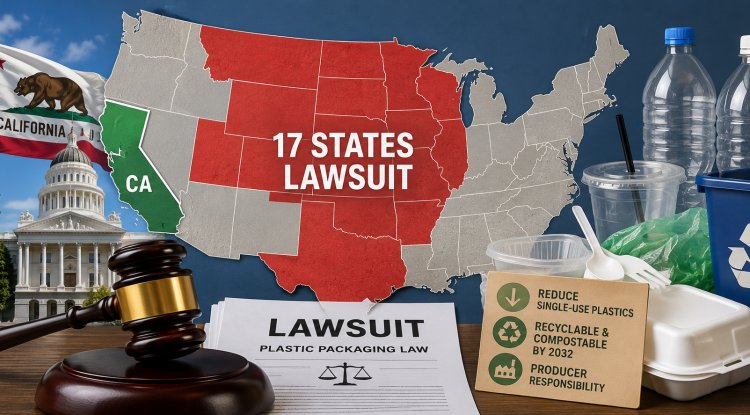
In an escalating legal and environmental battle, a coalition of six U.S. states has launched a lawsuit against California, challenging its landmark plastics packaging law. This unprecedented move pits state against state, raising profound questions about environmental regulation, interstate commerce, and the very fabric of federalism in America. The Golden State's pioneering legislation, aimed at drastically reducing plastic waste and boosting recycling rates, has ignited a national debate that could reshape how products are packaged and consumed across the country.
As this high-stakes legal drama unfolds, businesses, policymakers, and consumers alike are watching closely. This post by Azeem-USA will delve into the intricacies of California's controversial law, explore the core arguments put forth by the plaintiff states, examine California's robust defense, and unpack the far-reaching implications this lawsuit holds for environmental policy, economic practices, and interstate relations nationwide. Prepare to understand the complex interplay of law, commerce, and sustainability that is currently at the heart of this pivotal dispute.
📑 Table of Contents
1. The Genesis of the Dispute: California's SB 54
At the heart of this multi-state legal challenge lies California Senate Bill 54 (SB 54), officially known as the Plastic Pollution Prevention and Packaging Producer Responsibility Act. Enacted in 2022, SB 54 is arguably the most ambitious and comprehensive plastics reduction law in the United States. Its primary objective is to tackle the escalating crisis of plastic pollution by mandating significant reductions in single-use plastic packaging and increasing the recycling rates of all packaging materials sold within California.
The law sets aggressive targets: a 25% reduction in plastic packaging by 2032 and a 65% recycling rate for all single-use plastic packaging by the same year. Crucially, SB 54 shifts the financial and operational burden of managing packaging waste from taxpayers and local governments directly to the producers of packaging materials through an Extended Producer Responsibility (EPR) framework. This means manufacturers must join a Producer Responsibility Organization (PRO) that will develop a plan to meet the law’s targets, including funding collection, sorting, and recycling infrastructure.
Beyond its ambitious targets, SB 54 also prohibits the use of the 'recyclable' label on products that do not meet California's stringent recycling criteria, aiming to combat greenwashing and provide clarity to consumers. It represents a foundational shift in how plastic waste is managed, moving from a linear 'take-make-dispose' model to one that emphasizes reduction, reuse, and genuine recyclability. The law's comprehensive nature and its direct impact on product design and supply chains have made it a focal point for both environmental advocates and industry critics.
A Bold Step Towards a Circular Economy
California's SB 54 embodies a commitment to the principles of a circular economy, where resources are kept in use for as long as possible, extracting the maximum value from them whilst in use, then recovering and regenerating products and materials at the end of each service life. By placing the onus on producers, the state is attempting to incentivize innovation in sustainable packaging design and material choices, pushing companies to think beyond disposal. This 'producer pays' principle is a radical departure from traditional waste management systems and is seen by proponents as essential to creating a truly sustainable future for packaging. The law is not just about waste management; it's about reshaping the entire lifecycle of packaging materials.

2. The Plaintiffs' Grievances: Why States Are Suing
The legal challenge against California's SB 54 comes from a coalition of six states: Missouri, Ohio, Arkansas, Indiana, Kentucky, and Virginia. These states, through their respective attorneys general, filed a lawsuit arguing that California's law oversteps its authority and imposes an undue burden on businesses operating across state lines. Their central argument hinges on the 'Dormant Commerce Clause' of the U.S. Constitution, which implicitly prohibits states from enacting legislation that discriminates against or unduly burdens interstate commerce, even in the absence of federal legislation.
The plaintiff states contend that SB 54 effectively dictates packaging standards for products sold nationwide, not just within California. Manufacturers producing goods for the national market would, they argue, be compelled to adhere to California's strict requirements to avoid creating separate production lines for California-bound products. This, they claim, creates an unconstitutional extraterritorial reach, forcing companies in their states to comply with California law, thereby harming their local economies and infringing on their own sovereign rights to regulate commerce within their borders.
Furthermore, the lawsuit likely highlights the economic impact on businesses, particularly small and medium-sized enterprises (SMEs), which may struggle to absorb the costs associated with redesigning packaging, sourcing new materials, and participating in California's Producer Responsibility Organization. The states argue that these compliance costs, passed down the supply chain, could lead to higher consumer prices and reduced competitiveness for businesses operating under such mandates.
The Commerce Clause Conundrum
The Dormant Commerce Clause is a complex area of constitutional law, often invoked when state laws, while not explicitly discriminatory, have a significant impact on interstate trade. The suing states argue that SB 54's requirements, such as the mandated recycling rates and plastic reductions, effectively force producers everywhere to conform to California's standards. They maintain that this creates an impermissible barrier to trade and a fragmented national market, undermining the very purpose of the Commerce Clause: to foster a unified national economy. This legal theory asserts that California is attempting to regulate beyond its borders, dictating how products are manufactured and handled in other states, which is a power reserved for the federal government or the states themselves within their own jurisdictions.
3. California's Defense: Upholding Environmental Mandates

California, a state long at the forefront of environmental legislation, is expected to mount a vigorous defense of SB 54. Its primary argument will likely center on its inherent 'police power' – the broad authority of states to enact laws to protect the health, safety, and welfare of their citizens. The state will assert that plastic pollution poses a significant environmental and public health crisis within its borders, necessitating bold legislative action. From microplastics contaminating water supplies to overflowing landfills and marine debris, California faces substantial challenges that SB 54 aims to address directly.
California will also likely emphasize that SB 54 is not explicitly discriminatory against out-of-state businesses. The law applies equally to all packaging sold within California, regardless of its origin. The state can argue that any incidental burden on interstate commerce is outweighed by the compelling local interest in mitigating environmental harm. Furthermore, California has a history of enacting stricter environmental regulations than federal standards, often setting precedents that other states or even the federal government eventually adopt.
Moreover, California can argue that the law is performance-based, not prescriptive. It doesn't tell manufacturers *how* to achieve the targets, but rather *what* targets they must meet. This flexibility, the state might contend, allows businesses to innovate and find the most cost-effective ways to comply, rather than being forced into specific technologies or practices. The state's defense will likely highlight the critical need for such legislation in the face of a global plastic crisis, positioning SB 54 as a necessary and constitutional exercise of its sovereign powers.
State Sovereignty and the Environmental Imperative
California's defense will underscore its right to protect its unique environmental assets and the well-being of its population. The state will likely draw parallels to other instances where states have successfully enacted robust environmental laws, even when they have had an indirect impact on interstate commerce. The argument will be that plastic waste is a tangible problem with direct consequences for California's ecosystems and public health, and SB 54 is a legitimate and carefully crafted response. This legal battle represents a clash between the principle of state autonomy in environmental protection and the need for a seamless national market, forcing the courts to weigh these competing interests.
4. Broader Implications: A National Precedent?
The outcome of the lawsuit against California's SB 54 carries profound implications that extend far beyond the Golden State. A ruling in favor of the plaintiff states could significantly dampen the momentum for similar Extended Producer Responsibility (EPR) laws across the nation. Many other states are exploring or have already passed some form of EPR legislation for various products, including packaging. If SB 54 is deemed unconstitutional under the Dormant Commerce Clause, it could create a chilling effect, making other states hesitant to enact ambitious environmental regulations for fear of similar legal challenges.
Conversely, if California successfully defends its law, it could embolden other states to pursue more aggressive environmental policies, particularly in the realm of plastic waste. This could lead to a patchwork of varying state-specific regulations, creating a complex compliance landscape for national manufacturers and supply chains. Companies might be forced to navigate a myriad of different rules regarding packaging design, material content, and recycling targets, potentially increasing operational costs and complexity.
The lawsuit also highlights the ongoing tension between state-level innovation in environmental policy and the desire for federal standardization. While some argue that a uniform national standard would simplify compliance for businesses, others contend that state-led initiatives are crucial for pioneering new solutions and responding to specific local environmental challenges. This case will undoubtedly influence future debates on whether environmental governance should be primarily a federal or state responsibility, especially concerning products distributed nationally.
The Future of EPR and Green Legislation Across the USA
Extended Producer Responsibility (EPR) schemes, like the one embedded in SB 54, are gaining traction globally as an effective mechanism to hold manufacturers accountable for the entire lifecycle of their products. The outcome of this lawsuit will be a critical test for the viability and scope of EPR in the U.S. If the court upholds California's right to implement such a comprehensive system, it could accelerate the adoption of similar laws for plastics and other materials in states across the country. This would signify a major shift towards a more sustainable and circular economy, placing greater responsibility on producers and potentially driving significant investment in recycling infrastructure and eco-design innovation nationwide.

5. The Road Ahead: Legal Battle and Policy Shifts
The legal battle over California's SB 54 is likely to be a protracted one, potentially involving multiple court levels and appeals. The intricacies of constitutional law, particularly the Dormant Commerce Clause, often lead to lengthy litigation. During this period, businesses operating nationally will face uncertainty regarding future packaging regulations, potentially delaying investments in sustainable packaging solutions or forcing them to adopt a 'wait-and-see' approach.
Regardless of the lawsuit's immediate outcome, the very act of challenging SB 54 has brought national attention to the issue of plastic pollution and producer responsibility. It underscores the urgent need for a more coherent and sustainable approach to packaging waste across the United States. This legal clash could serve as a catalyst for renewed discussions at the federal level regarding national packaging standards or even a federal EPR program, which many environmental advocates and some industry players believe would provide the necessary uniformity and scale.
In the interim, companies will continue to face growing pressure from consumers and investors to adopt more sustainable practices. Even if SB 54 faces setbacks, the market forces driving demand for eco-friendly packaging are unlikely to diminish. This means that regardless of the legal outcome, the trajectory towards reduced plastic use and increased recyclability is firmly established, prompting industries to innovate and adapt their strategies.
Navigating the Intersection of Law, Commerce, and Sustainability
The lawsuit against California's plastics law is a pivotal moment at the intersection of environmental policy, interstate commerce, and legal precedent. It forces a critical examination of how states can address pressing environmental concerns without unduly burdening the national economy. The ultimate resolution will not only shape the future of plastics regulation but also define the boundaries of state authority in an interconnected economy. Businesses must proactively engage with these evolving dynamics, understanding that sustainability is no longer just a marketing buzzword, but a fundamental aspect of operational resilience and future profitability.
🔥 Stay informed on critical environmental and business developments by subscribing to Azeem-USA's updates today!
Conclusion
The lawsuit brought by six U.S. states against California's landmark plastics packaging law, SB 54, represents a significant moment in the ongoing national conversation about environmental regulation and economic federalism. At its core, this legal battle pits California's ambitious efforts to combat plastic pollution against concerns over interstate commerce and the potential for a fragmented national market. The outcome will have far-reaching implications, influencing not only the future of Extended Producer Responsibility policies but also the broader balance of power between state and federal authority in addressing critical environmental challenges.
As the legal proceedings unfold, the focus remains on finding sustainable solutions that protect our planet without unduly hindering economic activity. This case highlights the urgent need for collaborative approaches, whether through federal action, interstate compacts, or continued state-level innovation. For businesses and consumers alike, the message is clear: the era of unchecked plastic consumption is drawing to a close, and the demand for responsible, sustainable practices will only intensify. Azeem-USA will continue to monitor this crucial development, providing insights into how this legal showdown reshapes the landscape of environmental governance and commercial enterprise.
❓ FAQ
What is California's SB 54?
California's Senate Bill 54 (SB 54) is a landmark law enacted in 2022 that mandates a 25% reduction in plastic packaging and a 65% recycling rate for all single-use plastic packaging by 2032. It employs an Extended Producer Responsibility (EPR) framework, shifting the financial and operational burden of waste management to packaging producers.
Which states are suing California over SB 54?
Six U.S. states—Missouri, Ohio, Arkansas, Indiana, Kentucky, and Virginia—have filed a lawsuit against California challenging its SB 54 plastics packaging law.
What is the main legal argument against SB 54?
The primary legal argument against SB 54 is that it violates the Dormant Commerce Clause of the U.S. Constitution by imposing an undue burden on interstate commerce and unconstitutionally dictating packaging standards for businesses operating outside of California.
How does SB 54 impact businesses outside California?
Businesses operating outside California but selling products within the state may need to redesign their packaging to meet SB 54's reduction and recycling targets, potentially leading to increased compliance costs and the need to adjust national supply chains.
What is Extended Producer Responsibility (EPR)?
Extended Producer Responsibility (EPR) is an environmental policy approach in which a producer's responsibility for a product is extended to the post-consumer stage of a product's life cycle. It aims to shift the financial and physical burden of waste management from taxpayers and local governments to the producers of products and packaging.
Comments
Post a Comment