Breaking: Zelensky Pleads for US Sanctions After Trump Order Pauses New Measures 🚨 Breaking News Analysis 📸 Image Credit: yahoo.com By Azeem-USA · Sat Oct 17 2026 English (en-US) Ukrainian President Volodymyr Zelensky on Saturday implored international allies and domestic supporters to advocate for new United States sanctions against Russia, hours after President Donald Trump signed an executive order placing a significant package of restrictions on hold. This sudden U.S. policy shift injects immediate uncertainty into the ongoing conflict, raising alarms in Kyiv about potential exposure to escalating Russian aggression as winter looms. This analysis will break down the immediate implications of President Trump's decision, Zelensky's response, the strategic rationale behind the paused sanctions, and the potential consequences for Ukraine, Russia, and the wider geopolitical landscape. 📑 Table of Contents The Shock Executive Order Zelen...

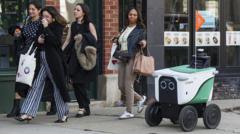
The landscape of the American sidewalk is undergoing a silent transformation. Where once only pedestrians and strollers roamed, a new inhabitant of sleek, autonomous robots is now humming along, carrying groceries and meals. However, as these machines multiply, so does a growing wave of public resentment.
In this in-depth analysis, we dive into the escalating backlash against delivery robots, examining why residents feel pushed out of public spaces and what this means for the future of smart urban living.
📑 Table of Contents
1. The Rise of the Sidewalk Fleet
Over the last few years, the promise of last-mile delivery automation has moved from science fiction to a daily reality. Startups and established tech giants have deployed thousands of small, wheeled robots designed to navigate sidewalks and deliver goods efficiently. The goal is simple: reduce the cost of delivery and eliminate the carbon footprint of traditional delivery trucks.
But as the density of these robots increases, the novelty has worn off. What was once seen as a charming innovation is now being viewed by many as a nuisance in crowded urban environments. The rapid deployment has outpaced the social acceptance and the infrastructure required to make such a coexistence seamless.
Efficiency vs. Presence
Companies argue that these robots are essential for the modern economy, providing low-cost services to consumers. However, the convenience often comes at the expense of those sharing the sidewalk.
2. The Friction of Public Space
The core of the backlash lies in the concept of 'shared space.' Sidewalks are public infrastructure intended for human movement, yet they are increasingly being treated as commercial logistics corridors. When a robot blocks a narrow path or forces a pedestrian to step into the street, it creates a physical and psychological point of friction.
Residents in various cities report feeling like they 'have to get out of the way.' This sentiment is particularly strong in areas where sidewalk space is already limited, making the presence of a moving obstructer feel like an invasion of public rights.
The Commercialization of Sidewalks
There is a growing perception that private companies are using public land for private profit without providing adequate benefit or consideration to the community.
3. Safety Concerns and Accessibility

One of the most vocal groups in opposition focuses on accessibility for vulnerable populations. For individuals with visual impairments, wheelchair users, or parents pushing strollers, an unpredictable robot can be a significant hazard. A robot that stops suddenly or fails to navigate a curb correctly can become a barrier for those with limited mobility.
Furthermore, there are concerns regarding the technical intelligence of these machines. While they are equipped with sensors and cameras, they often struggle with the chaotic nature of city life, such as children running or pets barking, leading to situations that pedestrians find difficult de-escalating.
The Accessibility Gap
Advocacy groups argue that the current design of delivery robots does not prioritize the needs of the diverse public that uses sidewalks.
4. Regulatory Pushback and Local Bans
In response to public outcry, several municipal governments are taking action. Some cities have begun implementing strict limits on the number of robots allowed, banning their operation during peak hours, or imposing heavy fees. These legislative moves represent a direct challenge to the 'move fast and break things' ethos of tech.
Protest groups have also emerged, demanding that cities reclaim sidewalks for humans. This legal and social battle is creating a complex tug-of-war between tech-friendly jurisdictions who want innovation and local officials who must protect the quality of life for residents.
Legislative Lag
The speed of technology development has far exceeded the speed of the legislative process, leaving a vacuum where conflict often thrives.
5. The Future of Urban Logistics
The backlash does not necessarily mean the end of autonomous delivery, but it does signal the need for a more thoughtful approach. For these technologies to succeed long-term, companies must move beyond mere efficiency and focus on integration. This includes better design that respects human movement and transparent communication with local communities.
We may see a shift where delivery robots are restricted to dedicated dedicated lanes or underground tunnels to avoid the conflict on the sidewalk entirely. The era of unregulated sidewalk testing is likely ending, and the era of regulated coexistence is beginning.
Finding the Middle Ground
The future of robotics depends on its ability to be seen as a helpful neighbor rather than an intrusive machine.
🔥 Subscribe to Azeem-USA for more insights on the intersection of technology and urban life.
Conclusion
The backlash over delivery robots is a reminder that technology does not exist in a vacuum. While the efficiency gains of autonomous delivery are undeniable, the cost to public space and accessibility cannot be ignored.
As we move forward, the challenge for cities is to balance innovation with the fundamental right of citizens to navigate their environment safely and comfortably.
❓ FAQ
Why are people angry at delivery robots?
People feel the robots crowd public sidewalks, create safety hazards, and impede pedestrian movement.
Are delivery robots safe?
While generally safe, those with visual impairments or mobility issues find them unpredictable and difficult to navigate around.
Are cities banning delivery robots?
Yes, some municipalities have introduced restrictions or temporary bans due to public complaints.
What is the main benefit of these robots?
They aim to lower delivery costs and reduce the number of delivery trucks on the road,p.
How can the conflict be resolved?
Through better regulation, dedicated delivery infrastructure, and improved robot design that respects pedestrians.
Comments
Post a Comment