
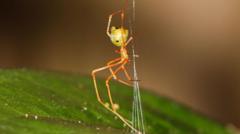
The natural world is full of surprises, but few discoveries have shocked the scientific community quite like the recent find out of Australia. Researchers have identified a unique species of spider that utilizes a mechanical-like spring trap to capture its prey, a feat previously thought impossible.
In this comprehensive guide, we dive deep into the mechanics of this unprecedented hunting method, the biological risks the spider takes, and why this discovery is fundamentally changing our understanding of evolutionary engineering in nature.
📑 Table of Contents
1. The Discovery of a Mechanical Hunter
In the rugged landscapes of Australia, scientists have uncovered a biological marvel that defies traditional definitions of predatory behavior. While most spiders rely on sticky webs or speed to ambush, this newly highlighted species employs a sophisticated strategy that involves stored mechanical energy. This discovery is not just about a new species, but about a new chapter in how we perceive animal capability.
The research team behind this discovery spent months observing the spider in its natural habitat. They noticed that the spider did not simply wait for prey to stumble by; it actively prepared a trap that functioned with incredible precision. This level of mechanical planning is exceptionally rare in the arachnid world.
A First of its Kind Hunting Method
Before this discovery, no other spider was documented to use a true spring-trap mechanism to secure its meal. This places the species in a league of its own among specialized predators.
2. Understanding the Mechanics of the Spring Trap
The core of this spider's success lies in its ability to store energy. Unlike muscles that contract and relax to create movement, this spider uses a specialized body structure to hold potential energy. When the prey triggers the mechanism, the energy is released instantly, causing the trap to snap shut faster than any standard muscle contraction could allow.
This mechanical approach is often compared to human-made mousetraps. By utilizing a 'spring-loaded' action, the spider minimizes the time between the detection of prey and the actual capture. This speed is vital when dealing with prey that is either fast or potentially dangerous.
The Physics of Biological Springs
The spider's legs or body segments act as the tension-bearing components, allowing for a high-velocity strike that catches insects off guard.
3. Hunting Dangerous Ants: The Strategy

One of the most fascinating aspects of this spider is its choice of prey: ants. Ants are notorious for their aggression, powerful mandibles, and ability to swarm. For most small predators, attacking an ant colony is a suicide mission, but this spider has evolved a specific way to overcome these formidable defenses.
The spider positions itself strategically along ant trails. Once an ant enters the 'kill zone,' the spring-trap is triggered, neutralizing the insect before it can call for reinforcements or deliver a painful bite. This high-risk, high-reward strategy demonstrates the peak of evolutionary specialization.
Overcoming the Ant Defense Mechanism
By using a mechanical trap, the spider can exploit a food niche that is inaccessible to other predators, ensuring a steady food supply with minimal competition.
4. Evolutionary Significance and Adaptation
The evolution of a spring-trap mechanism raises profound questions about the limits of adaptation. It suggests that the pressure to survive in competitive environments can drive the development of biological solutions that mimic man-made engineering. This is a classic example of convergent evolution or extreme specialization within a specific ecological niche.
Biologists are now looking at how this trait developed within the spider's lineage. The genetic cost required to build and maintain such a mechanism is significant, implying that the benefits of hunting dangerous protein-rich ants are immense enough to outweigh the energy investment of the trap.
Environmental Pressures Driving Innovation
The Australian environment is known for producing extreme traits, and this spider is the latest testament to the power of isolation and evolutionary pressures.
5. The Future of Arachnid Research
As we look forward, the discovery of the spring-trap spider opens up doors for biomimicry. Engineers may be interested in how the material properties of the spider's 'spring' can be replicated in robotics or lightweight technology. The efficiency of biological systems often surpasses our mechanical counterparts.
Furthermore, this find reminds us of how much remains undiscovered about our planet's biodiversity. In the remote corners of the world, there are likely other species with unique traits waiting be revealed by researchers who have the patience and the right tools to find them.
New Frontiers in Field Biology
Continued study of this species will likely reveal even more complex behaviors and social interactions between the spider and its environment.
🔥 Subscribe to Azeem-USA for more deep dives into nature's greatest mysteries!
Conclusion
The discovery of the spring-trap spider in Australia is a landmark event in biological science. By utilizing mechanical-like energy to hunt dangerous ants, this spider has mastered a niche that requires incredible evolutionary adaptation.
As we continue to explore the wonders of the natural world, this species serves as a reminder that nature is the ultimate engineer, constantly innovating for survival.
❓ FAQ
Where was the spring-trap spider found?
The spider was discovered in the wild of Australia.
Is this spider dangerous to humans?
While it hunts dangerous ants, it is specialized for insects and is not considered a threat to humans.
How does the spring trap work?
It stores potential energy in its body structure to snap shut on prey instantly.
Is this the only spider that does this?
Researchers state this specific hunting method is unprecedented and unique to this species discovery.
What does the spider primarily eat?
It focuses on aggressive ants which are usually difficult for other predators to catch.
Comments
Post a Comment