Breaking: Pope Leo XIV to Leave Hospital Saturday After Cancer Surgery 🚨 Breaking News Analysis 📸 Image Credit: yahoo.com By Azeem-USA · Sat Oct 17 2026 English (en-US) Pope Leo XIV will be released from the Gemelli Isola Tiberina hospital on Saturday, a mere four days after undergoing surgery for lung cancer. This rapid departure from the clinic, announced by the Vatican, signals a remarkably swift recovery for the 71-year-old Pontiff and allows him to resume his public duties, including delivering the traditional Sunday noon blessing from a window overlooking St. Peter's Square. This analysis will delve into the details of the Pope's diagnosis and surgery, examine the significance of his quick return to public life, explore the Vatican's communication approach, and assess the potential implications for the ongoing papacy. 📑 Table of Contents Pope Leo XIV's Swift Discharge Understanding the Diagnosis and Procedure Why This Ra...

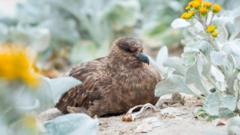
The world of public health is on high alert as the highly pathogenic H5N1 avian influenza strain has officially made its way to Australia, marking a significant and concerning milestone. Previously the sole continent free from this pervasive virus, Australia's confirmation signifies that H5N1 has now reached every corner of the globe, raising critical questions about its future trajectory and our collective preparedness.
This development underscores the dynamic nature of infectious diseases and the urgent need for robust, globally coordinated surveillance and response mechanisms. At Azeem USA, we delve into the implications of this historic confirmation, examining the virus itself, its impact on Australia, and what this global spread means for the future of public health and biosecurity worldwide.
📑 Table of Contents
1. H5N1's Unprecedented Global March
For years, the H5N1 strain of avian influenza has been a persistent concern for global health authorities. While primarily affecting birds, its ability to sporadically infect humans and its potential for mutation have always kept it on the radar. The virus's relentless spread across continents, from Asia to Europe, Africa, North America, and South America, has been a testament to its adaptability and the interconnectedness of our planet. Migratory birds, global trade, and wildlife movements all play a role in its dissemination, making containment an increasingly complex challenge.
The journey of H5N1 has been characterized by waves of outbreaks in poultry and wild bird populations, with sporadic, often severe, human infections occurring through close contact with infected birds. Each new geographical foothold has raised alarms, prompting increased surveillance and biosecurity measures. The confirmation of H5N1 in Australia was, therefore, not entirely unexpected, but it represents the final piece in a global puzzle that highlights the virus's extraordinary reach.
The Role of Wild Birds in Dissemination
Wild migratory birds are widely recognized as the primary natural reservoir and long-distance vectors for H5N1. Their extensive travel patterns can carry the virus across vast distances, introducing it to new regions and populations of both wild and domestic birds.
2. The Australian Confirmation: What We Know
The first confirmed case of H5N1 in Australia was detected in a wild bird, underscoring the natural pathways through which the virus travels. While the specific species and circumstances of its arrival are under investigation, this finding is crucial. It validates concerns that even geographically isolated continents are not immune to the global spread of highly pathogenic avian influenza. Australian authorities have swiftly initiated enhanced surveillance programs and biosecurity protocols to monitor the situation closely and prevent further transmission to domestic poultry and, critically, to humans.
The immediate focus is on understanding the extent of the virus's presence in Australia's wild bird populations and assessing any potential risks to commercial poultry farms. Early detection and rapid response are paramount in mitigating potential economic impacts on the agricultural sector and safeguarding public health. The government's commitment to transparency and collaboration with international health organizations is vital during this period of heightened vigilance.
Initial Detection and Response Measures
The confirmation typically involves laboratory testing of samples from affected animals, followed by immediate implementation of containment and surveillance measures by relevant veterinary and public health agencies.
3. Understanding H5N1: A Persistent Threat

H5N1 is a subtype of the influenza A virus, known for its high pathogenicity, meaning it can cause severe illness and high mortality rates in birds. The concern for human health stems from the virus's potential to jump the species barrier. While human infections remain rare, they are often associated with direct or close contact with infected poultry or contaminated environments, and have historically carried a high fatality rate. The ongoing circulation of H5N1 in bird populations worldwide increases the chances of such cross-species transmission and raises the specter of potential adaptation for sustained human-to-human spread.
Scientists are continuously monitoring H5N1 for genetic changes that could enhance its transmissibility to or between humans. The emergence of new clades and reassortment events with other influenza viruses are closely watched phenomena. Understanding the virus's evolution, its transmission dynamics in different hosts, and its geographical spread is fundamental to developing effective countermeasures, including vaccines and antiviral treatments, and to informing public health policies.
Pathogenicity and Zoonotic Potential
Highly pathogenic avian influenza viruses like H5N1 cause severe disease in birds, and their zoonotic potential means they can transmit to humans, posing significant public health risks.
4. Implications for Australia and Beyond
For Australia, the confirmation of H5N1 necessitates a robust and well-coordinated national response. This includes reinforcing biosecurity at borders, enhancing surveillance on farms and in wild bird populations, and preparing public health messaging to inform citizens about any potential risks and necessary precautions. The economic implications for Australia's significant poultry industry are also a major consideration, requiring swift action to prevent outbreaks in commercial flocks.
Globally, this development serves as a stark reminder that no region is insulated from the threat of emerging infectious diseases. It emphasizes the critical need for continued investment in global surveillance networks, rapid diagnostic capabilities, and international cooperation. Sharing data, research, and resources is more important than ever as we face a virus that has now demonstrated its ability to traverse the entire planet. The potential for H5N1 to adapt and cause a human pandemic, while currently low, cannot be discounted and requires ongoing preparedness.
Economic and Agricultural Impacts
The introduction of H5N1 into a country can have devastating consequences for its poultry industry, leading to trade restrictions and significant economic losses.
5. Strengthening Global Defenses Against Avian Influenza
The confirmation of H5N1 in Australia is a call to action for enhanced global collaboration and preparedness. It highlights the importance of the One Health approach, recognizing the interconnectedness of human, animal, and environmental health. Strengthening veterinary services, improving wildlife monitoring, and investing in research into novel vaccines and therapeutics are crucial steps. Furthermore, fostering open communication and data sharing between nations is essential for early warning and effective response to emerging zoonotic threats.
As we navigate this new phase of H5N1's global presence, Azeem USA remains committed to providing insightful analysis and updates on critical global health issues. This event underscores the ongoing need for vigilance, preparedness, and a unified international front to protect public health and ensure a safer future for all. The journey of H5N1 across every continent is a powerful lesson in the interconnectedness of our world and the shared responsibility we bear in safeguarding global health.
The Importance of the One Health Approach
The One Health framework emphasizes collaborative efforts between medical, veterinary, and environmental professionals to address health threats that originate at the interface of humans, animals, and their shared environment.
🔥 Stay informed on critical global health developments with Azeem USA.
Conclusion
The confirmation of the H5N1 bird flu in Australia marks a significant moment, confirming the virus's presence on every continent. This unprecedented global spread underscores the dynamic and persistent nature of avian influenza and serves as a critical reminder of the interconnectedness of global health ecosystems.
As authorities work diligently to manage the situation in Australia and monitor its wild bird populations, the world must renew its commitment to robust surveillance, international cooperation, and preparedness strategies. The ongoing evolution of H5N1 demands our continued attention and a proactive approach to mitigating potential risks to both animal and human health, ensuring a resilient defense against future zoonotic threats.
❓ FAQ
What is H5N1 bird flu?
H5N1 is a highly pathogenic subtype of the influenza A virus that primarily affects birds. It is known for causing severe illness and high mortality rates in avian populations and has the potential to infect humans.
Why is the confirmation in Australia significant?
Australia was the last continent without a confirmed H5N1 case. Its confirmation means the virus has now reached every continent, highlighting its extensive global reach and the challenges of containment.
How does H5N1 spread?
H5N1 primarily spreads among birds through contact with infected feces, secretions from the nose, mouth, or eyes, or through contaminated feed, water, or objects. Wild migratory birds are key vectors for long-distance spread. Human infections typically occur through close contact with infected birds or contaminated environments.
What are the risks to humans?
While human infections with H5N1 remain rare, they can be severe and have a high fatality rate. The primary concern is the virus's potential to mutate and adapt for efficient human-to-human transmission, which could lead to a pandemic.
What measures are being taken in Australia?
Australian authorities are implementing enhanced surveillance in wild bird and poultry populations, reinforcing biosecurity measures, and preparing public health advisories. International collaboration and data sharing are also key components of the response.
Comments
Post a Comment