
As summer temperatures soar to record-breaking levels across Europe, France has forced to take drastic measures to protect its citizens during cultural celebrations. The intersection of extreme weather events and large-scale public gatherings has led to a significant shift in how local authorities manage public safety during the current climate crisis.
In this deep dive, we explore why the French government decided to ban alcohol at major music festivals, the physiological impact of heatwaves, and what this means for the future of outdoor events in a warming world.
📑 Table of Contents
1. The Unprecedented Heat Crisis in France
France is currently grappling with a meteorological phenomenon that has pushed its infrastructure to the absolute limit. With red heatwave alerts issued for 35 different departments, the country is facing temperatures that threaten the lives of vulnerable populations. These alerts signify a high level of danger, requiring immediate action from both the government and the public to prevent fatalities.
The scale of this heatwave is not merely a matter of discomfort; it is a sustained period of extreme heat that prevents bodies from cooling down at night. In urban centers across France, the heat island effect further exacerbates the situation, making outdoor activities potentially hazardous for prolonged periods.
Understanding the Red Heat Alert System
Meteorologists use a color-coded system to communicate the severity of weather risks. The red alert is the highest tier, indicating that the risk is extreme and that emergency measures must be followed to mitigate heatstroke and medical emergencies.
2. Logic Behind the Alcohol Ban
The decision to ban alcohol at music festival events was not an arbitrary restriction on freedom but a calculated public health intervention. Alcohol is a known diuretic, meaning it increases the body's loss of fluids, leading to rapid dehydration. In an environment where people are already struggling to maintain thermoregulation, the consumption of alcohol can accelerate the onset of heatstroke significantly.
Furthermore, alcohol impairs the body's ability to sense temperature changes and affects judgment. In a dense crowd of thousands, an individual suffering from heat exhaustion might not seek help until their condition reaches a critical state. By removing alcohol from the equation, authorities aim to prioritize hydration over celebration.
Physiological Risks of Heat and Alcohol
When the body is overheated, it relies on sweat to cool down. Alcohol disrupts this natural process, creating a dangerous feedback loop that can lead to organ failure or death if not addressed immediately.
3. Fete de la Musique Under the Spotlight

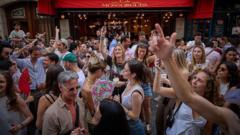
The annual Fete de la Musique is a cornerstone of French culture, drawing millions of people into the streets to celebrate music in all forms. Traditionally, this event is a time of joy, socializing, and outdoor gathering. However, with millions expected to be outdoors under a red alert, the logistical challenge for event organizers shifted from entertainment to survival.
Organizers faced the daunting task of maintaining the cultural spirit of the event while ensuring that medical services were not overwhelmed. The ban on alcohol served as one part of a broader strategy that included providing free water stations and creating shaded viewing areas throughout the cities.
Balancing Culture and Safety
The challenge for France lies in adapting traditions to a new climatic reality. The Fete de la Musique marks a turning point where celebrations must navigate the realities of environmental volatility.
4. Public Health and Emergency Response
Emergency services in France have been on high alert during this period. Medical teams were deployed to high-density areas to treat cases of mild dehydration, fainting, and heat exhaustion. The ban on alcohol was designed to reduce the number of acute cases that would require intensive emergency room capacity.
Public health officials have emphasized the importance of seeking cool shade and drinking water even when one does not feel thirsty. The message is clear: during a red heatwave, the body is under extreme stress, and any factor that increases that stress could potentially lead to life-threatening complications.
The Role of Medical Infrastructure
By preventing a surge in alcohol-related heat incidents, the healthcare system ensures that resources remain available for those experiencing genuine medical emergencies caused by the extreme temperatures.
5. The Future of Outdoor Event Management
What is happening in France is likely a precursor to how outdoor events will be managed globally moving forward. As heatwaves become more frequent and intense, the 'standard' way of hosting a summer festival may no longer be viable. We are seeing the birth of climate-adaptive planning as a mandatory part of event-production strategy.
Future festivals may need to incorporate 'heat-specific' protocols into their core design. This could include mandatory hydration zones, restrictions on alcohol sales during high-temperature windows, or even shifting events to cooler months or times of the day to avoid peak sun hours.
Adapting to a Warming Planet
The French response demonstrates that public safety depends on the ability to pivot quickly and prioritize life over traditional festivities in the face of changing environmental conditions.
🔥 Stay updated with Azeem-USA for more insights into global climate trends and safety news.
Conclusion
The ban on alcohol at French music festivals during the red heatwave is a stark reminder of the growing challenges posed by climate change. By prioritizing hydration and public safety, authorities have taken a proactive step to protect the population from extreme environmental risks.
As the world continues to warm, we expect to see more of these innovative and restrictive measures becoming the standard for public gatherings worldwide.
❓ FAQ
Why was alcohol banned at French festivals?
Alcohol was banned to prevent dehydration and heatstroke during a red heatwave alert.
What is a red heatwave alert?
It is the highest level of heat warning in France, indicating extreme danger and the need for immediate safety measures.
Is the Fete de la Musique a major national event?
It is a major annual French music celebration where millions of people gather in streets.
Are all festivals in France affected?
The ban specifically targeted events in 35 departments under red heat alerts.
How does alcohol affect the body in heat?
It causes dehydration and impairs the body's ability to regulate its temperature.
Comments
Post a Comment