Microsoft's AI Testing Tool: Revolutionize Dev Workflows!

The rapid evolution of artificial intelligence presents both incredible opportunities and complex challenges for developers. One of the most significant hurdles has been the intricate process of testing AI behavior, ensuring it performs as intended across a myriad of scenarios. Traditionally, this has involved writing extensive, often cumbersome, code to simulate different inputs and validate outputs. However, Microsoft is poised to change this paradigm with a groundbreaking new tool that simplifies AI behavior testing to its most fundamental element: human language.
This innovative solution promises to democratize AI development by allowing engineers to define and execute AI behavior tests using straightforward text descriptions. Imagine a world where you can describe the desired AI action, and the tool automatically generates the necessary tests. This is the future Microsoft is building, and it has profound implications for accelerating innovation, enhancing reliability, and securing AI systems across the entire development lifecycle.
📑 Table of Contents
1. The Challenge of AI Behavior Testing
Developing sophisticated AI systems, particularly AI agents, involves more than just training models. It requires rigorous validation to ensure these agents behave predictably, safely, and effectively in real-world applications. The complexity arises from the emergent properties of AI – behaviors that are not explicitly programmed but arise from the learning process. Traditional testing methodologies often struggle to keep pace with this complexity, requiring specialized expertise and significant time investment.
Manual test case creation can be a bottleneck, especially when dealing with the vast state spaces and potential interactions that AI agents can encounter. Developers need to anticipate a wide range of inputs, environmental conditions, and user interactions to build robust AI. This often leads to extensive test suites that are difficult to maintain and update as the AI models evolve. The risk of subtle, yet critical, behavioral flaws slipping through the cracks is a constant concern, impacting user trust and application reliability.
The Need for a More Intuitive Approach
The industry has long sought a more intuitive and efficient way to test AI. The goal is to bridge the gap between human intent and machine execution, making the testing process more accessible and less prone to human error in translation. This need becomes even more pronounced as AI is increasingly integrated into critical systems, from cybersecurity to autonomous operations.
2. Introducing Microsoft's Text-to-Test AI Tool
At recent events like Microsoft Build, the company has been showcasing its commitment to empowering developers with AI-native tools. A key announcement emerging from this push is a new Microsoft tool designed to revolutionize how AI behavior is tested. This tool leverages the power of natural language processing (NLP) to translate human-readable descriptions directly into executable test cases for AI agents and models.
This isn't just an incremental improvement; it's a fundamental shift in the developer workflow. By abstracting away the need for complex scripting and coding for test generation, Microsoft is making AI testing more accessible to a broader range of developers. The focus is on enabling developers to express their intentions clearly in plain language, letting the tool handle the intricate details of test creation and execution.
Empowering Developers with Natural Language
The core innovation lies in its ability to understand and interpret natural language prompts. Developers can simply describe the scenario they want to test, the expected outcome, and the conditions under which the AI should operate. This dramatically lowers the barrier to entry for comprehensive AI testing.
3. How It Works: From Description to Test Case
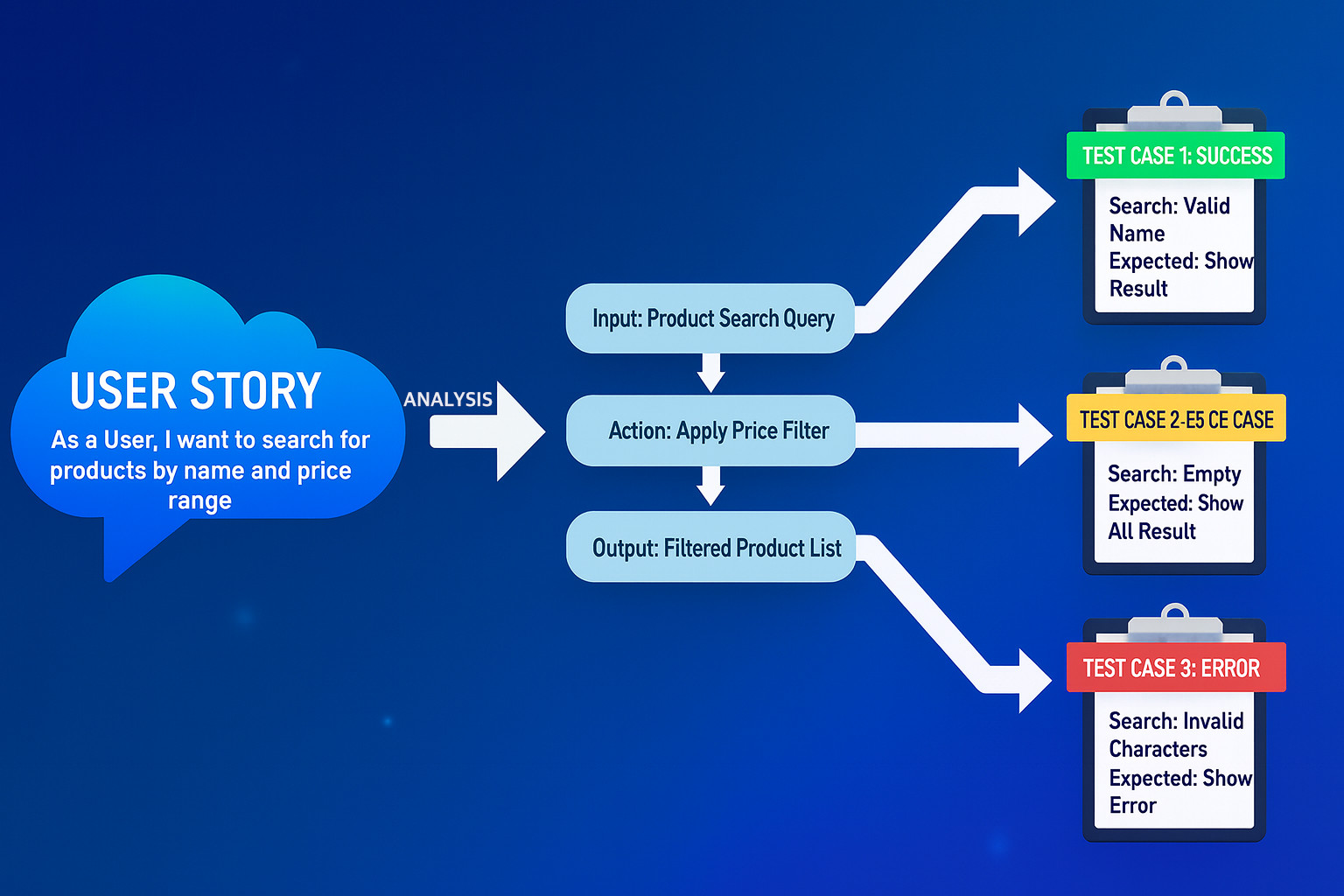
The process is elegantly straightforward. A developer interacts with the tool by providing a textual description of the AI's desired behavior or a specific scenario they wish to test. This description could be as simple as 'When a user asks for directions to the nearest park, the AI should provide turn-by-turn navigation.' or more complex, detailing environmental factors or specific user intents.
The AI-powered tool then parses this natural language input, identifying key entities, actions, conditions, and expected results. Using sophisticated NLP and potentially generative AI techniques, it translates these elements into structured test parameters and scripts. These can then be used to simulate the described scenario, feeding inputs to the AI model or agent and comparing the actual output against the described expectation.
Automated Test Generation and Execution
Beyond just generating test cases, the tool is designed to facilitate their execution and analysis. This end-to-end capability ensures that the translation from human intent to validated AI behavior is seamless. The system can then report on the success or failure of each test, providing valuable feedback to developers for iterative improvement.
4. Benefits for Developers and the Development Lifecycle
The implications of this new tool are far-reaching, offering significant advantages across the AI development lifecycle. Firstly, it dramatically speeds up the testing process. What might have taken hours or days of manual coding can now be accomplished in minutes using text descriptions. This acceleration allows for more frequent testing, leading to quicker identification and resolution of bugs and behavioral anomalies.
Secondly, it enhances the quality and comprehensiveness of testing. By making test creation more accessible, developers are encouraged to explore a wider range of scenarios, including edge cases that might have been overlooked with traditional methods. This leads to more robust and reliable AI systems. Furthermore, the tool aids in securing code, agents, and models by providing a more effective way to validate their behavior against security requirements.
Improving Collaboration and Accessibility
This text-based approach also fosters better collaboration between AI researchers, developers, testers, and even product managers who may not have deep coding expertise. It provides a common language for defining and verifying AI behavior. This democratization of testing empowers more team members to contribute to the validation process, ensuring that AI systems align with business objectives and user needs.
5. The Future of AI Development and Testing at Microsoft
Microsoft's investment in tools like this signals a clear direction for the future of AI development. The company is not just building AI models; it's building the infrastructure and tooling to make AI development more efficient, secure, and accessible. This move aligns with their broader strategy, as seen in initiatives like using AI to combat cyber threats and enhancing Windows platform security for AI agents.
The integration of natural language into core development processes, like testing, is a testament to Microsoft's forward-thinking approach. It reflects an understanding that the next generation of software development will be deeply intertwined with AI, and the tools must evolve accordingly. By providing developers with more intuitive ways to control and validate AI agent behavior, Microsoft is paving the way for more sophisticated and trustworthy AI applications.
A More Secure and Reliable AI Ecosystem
The emphasis on security and reliability, particularly in the context of AI agents and models, is crucial. Tools that allow for precise behavioral testing using simple descriptions are instrumental in building confidence in AI systems. This development is a significant step towards creating a more secure and dependable AI ecosystem for everyone.
🔥 Explore how Microsoft's latest AI tools can transform your development workflow today.
Conclusion
Microsoft's new AI behavior testing tool, powered by text descriptions, represents a significant leap forward in software development. By translating human language directly into executable tests, it addresses a critical bottleneck in AI development, making the process faster, more accessible, and more comprehensive.
This innovation not only empowers developers to build better AI but also enhances the security and reliability of AI systems across the board. As AI continues to permeate every aspect of technology, tools like this will be essential in ensuring that AI development is as intuitive and robust as the AI itself, promising a future of accelerated innovation and trustworthy intelligent systems.
❓ FAQ
What is the new Microsoft AI tool?
It's a new tool from Microsoft that allows developers to create and execute AI behavior tests using simple text descriptions instead of complex code.
How does the tool work?
Developers provide natural language descriptions of the AI's desired behavior or scenarios, and the tool translates these into structured test cases for execution.
What are the main benefits for developers?
The key benefits include faster testing cycles, improved test comprehensiveness, enhanced collaboration, and increased accessibility to AI testing.
Does this tool help with AI security?
Yes, by enabling more thorough and accessible testing of AI behavior, it helps in identifying and mitigating potential security vulnerabilities in code, agents, and models.
What is the significance of this tool for the future of AI development?
It signifies a move towards more intuitive, language-driven development processes, accelerating innovation and making AI development more accessible and secure.


Comments
Post a Comment